


Let’s be real: your dating app is probably wasting your time.
You’ve spent hours swiping, matched with people who seemed perfect, and then… nothing. The conversation fizzles. The first date is awkward. You realize within five minutes that you have absolutely nothing in common. Sound familiar? Even with a well-crafted dating profile—carefully selecting photos, sharing your interests, and describing your personality—many users still struggle to find genuine compatibility on most platforms.

Here’s the uncomfortable truth most dating apps don’t want you to know: they’re not designed to help you find a compatible partner. They’re designed to keep you swiping.
Attraction gets you a match. Compatibility determines if it actually works.
With 53 million Americans actively using dating apps and roughly 70% still single despite all that swiping, something clearly isn’t working. The average user spends 2-3 hours per week on these platforms but lands just 1-2 dates monthly—most of which go nowhere.
That’s billions of hours wasted globally on incompatible connections.
But there’s a shift happening. A new category of compatibility dating apps is emerging, and they’re flipping the entire model on its head. Instead of “match first, figure it out later,” these platforms help you understand compatibility before you invest time, energy, and emotions.
Leading this evolution is Jeter AI, the only platform designed to assess compatibility before you even go on a first date—not after three months of texting and awkward coffee shop meetups.
In this guide, we’re breaking down the 6 best compatibility-focused dating apps for 2026, comparing what actually works, and helping you stop wasting time on people who were never right for you in the first place.

What Makes a “Compatibility Dating App”? (The Real Definition)
Before we dive into rankings, let’s get clear on what separates a real compatibility dating app from a regular dating site that just claims to care about matching.
A true compatibility app does more than show you attractive profiles. It actively analyzes personality traits, values, communication styles, and relationship goals before you match—or at least before you invest significant time.
Key features of genuine compatibility apps:
- Structured personality and values assessments
- AI-driven or research-backed matching algorithms
- Matches based on detailed compatibility criteria rather than just appearance or proximity.
- Conversation guidance and prompts that reveal depth
- Deal-breaker filtering (politics, kids, lifestyle)
- Pre-date or early-stage compatibility insights
The critical distinction:
Most dating apps operate on a “match first, figure it out later” model. You see a photo, maybe a witty bio, you swipe right, and then you spend weeks trying to determine if you’re actually compatible. By then, you’re already emotionally invested.
True compatibility apps flip this: understand first, then decide.
This matters especially for Gen Z. According to Forbes, 72% of Gen Z users prioritize “authentic connections” over casual hookups. And Deloitte research shows 68% prefer intentional dating approaches. Meanwhile, swipe fatigue is real—Gen Z reports 40% higher burnout from endless swiping compared to older demographics.
You don’t want more matches. You want better ones.
Quick Comparison Table
Here’s how the top compatibility dating apps stack up in 2026:
| App | Best For | Compatibility Depth | Unique Feature |
|---|---|---|---|
| Jeter AI | Pre-date compatibility | ⭐⭐⭐⭐⭐ | Link sharing + QR codes + virtual speed dating |
| eHarmony | Deep questionnaires | ⭐⭐⭐⭐⭐ | 29 Dimensions of Compatibility |
| OkCupid | Values-based matching | ⭐⭐⭐⭐ | 4,000+ compatibility questions |
| Hinge | Mainstream relationships | ⭐⭐⭐ | Personality-revealing prompts |
| Coffee Meets Bagel | Curated matches | ⭐⭐⭐ | Limited daily selections |
| Bumble | Structured interaction | ⭐⭐ | Women-first messaging |
Each compatibility dating app offers its own standout features that set it apart—whether it’s unique matching algorithms, curated experiences, or innovative communication tools. These standout features help users find the platform that best fits their dating goals and preferences.
Now let’s break down what makes each platform worth considering—or not.

The 6 Best Compatibility Dating Apps
1. Jeter AI — Best for Compatibility Before the First Date
Why It Stands Out:
Jeter AI isn’t just another dating app with a compatibility quiz tacked on. It’s the only dating platform built entirely around one radical idea: you should know if you’re compatible with someone before you meet them.
Unlike other apps where compatibility happens after matching (or after several dates), Jeter AI lets you share a compatibility test link with anyone you’re considering dating—whether you met them on Tinder, Bumble, Hinge, at a bar, or through friends.
Here’s how the dating compatibility test works: you take the assessment, generate your shareable link, and send it to your potential match. They complete their side, and you both unlock a detailed compatibility report before investing in a first date.
Best For:
- Intentional daters who value their time
- Busy professionals who can’t afford wasted dates
- Anyone experiencing dating app burnout
- People who want to use Jeter AI alongside other dating apps like Tinder, Bumble, and Hinge
Key Strengths:
- Cross-platform compatibility: Works with any dating app or real life connections
- QR codes for IRL events: Scan and connect at singles events near you
- Virtual speed dating: Their patent-pending algorithm matches you with highest-compatibility partners
- Actionable insights: Not just a score—actual guidance on what works and what doesn’t
- 100+ compatibility questions covering emotional, communication, lifestyle, and deal-breaker dimensions
User testimonials on Jeter’s blog report avoiding 70% of mismatches by testing compatibility first. Early adopters show 4x better retention compared to traditional swipe apps.
Possible Limitations:
- Requires a mindset shift from traditional swiping
- New category means smaller user base (though it works across all existing apps)
- Not a standalone dating pool—designed to enhance your existing dating approach
Pricing:
The compatibility assessment is free. Reports use a token system: 3 tokens for $10, 6 for $15, or 12 for $25. Check current pricing here.
The Bottom Line:
Jeter AI is the only platform on this list designed to help you decide if you should meet someone—before you actually meet them. It turns fun compatibility checks into intentional dating decisions.
If you’ve ever thought “I wish I’d known this before the first date,” this is why you should take a compatibility test beforehand.

2. eHarmony — Best for Deep Compatibility Questionnaires
Why It Stands Out:
eHarmony pioneered the compatibility-first approach back in 2000, and they’ve built their entire dating platform around extensive psychological matching. Founded by Dr. Neil Clark Warren, a clinical psychologist, eHarmony uses a patented 29 Dimensions of Compatibility model covering everything from emotional temperament to social style.
This isn’t a “swipe on photos” situation. The onboarding process alone takes 30-45 minutes, weeding out casual users and ensuring everyone on the platform is serious about finding a committed relationship.
Best For:
- Marriage-minded users (30-49 demographic)
- People who want science-backed matching
- Users willing to invest time upfront for better results
Key Strengths:
- Deep psychological assessment based on relationship science
- Claims responsibility for approximately 2% of U.S. marriages
- Serious user base with clear relationship goals
- Expert-approved methodology endorsed by therapists
Possible Limitations:
- Lengthy onboarding process (can take hours total)
- Static compatibility scoring that doesn’t adapt to real-time interactions
- Premium pricing ($35-65/month). Accessing the full range of eHarmony’s paid features requires a paid subscription or premium subscription, which unlocks premium features such as advanced matching insights and communication tools.
- Less effective for younger demographics seeking flexibility
The Bottom Line:
eHarmony remains the gold standard for traditional compatibility questionnaires. If you’re looking for long term relationships and don’t mind investing significant time upfront, it’s a solid choice. Just know that the compatibility assessment happens before you match—not dynamically throughout your dating journey.
3. OkCupid — Best for Values-Based Compatibility
Why It Stands Out:
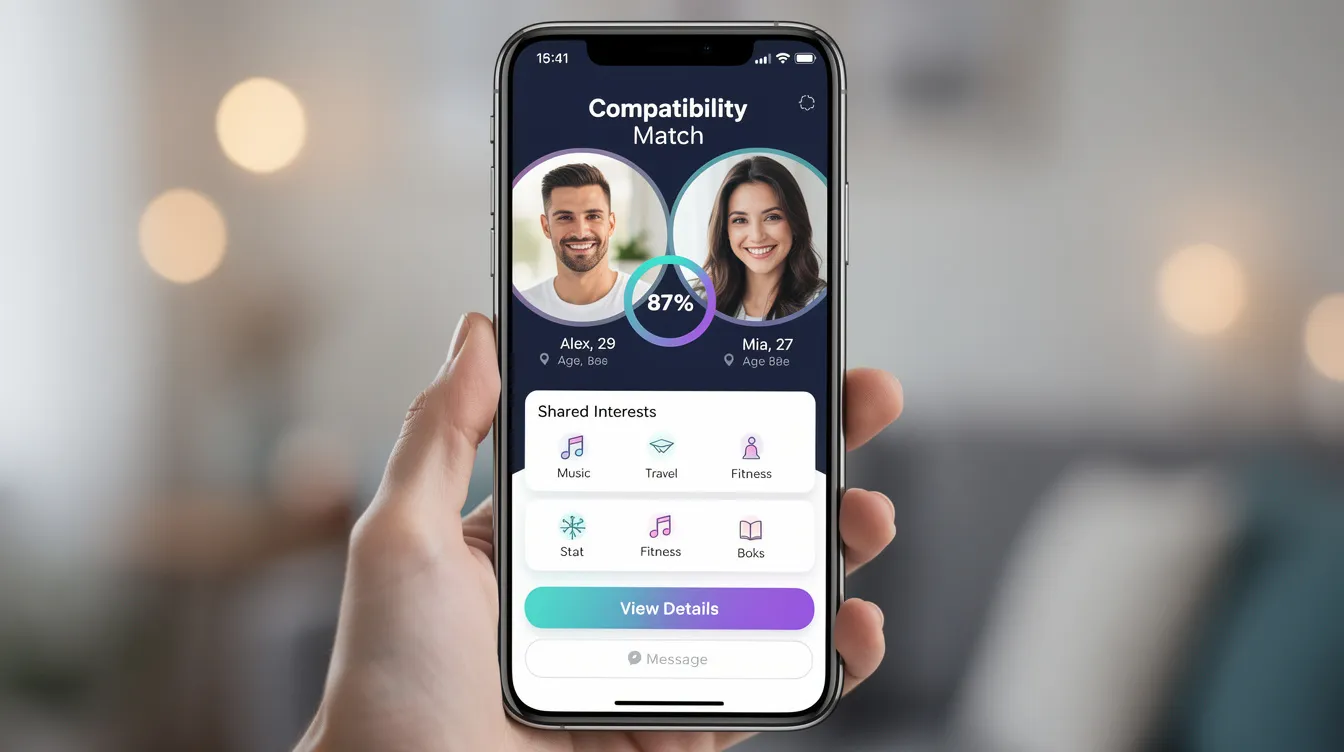
OkCupid built its reputation on one thing: questions. With over 4,000 questions in their database covering everything from politics to pet preferences, OkCupid generates detailed compatibility percentages that go far beyond surface attraction. OkCupid uses its algorithm to suggest matches based on your answers to thousands of questions, helping you find people who align with your values and interests.
You’ll see exactly how much you align with potential matches—85% match, 12% enemy, whatever the numbers reveal. For many users, especially those who prioritize political or social values alignment, this transparency is invaluable.
Best For:
- Users who prioritize shared beliefs and values
- LGBTQ+ community (strong inclusive options)
- Gen Z daters (65% emphasize political alignment per 2025 surveys)
- Free users who want robust features without paying
Key Strengths:
- Extensive question database for precise matching
- Detailed compatibility percentages you can actually see
- Strong free version with meaningful features. The paid version of OkCupid unlocks additional functionalities, such as seeing who liked you and more refined filters.
- Inclusive options for sexual orientation and gender identity
- Transparent about why you match (or don’t)
Possible Limitations:
- Compatibility happens after matching, not before
- Mixed user intent (serious daters alongside casual dating seekers)
- Can feel overwhelming with so many questions
- Quality of matches varies by location
The Bottom Line:
OkCupid excels at values-based matching through sheer volume of data points. If knowing where someone stands politically or socially is non-negotiable for you, OkCupid surfaces that information better than any other popular dating app.
4. Hinge — Best Mainstream App With Some Compatibility Signals
Why It Stands Out:
Hinge positions itself as “designed to be deleted”—built for romantic relationships rather than endless swiping. The app feature that sets it apart is prompts: questions that reveal personality beyond photos, like “Two truths and a lie” or “I’ll know we’re compatible if…”
According to multiple 2026 dating app rankings, Hinge tops charts for relationship seekers. EmLovz coaching reports 99% of clients successfully find relationships through Hinge, and users report 3x more dates leading to relationships compared to Tinder.
Best For:
- Users wanting better than swipe-only apps
- Mainstream daters not ready for full compatibility testing
- People who value conversation starters
- Anyone seeking genuine connections without extreme commitment
Key Strengths:
- Thoughtful prompts reveal personality depth
- Limited daily likes encourage intentionality
- Strong reputation for serious relationships
- Behavioral signals help surface compatible partner matches
- Clean interface with detailed profiles
Possible Limitations:
- Compatibility is still reactive (happens after matching)
- Less depth than true compatibility apps
- Still somewhat appearance-driven
- Prompt quality varies wildly between users
The Bottom Line:
Hinge is the best mainstream option for relationship focused dating. It’s a significant upgrade from pure swipe apps but still operates on a “match first, assess compatibility second” model.
5. Coffee Meets Bagel — Best for Slower, Curated Matches
Why It Stands Out:
Coffee Meets Bagel takes the opposite approach from infinite swiping. Instead of drowning you in options, the app serves 5-21 curated “bagels” (matches) daily based on your preferences and behavior.
This forced slowness encourages users to actually consider potential partners rather than mindlessly swiping. Users report 30% more meaningful conversations compared to volume-based apps.
Best For:
- Users overwhelmed by too many choices
- Busy professionals who want quality over quantity
- Online daters seeking more meaningful connections
- People who appreciate curation over chaos
Key Strengths:
- Reduces decision fatigue with limited daily matches
- Encourages users to thoughtfully consider each profile
- Algorithm learns your preferences over time
- Less time-consuming than swipe-heavy apps
Possible Limitations:
- Lower compatibility depth than dedicated compatibility apps
- Slower pace may frustrate impatient users
- Smaller dating pool in some areas
- Limited free features compared to other apps
The Bottom Line:
Coffee Meets Bagel is ideal if you’re drowning in options elsewhere. The curation helps, but it’s still not a true compatibility-first approach—just a less overwhelming one.
6. Bumble — Best for Structured Conversations
Why It Stands Out:
Bumble’s core innovation is simple: women initiate. In heterosexual matches, women must send the first message within 24 hours, or the match expires. This structure cuts down on low-effort interactions and reduces unsolicited messages that plague other dating apps.
The app earned strong ratings (4.3/5) among 18-30 year olds and includes additional modes for finding friends (Bumble BFF) and professional networking (Bumble Bizz).
Best For:
- Queer women and women seeking control over interactions
- Android users and iOS users alike (cross-platform)
- Users wanting to avoid catfishing and fake profiles
- People interested in dating, friends, and networking
Key Strengths:
- Reduces low-effort and inappropriate messages
- Time limits create urgency and action
- Photo verification reduces fake profiles
- Bumble also offers privacy controls that allow users to remain anonymous or limit the visibility of their profile information while browsing.
- Multiple modes beyond dating
- Strong user base with massive user base globally
Possible Limitations:
- Minimal compatibility insight before matching
- Still primarily appearance-based
- 24-hour limit can feel pressuring
- Compatibility assessment is essentially nonexistent
The Bottom Line:
Bumble structures conversations better than most dating apps worth mentioning, but it’s not a compatibility app. It’s a swipe app with guardrails. If structure matters more than compatibility depth, it works. Otherwise, you’re still gambling on chemistry.

Inclusivity in Dating Apps: Finding Love for Everyone
Inclusivity has become a cornerstone of the modern dating app landscape, making it easier than ever for people of all backgrounds to find meaningful connections online. Gone are the days when online dating catered only to a narrow audience—today’s best dating apps are intentionally designed to welcome users across the spectrum of gender identities, sexual orientations, and relationship preferences.
Take OkCupid, for example. As one of the first major dating apps to expand its identity options, OkCupid now supports 22 genders and 13 sexual orientations, allowing users to express themselves authentically and connect with others who truly understand them. This commitment to inclusivity has inspired other apps to follow suit, creating a more welcoming environment for everyone.
For queer women, apps like HER offer a dedicated space to meet like-minded singles, free from the noise and misunderstandings that can come with more general platforms. Meanwhile, apps such as Feeld cater to open-minded daters, supporting over 20 sexualities and gender identities, and encouraging users to explore connections that align with their unique relationship goals.
By prioritizing inclusivity, these dating apps are breaking down barriers and helping users find genuine connections—whether you’re looking for a long term partner, a casual relationship, or simply a supportive community. The result? More people than ever are able to find their perfect match and build relationships that reflect who they truly are.
Staying Safe on Dating Apps: Tips for Secure Connections
While online dating opens up a world of potential matches, it’s essential to prioritize your safety as you navigate the dating pool. The good news? Most dating apps now offer built-in safety features to help you connect with confidence and focus on building genuine connections.
Start by trusting your instincts—if something feels off about a profile or conversation, don’t hesitate to move on. Always arrange to meet potential matches in public places, and consider using video chat features before agreeing to an in-person date. Many popular dating apps, like Tinder and Bumble, now offer photo verification tools, helping you confirm that the person you’re chatting with is who they say they are.
It’s also smart to avoid sharing sensitive information, such as your home address or financial details, until you’ve established trust. Running a quick reverse image search on profile photos or checking for mutual friends can help you spot fake profiles and avoid scams. And remember, if an app or user seems suspicious or spammy, it’s okay to walk away—your safety comes first.
By taking these precautions and choosing dating apps that prioritize user security, you can enjoy the excitement of online dating while minimizing risks and focusing on what really matters: building genuine, meaningful connections with others.
Why Most “Compatibility” Apps Still Fail
Here’s the uncomfortable reality: even apps that claim to focus on compatibility usually fail at actually operationalizing it.
The core problems:
- Compatibility assessment happens too late. Most apps assess compatibility after you’ve already matched, messaged, and maybe even met. By then, you’re emotionally invested and more likely to ignore red flags.
- No real-world integration. Your compatibility score sits in a profile. It doesn’t guide your conversations, help you decide whether to meet, or connect to actual dating experiences like events or video calls.
- No actionable insights. A “78% compatible” badge tells you almost nothing useful. What are the friction points? What topics should you explore? What deal-breakers exist?
- Still based on matching first. The fundamental model remains: see photo → swipe → match → figure it out. Compatibility is an afterthought.
Few dating sites publicly share detailed success metrics or marriage rates, making it difficult for users to assess which platforms are truly effective for serious relationships.
According to 2025 Statista data, 80% of dating app matches fizzle without leading to meaningful interaction. Relationships formed through online dating sites average just 3.5 months—compared to 7.5 months for relationships started offline.
The key insight:
Most compatibility apps measure compatibility. They don’t operationalize it.
They give you a number but don’t help you act on it.
This is where Jeter AI’s approach differs fundamentally. Instead of compatibility as a passive score, Jeter turns it into:
- Pre-date decisions (should I meet this person?)
- Guided conversations (what should we talk about?)
- Real-world interactions (compatibility-matched speed dating events)
- Cross-platform utility (works wherever you meet people)
Compatibility isn’t useful if it doesn’t change behavior. That’s why same people keep having the same bad dates.
The Future of Dating: Compatibility Before Chemistry
The dating landscape is shifting, and the data tells a clear story.
The trends:
- Swiping is declining 25% year-over-year according to App Annie’s 2026 report
- 68% of Gen Z prefers intentional dating approaches (Deloitte)
- Industry analysts predict 40% growth in compatibility-focused dating niches by 2028
The pattern is unmistakable: people are exhausted by volume-based dating. They don’t want a bigger dating pool—they want a better-filtered one.
What’s driving this shift:
- Mental health awareness around dating burnout
- Time scarcity (who has hours to waste on bad dates?)
- Greater selectivity about where to spend money and effort in the search for meaningful connections.
- Values-driven decision making among younger generations
- Technology enabling smarter filtering
The role of AI:
AI compatibility calculators represent the next frontier. Instead of static questionnaires, AI can analyze communication patterns, predict long-term compatibility, and provide dynamic insights that evolve with new information.
This isn’t about replacing human judgment—it’s about giving you better information before you make decisions about who deserves your time and energy.
The future isn’t more matches. It’s fewer, better ones.
Which Compatibility Dating App Is Best for You?
Choosing the right platform depends on your goals, timeline, and how much compatibility depth matters to you. Here’s a decision framework:
Choose Jeter AI if:
- You want compatibility assessment before the first date
- You’re already using other apps and want better filtering
- You attend singles events and want compatibility-matched experiences
- You value time efficiency and want to avoid bad dates
- You’re open to a new approach beyond traditional swiping
Choose eHarmony if:
- You’re marriage-minded and seeking serious relationships
- You prefer traditional, structured matching
- You don’t mind lengthy onboarding
- You’re in the 30-49 demographic
Choose OkCupid if:
- Shared values and beliefs are your top priority
- You want extensive free features
- Political alignment is non-negotiable
- You’re comfortable with mixed-intent user bases
Choose Hinge if:
- You want better than swipe-only but aren’t ready for intensive compatibility testing
- You prefer a mainstream app with a relationship focus
- Conversation prompts appeal to you
- You’re looking for a perfect match through improved mainstream options
Choose Coffee Meets Bagel if:
- You’re overwhelmed by too many choices
- Quality over quantity appeals to you
- You have limited time for dating apps
- You prefer curation over endless browsing
Coffee Meets Bagel and eHarmony are also popular choices among single parents seeking meaningful connections, thanks to their curated and relationship-focused communities.
Choose Bumble if:
- Structure matters more than compatibility depth
- You want control over who messages you
- You’re interested in networking and friendship modes too
- You want a casual fling or casual relationship with less friction
Quick decision matrix:
| Your Priority | Best Choice |
|---|---|
| Pre-date compatibility | Jeter AI |
| Deep traditional matching | eHarmony |
| Values alignment | OkCupid |
| Mainstream reliability | Hinge |
| Curated quality | Coffee Meets Bagel |
| Structured conversations | Bumble |
Success Stories: Real Relationships from Compatibility Apps
Despite the ups and downs of online dating, countless users have found lasting love—and even marriage—through compatibility-focused dating apps. These platforms aren’t just about swiping; they’re about helping you find a compatible partner who shares your values, interests, and relationship goals.
Take the story of a Glamour contributor who met her now-husband within two months of joining Match, or the many users who credit OkCupid’s detailed questionnaires for introducing them to their current partners. These real-life examples show that, for many users, online dating isn’t just about casual flings—it’s a powerful way to build long term relationships and meaningful connections.
Compatibility apps work by encouraging users to showcase their personalities and intentions, making it easier to filter out mismatches and focus on people who are truly aligned with your vision for a committed relationship. Whether you’re seeking a serious partnership or open to a casual fling, there’s a dating app designed to help you find your perfect match.
The bottom line? Many users have discovered that with the right approach—and the right platform—online dating can lead to genuine, lasting love. If you’re ready to move beyond endless swiping and start building real relationships, compatibility apps might just be your best bet.
Final Thoughts
Dating isn’t broken because of lack of options. With 53 million online daters in the U.S. alone and dozens of best dating sites available, options aren’t the problem.
Dating is broken because people don’t know who they’re actually compatible with—until they’ve already invested time, energy, and emotions into finding out the hard way.
The best online dating apps of 2026 aren’t the ones with the most users or the slickest interfaces. They’re the ones that help you make better decisions faster.
That means:
- Understanding compatibility before emotional investment
- Filtering for relationship goals and values early
- Using data and AI to surface potential matches that actually make sense
- Turning compatibility insights into actionable dating decisions
The best compatibility dating apps don’t just help you match—they help you choose better.
If you’re tired of wasted dates, confusing signals, and that sinking “we have nothing in common” feeling fifteen minutes into meeting someone, consider shifting your approach.
Stop optimizing for more matches. Start optimizing for better ones.
Take Jeter AI’s free compatibility test and see what intentional dating actually looks like.

Frequently Asked Questions
What is the best compatibility dating app?
For overall compatibility depth and pre-date assessment, Jeter AI stands out as the best dating app focused on compatibility. Unlike other apps that assess compatibility after matching, Jeter lets you understand relationship potential before investing time in dates. For traditional questionnaire-based matching, eHarmony remains strong. For values-based matching specifically, OkCupid excels. The “best” depends on your priorities—but if you want compatibility before emotional investment, Jeter AI is the clear leader.
Which dating apps match based on personality and values?
Several dating apps incorporate personality and values matching: eHarmony uses its 29 Dimensions of Compatibility questionnaire, OkCupid relies on thousands of user-answered questions, and Jeter AI offers comprehensive compatibility assessments covering emotional, communication, lifestyle, and deal-breaker dimensions. Hinge includes personality-revealing prompts but with less systematic analysis. For deepest personality matching, eHarmony and Jeter AI offer the most robust approaches among best dating apps on the market.
Are compatibility dating apps better than swipe-based apps?
Research suggests yes. Relationships from compatibility-focused online dating platforms tend to last longer and report higher satisfaction. While swipe-based apps like Tinder optimize for engagement and volume, compatibility apps optimize for match quality. Data shows relationships from traditional apps average 3.5 months compared to 7.5 months for offline relationships. Compatibility-focused apps aim to bridge this gap by ensuring better alignment before dating begins. That said, many users find success combining approaches—using swipe apps with compatibility tools like Jeter AI.
Can you know if you’re compatible before the first date?
Yes—and this is exactly what Jeter AI was built for. Through comprehensive compatibility assessments covering personality, values, communication styles, and deal-breakers, you can identify major alignment issues or promising compatibility before meeting in real life. This doesn’t guarantee success, but it dramatically reduces time spent on incompatible matches. User testimonials suggest avoiding 70% of mismatches through pre-date compatibility testing. Think of it like checking if you’re directionally aligned before starting a journey together.
Which dating app is best for serious relationships?
For relationship seekers, the top options are eHarmony (traditional, marriage-focused), Hinge (mainstream but relationship-oriented), and Jeter AI (compatibility-first approach). eHarmony claims responsibility for approximately 2% of U.S. marriages and attracts serious, long term partner seekers. Hinge explicitly designs for relationships with its “designed to be deleted” philosophy. Jeter AI helps ensure you’re pursuing serious relationships with compatible people by front-loading assessment. Avoid hookup app alternatives like pure swipe apps if long term relationships are your goal.
What makes Jeter AI different from other dating apps?
Jeter AI is fundamentally different because it’s not a traditional dating app—it’s a compatibility assessment platform that works alongside any dating services you already use. Key differences:
- Pre-date focus: Compatibility happens before you meet, not after
- Cross-platform: Works with Tinder, Bumble, Hinge, or people you meet offline
- Shareable links: Send your compatibility link to anyone you’re considering dating
- Real-world integration: QR codes at singles events, virtual speed dating
- Actionable insights: Not just a compatibility score—guidance on what works and potential friction points
Other dating platforms keep you in their ecosystem. Jeter AI enhances your entire dating life regardless of where you meet successful matches.
How accurate are compatibility tests on dating apps?
Accuracy varies significantly by platform and methodology. Psychometrically validated assessments (like those used by eHarmony and Jeter AI) typically achieve 70-85% accuracy in predicting relationship satisfaction when compared to validated research models. However, “accuracy” depends on what you’re measuring. Compatibility tests excel at identifying value alignment, communication style fit, and deal-breaker conflicts. They’re less effective at predicting chemistry or attraction. The most accurate approach combines structured assessment with real interaction—which is why platforms allowing video chat and in-person events alongside testing tend to produce more successful relationships.
Do compatibility dating apps actually work for long-term relationships?
Yes, with caveats. eHarmony’s internal data claims their platform has produced approximately 2% of U.S. marriages—a significant number given the competition from other dating sites and other users. Research on compatibility-matched relationships shows higher satisfaction and longevity compared to attraction-only matching. Jeter AI early user data shows 4x better retention and users reporting more meaningful connections. However, no app guarantees success. Compatibility apps improve odds by filtering for alignment early, but successful relationships still require effort, communication, and genuine investment from both parties. They give you a better starting point—not a guaranteed outcome.


