


Introduction: What Is an AI Dating App in 2026?
The term “ai dating app” no longer means a simple algorithm that shows you profiles based on age and location. In 2026, these platforms run on GPT-level language models, computer vision trained on millions of swipes, and behavioral data that tracks everything from how long you linger on a photo to how quickly you reply to messages. Real-time language translation in dating apps now helps users connect across different cultures and languages, breaking down barriers and making global connections possible.
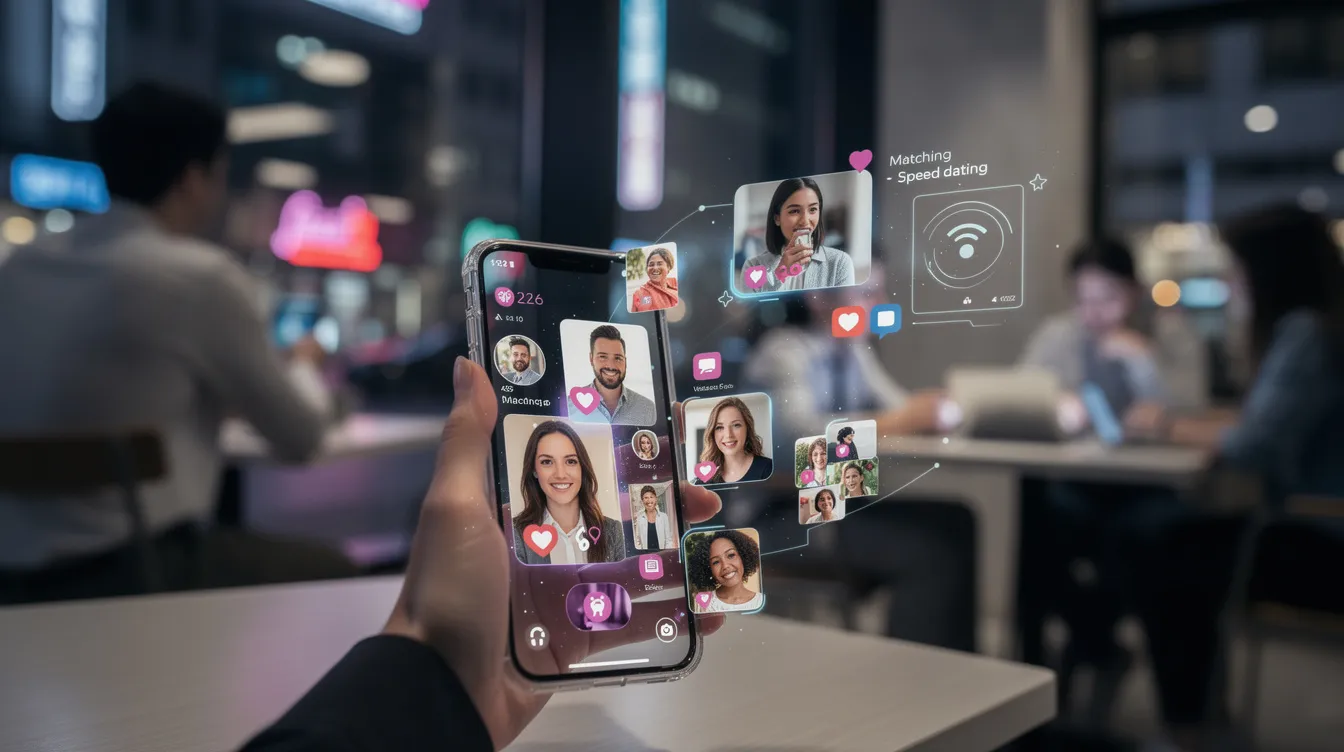
Users can easily download and access AI dating apps, many of which are free to sign up, such as Iris Dating. Iris Dating is free to sign up and start your journey. The team set out to create Iris to enhance the romantic matchmaking experience by leveraging AI technology to generate meaningful and magical moments, making the process more reliable and personalized. With AI dating apps, users can experience the excitement of a meaningful connection for the first time, making those rare and magical moments more accessible.
Dating apps now do far more than rank profiles. They predict compatibility before you match, generate personalized conversation openers, and even coach users through the awkward first-date phase. Iris Dating, for example, is designed to be user friendly and has a unique interface, as reported by users. According to a Match Group and Kinsey Institute survey, 26% of U.S. singles reported using artificial intelligence to improve their dating experiences—a 333% increase from the previous year. Additionally, 72% of users are open to using AI features for tasks like match recommendations.
These apps use AI to create more meaningful connections and help users find love by matching people who share interests and values. Iris Dating uses artificial intelligence to connect users with people who share their interests and values, aiming to create more meaningful connections by understanding mutual attraction between users. Iris AI is advanced artificial intelligence that predicts mutual attraction, learns user preferences, and increases the likelihood of meaningful connections. Iris Dating uses AI to learn users’ unique preferences for facial features and matches them with attractive singles who fit their taste. On average, men like up to 85% of the profiles that Iris recommends to them, and women like up to 55%. Iris Dating aims to create more magical moments in dating by using AI to remove chance from the equation.
This guide will show you how to use AI dating apps and tools like Jeter to find better matches, avoid burnout, and date more intentionally. Dating feels broken for most people right now. AI might be part of the fix—if you know how to use it correctly.

The Dating App Evolution: From Swipe Culture to Smart Matches
The world of online dating has changed dramatically in just a few short years. Where dating apps once relied on endless swiping and surface-level attraction, the rise of artificial intelligence has ushered in a new era of smart matches and genuine connections. Iris Dating is at the forefront of this evolution, using advanced AI technology to move beyond the swipe culture and focus on what really matters: mutual attraction and meaningful relationships.
Unlike other dating apps that treat AI as just another feature, iris Dating puts artificial intelligence at the heart of its matching system. The app is constantly working behind the scenes, learning from your unique preferences, analyzing facial features, and understanding your personality to connect you with attractive singles who truly fit your vibe. This means every match feels more intentional, and the chances of finding love are higher than ever.
One of the standout benefits of iris Dating is its commitment to authenticity and safety. Fake profiles and catfishing are a thing of the past thanks to the app’s AI-powered verification system, which is a top priority for the iris team. Users can focus on building real connections with real people, knowing that the system is designed to protect their experience and privacy.
Getting started is simple—just create a free account and you’ll instantly have access to a user-friendly interface that makes exploring potential matches easy and enjoyable. The AI-driven algorithm works to deliver your best matches, and if you’re looking for even faster matches or exclusive features, a premium subscription unlocks even more of what iris Dating’s technology has to offer.
But iris Dating isn’t just about matching profiles—it’s about creating those magical moments of attraction that can turn into lasting relationships. Whether you’re searching for a Valentine’s date tonight or hoping to build something long-term, iris Dating’s AI is designed to help you find love in a way that feels natural, safe, and tailored to your unique preferences.
In a world crowded with dating apps, iris Dating stands out as a breath of fresh air. Its innovative use of AI technology, focus on mutual attraction, and dedication to user safety make it the go-to app for anyone serious about finding a genuine connection. Download iris Dating today, create your free account, and discover how smart matches can lead to real-life romance and successful relationships.
How AI Dating Apps Actually Work (In Plain English)
You don’t need a computer science degree to understand what’s happening behind your swipes. Here’s the non-technical breakdown of how modern ai dating app systems operate.
Core components inside most dating apps include:
Matching algorithms trained on swipe, like, and message data. These systems learn which profiles you engage with and predict who you’ll find attractive based on patterns across millions of users. AI features provide users with better access to compatible matches and personalized communication, enhancing user engagement and control within the app.
Computer vision models that learn your preferences for facial features, photo styles, and even backgrounds. Apps like iris dating pioneered this approach, training AI to understand subtle attraction patterns from your behavior.
Natural language processing that analyzes bios, prompts, and chat tone. This technology reads between the lines to identify values, personality markers, and communication styles. Real-time language translation powered by AI also helps users connect across different cultures and languages, breaking down communication barriers.
The feedback loop is where it gets interesting. Every skip, every like, every message you send (or don’t send) fine-tunes your taste profile over days and weeks. On Day 1, you see generic recommendations. By Day 30, the system knows you consistently engage longer with profiles mentioning outdoor activities and spend twice as long viewing photos with dogs. To function effectively, dating apps collect vast amounts of sensitive personal data, which raises concerns about data privacy risks.
Legacy apps like early Tinder versions used AI quietly in the background to show “most relevant” profiles. Newer AI-first tools surface compatibility scores, generate openers, and suggest conversation topics explicitly. Jeter’s compatibility system takes a different approach—focusing on psychology-grounded questions about values and life goals rather than only analyzing swipes or photos.
Why Dating Feels Broken (And Where AI Can Really Help)
Swipe fatigue. Ghosting. Endless pen-pal chats that never convert to real life dates. Choice overload that makes every decision feel exhausting. These aren’t personal failures—they’re systemic problems with how online dating currently works.
The specific pain points:
- Choice paralysis from hundreds of potential match options in any urban area. Many users appreciate that AI can reduce choice paralysis by streamlining the matching process.
- First-message anxiety and running out of things to say after “hey”
- Unclear intentions creating misaligned expectations between casual and serious daters
- Time invested in conversations that go nowhere
Research shows that behavior-based matching can increase user retention by up to 40% because users spend less time filtering through bad matches. That’s the core promise of AI: doing the filtering work so you can focus on genuine connection.
How AI features address each problem:
For first-message anxiety, AI tools suggest personalized openers. If someone mentions loving hiking in the Blue Mountains, the system might suggest: “I see you’re a fan of the Blue Mountains! What’s the best hidden trail you’ve discovered there?”
For unclear intentions, compatibility tests surface relationship goals early. If one person definitely doesn’t want children and another is planning to have kids within three years, AI can flag this misalignment before emotional investment.
For detecting fake profiles and bots, platforms like Bumble deployed a “Deception Detector” that achieved a 45% reduction in spam and scam reports within two months.
AI dating apps also benefit from ongoing performance improvements and regular updates, which enhance user experience, app stability, and overall functionality.
The shift here is from chemistry-first swiping to compatibility-first filtering. If you want to go deeper on this concept, compatibility vs chemistry explains why pre-date assessment saves time and reduces burnout.

Attraction vs Compatibility: What AI Can (and Can’t) Predict
Two distinct concepts matter here, and conflating them causes problems:
Attraction is the instant pull when you see or message someone. It’s largely visual, visceral, and immediate. Compatibility is how well your lifestyles, values, and goals align over months and years. You can have one without the other.
Consider this scenario: You match with someone extremely attractive. Chemistry sparks immediately. Three weeks later, you discover they’re fundamentally misaligned with you on kids (they want four, you want none), money (they’re a spender, you’re a saver), and religion. Without compatibility filtering, you’ve invested significant emotional energy before discovering a dealbreaker.
Alternatively: You match with someone outside your typical type physically. Over conversation, you discover exceptional alignment on values, humor, communication style, and life direction. Attraction builds. This is the slow burn that often leads to successful relationships.
Attraction-first AI (like the iris dating app approach) learns what face shapes, hair colors, and photo compositions attract you from your swipes. It’s precise at predicting surface-level attraction but can’t assess whether you’ll still like each other in five years. AI often reduces nuanced human qualities and preferences into simplified bits of information, which can result in superficial matches that do not align with deeper desires. Users have noted that this can sometimes lead to matches that feel mismatched or lack genuine connection.
Compatibility-first AI tools like the Jeter Compatibility Test measure communication styles, conflict resolution patterns, and relationship timelines. Less flashy, but focused on what predicts long-term relationship success.
AI tries to make sense of mutual desire and preferences by analyzing patterns in user behavior and responses. However, its ability to understand the complex nature of human emotions and connections is limited, often leading to mismatches based on superficial qualities. Some users feel that the AI’s focus on these surface-level bits does not always align with their deeper preferences.
Neither type predicts the magical moment of in-person chemistry. AI should be framed as a filter for obvious incompatibilities—not an oracle of romantic destiny. For readers serious about long-term relationships, The modern compatibility test explores this distinction further.
Overcoming Attraction Anxiety in the Age of AI Dating
Attraction anxiety is a real challenge for many people navigating the world of online dating, especially as AI-powered dating apps like Iris Dating become more popular. The pressure to find the perfect match, fear of rejection, and uncertainty about whether mutual attraction will spark can make the process feel overwhelming. But with the right tools and approach, attraction anxiety doesn’t have to stand in the way of finding love.
Iris Dating is designed to help users overcome these hurdles by putting mutual attraction and genuine connection at the heart of the experience. Unlike other dating apps that treat AI as just a feature, Iris Dating’s artificial intelligence technology is constantly working behind the scenes to learn your unique preferences—including the facial features and interests that matter most to you. This means every match you see is tailored to your desires, increasing the chances of a magical moment and a successful relationship.
Getting started is simple: create a free account and explore the app’s user-friendly interface. Iris Dating’s AI tools make it easy to connect with attractive singles who share your interests, helping you move past the anxiety of endless swiping and uncertainty. The app’s top priority is your safety and security, using advanced AI technology to verify users and eliminate fake profiles, so you can focus on building real connections with real people.
For those looking for even more, a premium subscription unlocks faster matches, performance improvements, and exclusive features that enhance your dating journey. Whether you’re hoping to find a Valentine’s date tonight or searching for a long-term partner, Iris Dating’s AI is designed to help you chat, start conversations, and connect with like-minded individuals—no matter your age or preferences.
The Iris team is constantly working to improve the app, ensuring users always have access to the best matches and the latest technology. With Iris Dating, you can imagine a world where attraction anxiety is a thing of the past, and genuine connections are the norm. The app’s focus on mutual attraction, personalized recommendations, and a safe environment makes it the perfect platform for anyone ready to find love in the digital age.
Don’t let attraction anxiety hold you back. Download Iris Dating, create your free account, and take the first step toward a meaningful relationship. With advanced AI technology, a commitment to real people, and a user-friendly experience, Iris Dating is your gateway to finding love and building successful relationships—one magical moment at a time.
How to Use AI Dating Apps Without Losing Your Authenticity
The fear is real: if everyone uses AI, will everyone sound the same? Will conversations feel robotic? Will we lose what makes dating human? The use of AI to generate bios and messages creates an authenticity crisis, blurring the line between human and machine-created content. In fact, 64% of users would be bothered if they found out a match used AI to modify photos or draft prompts. While some AI-generated bios and prompts might sound cool at first, they can often come across as generic and lack the quirks that make profiles feel truly authentic.
Here’s how to use ai tools without becoming a bot yourself:
Best practices for authentic AI integration:
Use AI to brainstorm profile prompts, but always rewrite in your own voice. If AI suggests “I love adventure and trying new things” (generic), and you actually say things like “I’m obsessed with finding weird neighborhood restaurants and getting hilariously lost on hikes,” write that instead.
Let AI suggest first messages, but personalize with specific details. Instead of sending “I love hiking too!” (AI-generated), send “I noticed you summited five peaks this year—what was the most challenging? I’m still working up to anything above 4,000 feet” (personalized).
Avoid outsourcing emotional disclosures. Using AI for opening lines is fine. Using AI to write responses to “What hurt you in your last relationship?” reads as inauthentic and will kill genuine connection.
For some apps, AI is not just a feature but is central to the matchmaking process. This means artificial intelligence is at the core of how matches are made, enabling smarter, more personalized connections and mutual attraction predictions, rather than being a secondary option or add-on.
Example transformations:
Generic AI line: “Your profile caught my attention. I’d love to chat.” Authentic version: “The photo of you attempting to cook while your dog clearly judges you is extremely relatable. What were you even making? Lol, I’ve definitely burned my share of dinners trying to impress a date.”
Stiff AI bio: “I’m looking for someone who values communication and shared experiences.” Warmer edit: “I’m looking for someone who’ll text me about the weird thing that happened at work and actually wants to try that new Thai place on the corner together.”
Consider using AI as a coach—asking Jeter-style tools to analyze your dating patterns and clarify your non-negotiables before matching. AI should make you more intentional, not less yourself.
Compatibility Tests: The Secret Weapon Behind Smarter AI Dating
Compatibility tests are resurging in 2025-2026 because singles are exhausted by low-intent swiping and seeking more efficient, higher-intent dating. This isn’t your grandmother’s magazine quiz—it’s ai technology built on relationship psychology.
What modern AI-driven compatibility tests look like:
Adaptive questions where later items change based on your earlier answers. If you say “I want to get married within three years,” subsequent questions focus on marriage preferences rather than casual dating topics.
AI algorithms assess what users are interested in by analyzing profile information and responses, helping to match people based on genuine interests and improving overall match quality.
Scoring that weighs dealbreakers more heavily than minor preferences. “Definitely does not want children” carries more algorithmic weight than “prefers spontaneous trips to planned vacations.”
Predictive models trained on long-term relationship outcomes where data exists, identifying which compatibility dimensions most strongly predict relationship durability.
Jeter as a concrete example:
Jeter AI predicts compatibility using this framework. Tests can be taken solo (to clarify what you want) or with a partner (to compare scores before major commitments).
Specific question categories from resources like 100 compatibility questions for couples cover money, kids, conflict styles, and life goals.
The Love test guide helps singles clarify what they’re actually looking for before swiping.
AI ‘wingman’ tools now suggest personalized icebreakers based on shared interests, making it easier to start conversations with potential matches.
Practical guidance: take a compatibility test before committing to a new partner or moving in together. Why you should take a compatibility test before a first date explains the logic.

Real-World Use Cases: Using AI With Tinder, Bumble, Hinge & More
Most people won’t abandon mainstream dating apps entirely. Instead, they’ll layer AI tools on top to improve match quality on platforms they’re already using. Some platforms now use a pay-per-date model, where users pay a token to initiate a date, making the process more intentional and efficient.
A practical step-by-step flow using insights from using Jeter with Tinder/Bumble/Hinge:
First, clarify your values and dealbreakers via a compatibility or love test. Know what you actually want before you start swiping—not just your type, but your requirements for a real relationship.
Second, tune your profile photos and prompts to attract people who share your priorities. Instead of “Looking for something serious” (vague), write: “I’m looking for a partner to build something with—travel annually, support each other’s careers, eventually share a home. Financial transparency matters to me.”
Third, use AI to filter potential match candidates based on stated intentions and lifestyle. When evaluating profiles, apply compatibility filters: Does this person’s stated intentions align with mine? Do they mention values compatible with what I need? Many apps offer a premium subscription that unlocks additional AI features, faster matches, and exclusive functionalities for a better dating experience.

Specific examples:
For Hinge, an AI assistant could help rewrite “Love to travel” into “Planning a sabbatical trip to Southeast Asia in 2027 and want someone who gets excited about that kind of thing—even if you prefer the planning to the spontaneity.”
You might come across a guy whose profile stands out because he’s always pictured with his dog and describes himself as “the kind of guy who brings coffee to friends at 7am.” AI can help you spot these personality traits and decide if they match what you’re looking for.
For red flag identification, AI systems can recognize profile inconsistencies, photos that seem AI-generated (potential catfishing), and messaging patterns suggesting low investment.
These platforms are designed to connect users with real people, fostering trustworthy and meaningful relationships. For example, one user shared how she secured a Valentine’s date tonight thanks to the app—an outcome that is extremely rare in the world of online dating. This highlights how AI-driven matching can create those special, unexpected moments of genuine romantic connection that most people only hope for.
In dense urban markets with high swipe volume, AI filtering becomes exponentially more valuable. The 2026 guide to dating in cities explores city-specific dynamics. However, some users have expressed disappointment with the geographical spread of potential matches, noting that many recommended profiles are located far away.
Mainstream apps are also integrating advanced AI features. For instance, Tinder’s ‘Chemistry’ feature allows users to receive a curated ‘drop’ of high-quality matches based on AI-driven questions.
From Apps to Real Dates: AI, Speed Dating & Offline Connections
We’re in the anti-pen-pal era. Users are tired of talking for weeks and never meeting in person. The point of ai dating tools should be faster matches to real life connections. The ultimate aim is to foster genuine romance and create magical, real-life moments that go beyond transactional interactions.
How AI shortens the path from match to meeting:
Automated calendar coordination learns both users’ availabilities and suggests meeting times without endless back-and-forth texting.
Date idea suggestions based on mutual interest signals. If both profiles mention hiking and coffee, AI suggests “Morning hike near [location] followed by brunch.”
Guardrails against unsafe proposals—flagging suggestions of private locations for first dates, detecting potentially concerning messages.
AI-enhanced speed dating:
Jeter’s speed dating reimagined describes compatibility pre-matching before events. Instead of random timed rotations, AI strategically pairs people for conversations, dramatically increasing the likelihood of genuine connection. Post-event AI feedback helps users understand who showed the highest compatibility potential.
Concrete offline scenarios:
AI suggests conversation openers tailored to known compatibility gaps between you and your date—directly addressing potential friction points rather than generic small talk.
For nervous users, AI provides a conversation safety net: a short list of questions or topics to reference if blank-mind syndrome strikes.
One user shared, “Thanks to the app, I actually have a valentine’s date tonight—AI helped us coordinate plans and suggested a great spot, making it all feel effortless.” These real-life moments highlight how AI can turn online matches into meaningful offline experiences.
The goal is always more real-world connection, not endless optimized chatting. Meet quickly, let in-person chemistry do its work. However, over-reliance on AI for social cues and communication may hinder the development of organic social skills, so it’s important to balance technology with genuine human interaction.

Privacy, Bias & Ethics: The Hidden Risks of AI Dating Apps
Smarter AI means more powerful data collection—and more potential for misuse. Users should understand what they’re trading for convenience.
Key concerns:
Data collection goes deep: photos, chat logs, location, sexual orientation, relationship status, and behavioral patterns. The critical question: how long is this data stored? Is it anonymized or linked to your identity permanently? Is it sold to third parties?
Algorithmic bias is a documented problem. If past users on a platform swiped disproportionately on certain ethnicities, ages, or body types, the algorithm learns and potentially reinforces these patterns—encoding social biases into matching systems. According to AI ethics researchers, this systematization of bias can reduce visibility for marginalized groups without users even realizing it’s happening. AI can also reinforce societal stereotypes in match recommendations if trained on historical data that contains biases.
Deepfake and impersonation risks increase as AI becomes sophisticated enough to generate realistic images of people who don’t exist. Scammers can use deepfake technology to create convincing fake profiles and videos that are harder to detect. Reputable platforms are implementing identity verification and deepfake detection, but the technology arms race continues.
Practical safety tips:
Read privacy policies to understand what data is linked to you versus anonymized. Prefer services that explain their compatibility logic in human language rather than treating it as a black box.
Research the team and mission behind any AI dating product. About Jeter maintains transparency about its purpose and approach—a standard worth expecting from any platform handling intimate data.
Dating safely is a top priority for iris. iris uses an AI-powered system to verify users’ identities, ensuring that there are no fake profiles and no catfishing.
How Jeter Uses AI Differently (If You Want More Than Just Swipes)
Most ai dating app platforms center on photos and gamification of swiping. Jeter takes a fundamentally different approach. The team of data scientists and love experts is constantly working to improve the AI-driven matchmaking algorithm, ensuring ongoing innovation and better matches.
Jeter’s core philosophy:
AI as a tool for pre-date clarity and long-term compatibility—not just another other dating app optimizing for the next swipe. The focus is on values, conflict resolution styles, and life goals rather than pure mutual attraction prediction. Iris Dating’s AI, for example, learns from user interactions, such as liking or disliking profiles, to improve match quality over time.
Specific tools and resources:
Love test for intentional dating offers a playful but serious way to clarify your unique preferences and what you’re seeking.
Compatibility test works for both singles assessing what they need and couples evaluating relationship fit.
Modern compatibility test dives into long-term alignment factors.
Integration into your dating life:
Take a compatibility test, then update your profiles across other apps accordingly—making your Hinge, Bumble, or Tinder presence more intentional and attractive to aligned people.
Share compatibility insights with a serious prospect before making big commitments like moving in together or engagement.
For existing couples, use questions from 100 compatibility questions for couples before major financial decisions or cohabitation.
Future of AI Dating: What to Expect by 2030
Imagine a future where AI dating apps don’t just help you swipe, but truly understand your preferences and personality to find meaningful connections.
By 2030, AI dating tools will likely feel as normal as dating apps themselves felt by 2020. The question is how they’ll evolve.
Likely developments:
The future of dating with AI may involve a shift from traditional swiping to more personalized matchmaking experiences, where algorithms focus on deeper compatibility rather than surface-level attraction.
AI “relationship copilots” that don’t disappear after the first date—remaining integrated through early relationship stages, offering communication tips and conflict resolution suggestions.
Real-time compatibility analysis inside video calls, potentially reading facial expressions and conversational patterns (with significant privacy and consent implications).
Deeper integration with offline events: AI-curated small group dinners, meetups, and activities where attendees are pre-matched on compatibility clusters.
Benefits and risks:
Optimistic scenario: more efficient dating, fewer mismatched long-term commitments, better mental health outcomes from reduced rejection shock and more intentional interactions.
Risk scenario: over-optimization reducing serendipity, dependence on compatibility scores creating anxiety, reduced romantic agency and human intuition.
The critical framing: AI dating tools are tools, not oracles. They can highlight incompatibilities, surface high-probability best matches, and reduce friction. But humans ultimately decide whom to meet, whom to pursue, and whom to love. The most successful relationships will come from people who treat AI as an advisor, not a decision-maker.
If you want to be an early adopter of more intentional, AI-assisted dating, explore Jeter and its compatibility tests. Start with clarity about what you want—then let AI help you find it faster.
Key Takeaways
- AI dating apps in 2026 go far beyond simple swipe algorithms—they predict compatibility, generate openers, and coach users through dating
- Attraction-focused AI (learning visual preferences from swipes) is powerful but incomplete without compatibility assessment tools
- Compatibility tests like Jeter’s are critical for serious daters who want to avoid wasted time on misaligned matches
- Use AI to brainstorm and filter, but keep emotional disclosures and vulnerable conversations authentically human
- Privacy and bias concerns are real—research any platform’s data practices before sharing intimate information
- Readers can start today by taking a compatibility or love test, then updating profiles across dating apps with those insights
- The goal is always more real-world connection faster—not endless optimized digital chatting


