


Compatibility Test: How To Really Measure If You’re A Match
You’ve felt the butterflies, the late-night texts, and that pull when they walk into a room. But as anyone with relationship history will tell you, feelings alone don’t determine whether two people can build a life together. That’s where a compatibility test comes in.
This guide is for anyone in a relationship or considering one, who wants to understand if they and their partner are truly compatible. Understanding compatibility can help prevent future heartbreak and build stronger, more resilient relationships.
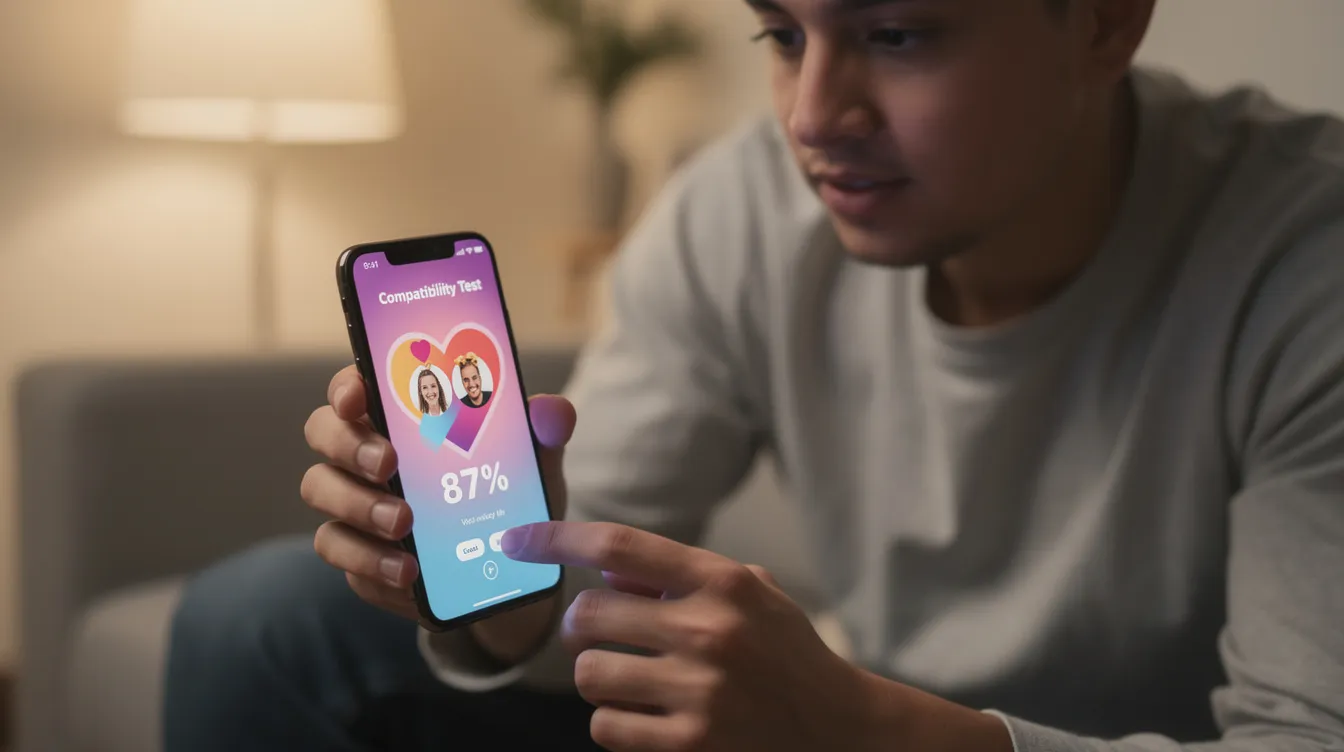
A compatibility test is designed to assess how well partners align in core areas like values, communication styles, goals, and personalities. Compatibility refers to how well-suited you and your partner are for a relationship, beyond just love.
A compatibility test is any tool—quiz, questionnaire, or structured conversation—designed to help you figure out how well you and another person align on the stuff that actually matters in everyday life: values, goals, communication styles, and how you handle conflict. These tests go beyond the initial spark of romance to explore whether you’re genuinely compatible for the long haul.
For further reading on relationship compatibility, the Gottman Institute provides extensive research and tools on relationship dynamics and communication styles (Gottman Institute). The American Psychological Association also offers insights into relationship health and compatibility (APA – Relationships). You can also explore how Jeter AI turns fun compatibility checks into real intentional dating, learn more about the compatibility test offered by Jeter, or check out the 100 compatibility questions for couples: the ultimate pre-commitment checklist.
Quick Answer: What a Compatibility Test Actually Tells You
In plain terms, a compatibility test helps you discover practical fit for daily life and future challenges, not just romantic chemistry. Think of it as a reality check beneath the surface of attraction.
Consider three concrete examples you’ll encounter online in 2026:
| Test Type | What It Does | What It Can’t Reveal |
|---|---|---|
| Fun 10-question quiz | Asks playful questions about date preferences and habits; yields a percentage match score | Blind to serious deal-breakers like wanting kids or financial values |
| Detailed 100-question worksheet | Partners answer independently on emotions, money, and life plans | Requires honesty; can’t predict how you’ll act under stress |
| Name-and-birth-date love compatibility calculator | Uses zodiac sign or numerology to generate a score | Entertainment only; no science behind predictions |
| This article focuses on practical, real-world compatibility checks rather than mystical tools alone. Whether you’re in a new relationship or preparing for marriage, you’ll find actionable insights here. Note that this post is current as of March 2026. | ||
| For scientific perspectives on compatibility and relationship success, check out research articles published in the Journal of Marriage and Family (JMF). To understand more about how a dating compatibility test works, visit Jeter AI’s explanation. |
What Does Compatibility Really Mean in a Relationship?
Compatibility is how well two people’s personalities, goals, habits, and values work together in daily life. It’s the difference between a partnership that flows and one where you’re constantly stuck in painful friction.
Love and compatibility aren’t the same thing. Love is about feelings—the chemistry and attraction that make you fall for someone. Compatibility is about shared direction: do you both want kids? How do you handle money? What happens when you argue?
Here are the key dimensions of compatibility:
- Core values: Honesty, family priority, ambition, faith
- Life plans: Kids, career trajectory, where to live
- Money attitudes: Spending vs. saving, comfort with debt
- Conflict style: Do you talk things out or shut down?
- Emotional needs: How each person feels supported and loved
Consider two people deeply in love but split on having children. One partner can’t imagine life without kids; the other feels just as strongly opposed. Research shows child-desire discord predicts a 45% higher breakup rate (Source: Psychology Today). Compatibility isn’t about being identical—it’s about being able to form a team without chronic, unresolvable friction.

Types of Compatibility Tests You’ll See Online in 2026
The world of compatibility testing has expanded dramatically. You’ll find playful quizzes, structured questionnaires, and astrology-based calculators, each serving a different purpose.
Short partner quizzes (10-20 questions) ask about daily habits, communication, and future hopes. These are fun conversation starters but tend to scratch only the surface.
In-depth questionnaires (50-100 questions) are what serious couples explore before or during a relationship. They probe deal-breakers around kids, finances, sex, and values. Frameworks like the Enneagram (The Enneagram Institute) or 5 Love Languages (5 Love Languages) form the basis for many of these.
Name-and-birth-date calculators use numerology or your zodiac sign to generate a match percentage. Visit any astrology website and you can input birth details to see scores like “Aries-Leo: 92% passion, low on compromise.” These tools offer entertainment and reflective prompts, but science dismisses astrological predictors—correlations are no better than random guess (Scientific American article on astrology).
Some tests are built for early dating and crushes. Others are designed for pre-marital checks, helping couples preparing for marriage address significant differences before they become problems.
Learn more about the science and approach behind compatibility testing at Jeter AI’s About page.
Core Areas Every Serious Compatibility Test Should Cover
A thorough compatibility test touches multiple concrete life domains—not just “Are you in love?”
Here’s what matters:
Communication and conflict
- How do you argue? Do you raise your voice or go silent?
- How do you apologize and repair after a fight?
- Can you talk about hard stuff without shutting down?
Values and beliefs
- Religious practice and expectations
- Political views that affect everyday decisions
- Ethical stances on key issues
Lifestyle
- Sleep schedules (night owl vs. early riser)
- Cleanliness standards
- Social life—how often you want to spend time with friends
Money and career
- Saving vs. spending habits
- Comfort with debt for travel, education, or food
- Work hours and career ambition through the 2030s
Family and children
- Desire for kids and timeline
- Parenting style: strict or permissive?
- In-law involvement and holiday dynamics
Intimacy and emotional connection
- Affection and sex frequency preferences
- Love languages (words, quality time, acts of service, gifts, physical touch)
- How you support each other during stress
Any quiz or test worth taking should include at least one clear question in each domain.
How To Create Your Own 50–100 Question Compatibility Test
Couples can create their own test tailored to their real lives. This works especially well when you want more accurate insights than generic quizzes provide.
Start with deal-breakers
Before anything else, each partner should separately list non-negotiables. These might include:
- Hard drug use
- Refusal to work
- Strict religious expectations one person can’t accept
- Never wanting children (or insisting on them)
Write specific questions
Vague questions get vague answers. Instead of “Do you like spending time together?”, ask:
“How many nights per week do you want us home together as opposed to out with friends or working late?”
Sample question cluster (showing tone and specificity):
- Rank your top three values: family, career, adventure, or security.
- How do you prefer apologies: verbal acknowledgment or actions that prove change?
- What percentage of income should go to savings each month?
- What’s your view on co-sleeping with future kids?
- How do you react when your partner wants to travel solo?
- How should we split holidays between families?
- What kind of support do you need during job loss or illness?
Keep questions neutral. There shouldn’t be a “right” answer—that just encourages people to please rather than be honest.

Using Online Quizzes and Love Calculators Wisely
By 2026, quick quizzes and astrological love calculators are everywhere. The hashtag #LoveCalculator had over 1.2 billion TikTok views by this year, and every dating app seems to offer some form of match score.
Here’s how to use them without losing sense:
- Treat zodiac or numerology results as conversation starters, not fate. If a calculator says you and your crush are a 78% match based on Venus signs, use that as a prompt: “This says we might differ on independence—what does space look like for you in a relationship?”
- Look for tools that explain their scores, not just a percentage. A quiz that says “You scored low on conflict resolution—here’s why” is far more useful than a bare “65% compatible.”
- Recognize what these tools can’t do. No app or website can replace professional counseling if you’re dealing with abuse, addiction, or repeated betrayal. If you’re stuck on serious issues, wait and get help from someone qualified.
The funny thing about these tests is they often reveal more through the conversation they spark than the answer they provide.
How To Talk About Compatibility Test Results With Your Partner
How you discuss results reveals as much about compatibility as the answers themselves.
Set the right context
Schedule a calm, private time—a weekend afternoon without distractions, not after a long day at work or right before bed. This isn’t a quiz you rush through like picking movies or deciding on food.
Use curiosity, not blame
Try “I” statements:
“I was surprised by your answer about money—can you tell me more?”
Avoid interrogation. Your partner isn’t on trial.
Focus on patterns
Don’t nitpick every question. Look for themes:
- Are you both avoiding conflict?
- Does one person want kids urgently while the other is unsure?
- Do your spending habits comment on deeper differences in security needs?
Agree on next steps
For major differences, decide together: more conversations? A compromise idea? Consulting a therapist when stakes are high? The American Association for Marriage and Family Therapy offers resources on finding therapists (AAMFT).
Disagreement is normal. The key is whether you can negotiate and respect each other’s needs. Research shows that 65% of workable mismatches resolve through empathy and willingness to adapt (Source: Harvard Business Review).
Limitations of Compatibility Tests and What They Can’t Predict
No quiz, worksheet, or calculator can guarantee a successful—or failed—relationship. That’s simply impossible.
Here’s why:
- People change. Job loss, illness, relocation, and kids alter dynamics over years. A perfect score today doesn’t mean you’ll stay aligned forever.
- Tests rely on honesty. If someone answers aspirationally (“I want to be a morning person”) instead of truthfully (“I’m a night owl”), results skew.
- Skills matter more than alignment. Communication, empathy, and willingness to repair after conflict often outweigh “perfect” initial compatibility. Gottman’s research shows a 5:1 ratio of positive to negative interactions predicts thriving relationships (Gottman Institute Research).
- Scores can be weaponized. Using results to control or threaten a partner (“This test says we’re only 40%, so you need to change”) is a red flag, not a solution.
Position compatibility tests as tools for insights and conversation, not final verdicts on whether your relationship is “meant to be” by the universe.

Next Steps: Turning Test Insights Into Real-Life Action
Compatibility isn’t about finding a perfect match on paper. It’s about using what you discover to build something real together.
Here are three concrete follow-ups:
- Schedule a “relationship planning” date. Set aside time to explore your answers and what they mean for your future. Don’t just watch and wait—act on what you learn.
- Update your compatibility list yearly. Life changes. Revisit your priorities after big events like a move, new job, or having kids.
- Use questions early, not late. If you’re single with a crush, begin exploring compatibility before committing deeply. It’s easier to address differences when you’re not already years into a marriage with a husband or wife and wondering why you never talked about this stuff.
For couples planning marriage, consider pre-marital counseling and bring your test answers as a starting point. Studies show this boosts success rates by 31% (Source: Journal of Family Psychology).
Readers, here’s what matters most: compatibility is an ongoing process you revisit over time, not a one-time score. The hope isn’t to find someone with whom you’ll never disagree—it’s to find a person who’ll work through differences with you, year after year.


