


Introduction: Who This Guide Is For and Why It Matters
This guide is for anyone navigating modern dating, whether you’re new to dating or returning after a break. In today’s fast-paced world of endless options and digital connections, understanding the difference between compatibility vs chemistry is crucial for building healthy, lasting relationships. Many people find themselves exhausted by the cycle of dating, meeting countless potential partners, and then realizing fundamental differences too late. This is where compatibility vs chemistry comes into play: by engaging in thoughtful pre-date compatibility assessment, you can save time, reduce emotional burnout, and increase your chances of finding a truly compatible partner.
We cover the difference between compatibility and chemistry, why compatibility matters, and practical steps for pre-date assessment. Understanding compatibility vs chemistry can help you avoid dating burnout and build healthier relationships.
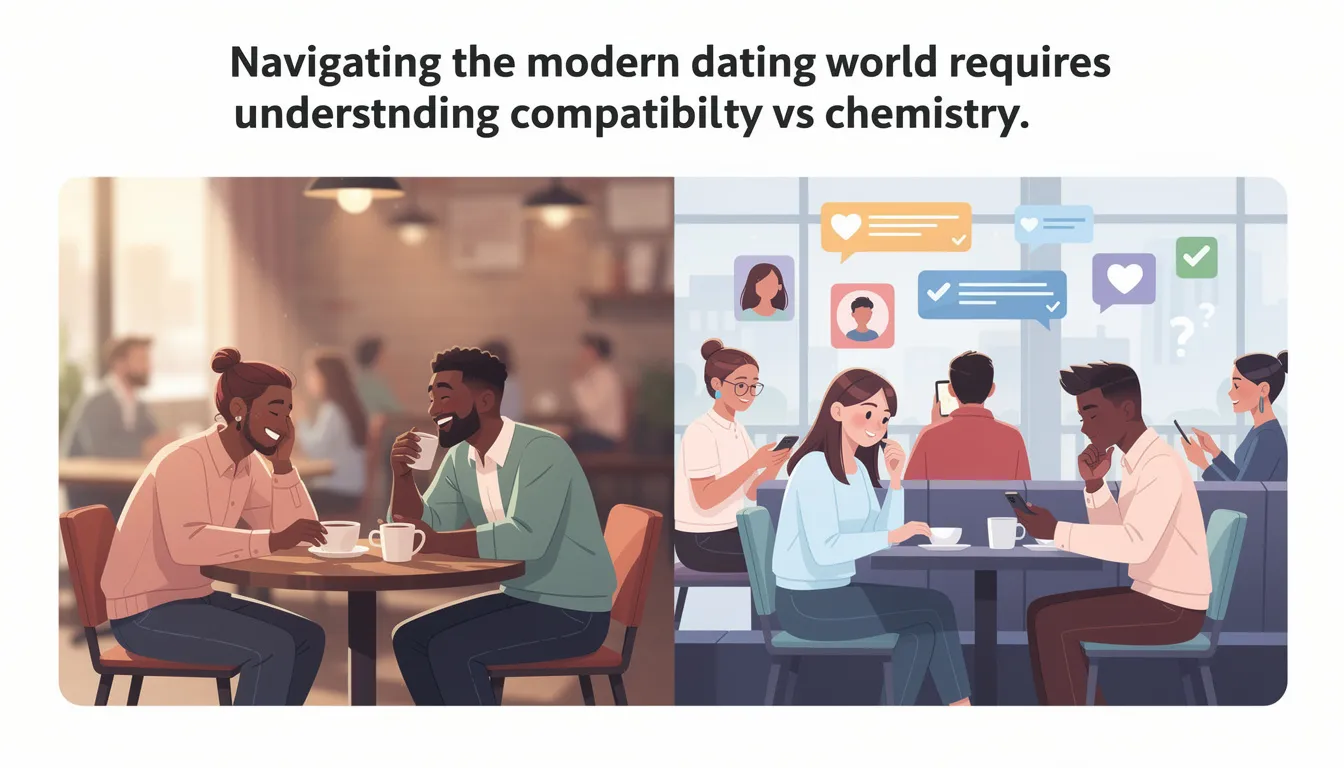
Why does this topic matter? Compatibility determines how well two people function in real life, covering critical areas like financial habits, parenting styles, faith, and conflict resolution. Compatibility is the steady, harmonious alignment of values, life goals, and lifestyles that allows a relationship to last. Compatibility in relationships is about the willingness to relate to partners with equality and respect, rather than being alike. People often misunderstand compatibility by assuming that closeness equals sameness, when it actually involves respect and equality.
For many, work-life balance is essentially dead—leaving people too tired or too broke to even consider engaging in dating activities. The lack of balance in today’s society has made it harder than ever to invest energy and resources into finding a meaningful connection, making pre-date compatibility assessment even more valuable.
This comprehensive guide explores how to assess compatibility before meeting someone, the importance of compatibility screening before dating, and practical pre-date compatibility questions you can use to evaluate potential matches. We’ll dive deep into the crucial distinction between compatibility vs chemistry in dating, explain why compatibility matters more than attraction, and share effective strategies for checking compatibility before going on a date. Assessing compatibility before dating also helps you attract partners who are more likely to be a good long-term fit. Whether you’re new to dating or returning after a break, understanding compatibility early on can transform your experience and lead to healthier, more fulfilling relationships.
Why Compatibility Matters More Than Attraction
It’s easy to be swept away by chemistry—the immediate attraction, the butterflies, the magnetic pull toward someone new. But chemistry alone is often fleeting, driven by neurochemical highs that can mask deeper incompatibilities. Compatibility, on the other hand, is the foundation for lasting connection. It encompasses shared values, aligned life goals, communication styles, and emotional maturity.
As mentioned by relationship experts and supported by research from sources such as the American Psychological Association, compatibility matters more than attraction when it comes to long-term relationship success. Chemistry may ignite the flame, but compatibility keeps it burning steadily. Without compatibility, relationships can become a rollercoaster of highs and lows, leading to frustration, conflict, and eventual burnout.
The idea that chemistry is all you need often overshadows the importance of compatibility. People’s ideas about what makes a good relationship can influence whether they focus on fleeting attraction or seek deeper, more sustainable connections. Understanding why compatibility matters more than attraction helps shift your dating focus from momentary excitement to sustainable connection. This mindset is essential for anyone looking to avoid wasting time on incompatible dates and build meaningful partnerships.
People often misunderstand compatibility by assuming that closeness equals sameness, when in reality, compatibility is about respect and equality.
To better understand how these two forces interact, let’s explore the distinction between compatibility and chemistry in dating.
Compatibility vs Chemistry in Dating: Finding the Balance
Understanding the difference between compatibility and chemistry is essential for anyone seeking a healthy, lasting relationship. Both are necessary, but they play different roles in romantic connections.
Definitions: What Are Chemistry and Compatibility?
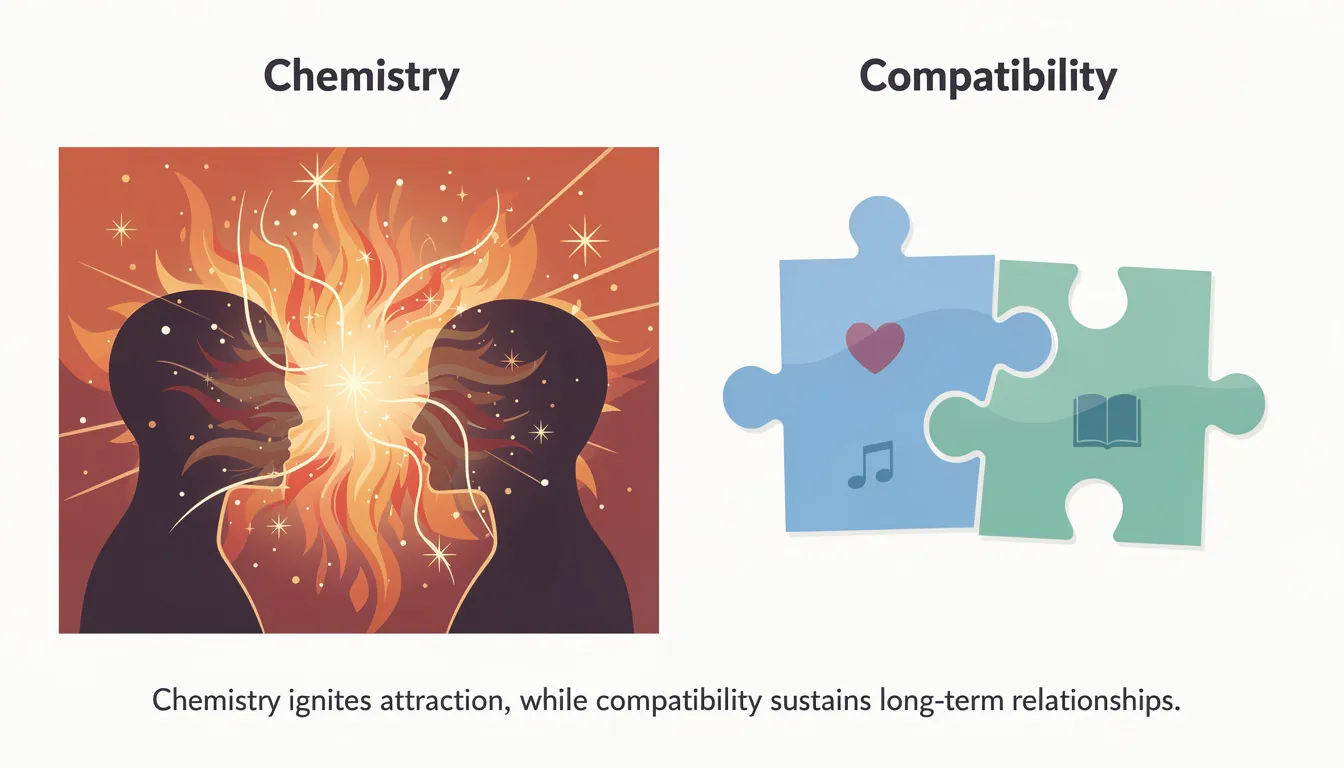
- Chemistry is the, often fleeting, “spark” or physical/emotional pull that brings two people together. It is the intense, visceral “spark” of attraction, passion, and excitement that draws people together. In romantic relationships, chemistry is the emotional “spark” that pulls you in. High chemistry is often driven by a biological rush of dopamine and serotonin. Chemistry is often immediate, sometimes fleeting, and can lead to overlooking red flags. Chemistry ignites the connection, whereas compatibility sustains it long-term. Chemistry initiates the relationship and drives passion, but cannot sustain a relationship alone. Without compatibility, high-chemistry relationships often become volatile or unsustainable.
- Compatibility is the steady, harmonious alignment of values, life goals, and lifestyles that allows a relationship to last. Compatibility determines how well two people function in real life, covering critical areas like financial habits, parenting styles, faith, and conflict resolution. Compatibility in relationships is about the willingness to relate to partners with equality and respect, rather than being alike. People often misunderstand compatibility by assuming that closeness equals sameness, when it actually involves respect and equality.
Comparison Table: Chemistry vs Compatibility
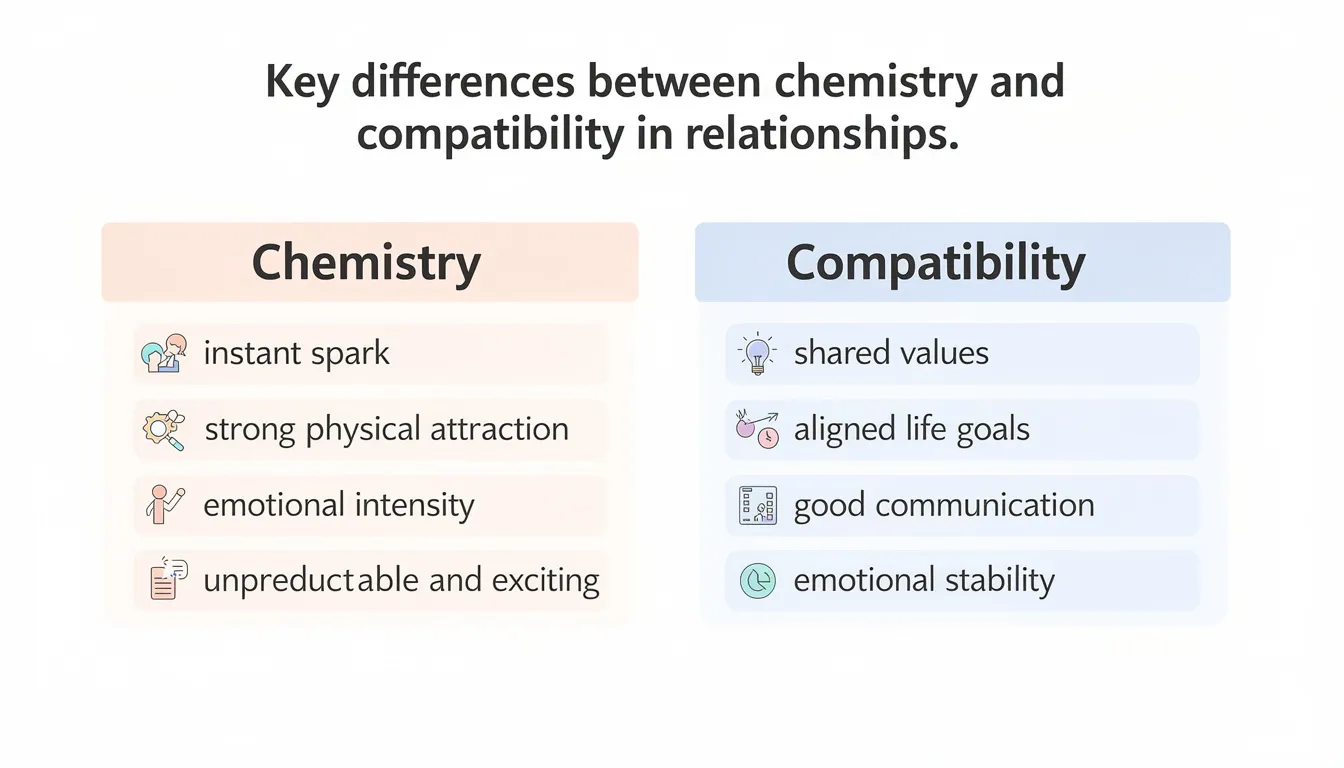
| Aspect | Chemistry | Compatibility |
|---|---|---|
| Definition | The intense, visceral “spark” of attraction, passion, and excitement | The steady, harmonious alignment of values, life goals, and lifestyles |
| Role in Relationship | Ignites the connection and desire to connect; initiates passion | Sustains the relationship long-term; provides stability and harmony |
| Duration | Often immediate and sometimes fleeting | Develops over time and endures |
| Driven by | Biological rush of dopamine and serotonin | Shared values, mutual respect, and aligned life priorities |
| Risks | Can lead to overlooking red flags; alone, may result in volatile or toxic dynamics | Alone, may feel boring or unfulfilling |
| Importance | Necessary for excitement and intimacy | Necessary for long-term success and real-life functioning |
| Relationship Outcome | Chemistry alone can lead to toxic or unstable relationships | Compatibility alone can lead to safe but passionless relationships |
| Ideal | Both chemistry and compatibility are necessary for a successful relationship; finding a balance is essential | |
| Key Facts: |
- Chemistry and compatibility are both necessary for a successful romantic relationship.
- Finding a balance between chemistry and compatibility is essential for a healthy relationship.
- Chemistry ignites the connection, whereas compatibility sustains it long-term.
- Chemistry initiates the relationship and drives passion, but cannot sustain a relationship alone.
- Without compatibility, high-chemistry relationships often become volatile or unsustainable.
- Compatibility determines how well two people function in real life, covering critical areas like financial habits, parenting styles, faith, and conflict resolution.
- A relationship with only compatibility can become boring and unfulfilling.
- A relationship with only chemistry can lead to a toxic dynamic over time.

Types of Relationship Dynamics
- Chemistry without compatibility: Can lead to intense but unstable relationships. Chemistry is the intense, visceral “spark” of attraction, passion, and excitement that draws people together. Sometimes, the pursuit of sex can be a red flag if it overshadows genuine compatibility, leading to manipulative or superficial intentions and relationships that often burn out quickly or become tumultuous.
- Compatibility without chemistry: May result in safe but unfulfilling partnerships, sometimes described as “very close friendships” or “sexless marriages.” Without chemistry, a relationship may feel more like a friendship or business arrangement.
- The goal is to find a balance: Where both elements coexist, creating a relationship that is both exciting and sustainable—a sweet spot that combines attraction with shared values and mutual respect.
Now that we’ve clarified the difference, let’s look at how you can assess compatibility before meeting someone.
Understanding Compatibility
Understanding compatibility is at the heart of successful modern dating and the foundation of any long-term relationship. In the world of dating advice, compatibility is sometimes overshadowed by the excitement of chemistry, but in reality, it’s the ability of two people to coexist, support, and grow together that leads to a truly healthy partnership.
Compatibility is about more than just sharing hobbies or having similar tastes—it’s rooted in mutual respect, similar values, and a shared vision for life. When two people are compatible, they find a “sweet spot” where their personalities, goals, and lifestyles align in a way that feels natural and supportive. This sweet spot is what allows a relationship to thrive, even when faced with the inevitable ups and downs of human life.
In modern dating, the idea of compatibility is more important than ever. With so many options and so much advice available, it’s easy to get caught up in the search for the perfect match or the most intense chemistry. But true compatibility is about finding someone with whom you can build a real partnership—someone who respects your individuality, shares your core values, and is willing to compromise and work through challenges together.
For women, compatibility often means seeking a partner who values communication, trust, and emotional support. But men also play a crucial role in creating a compatible relationship, bringing their own strengths and willingness to listen, adapt, and compromise. When both partners are committed to mutual respect and understanding, the relationship becomes a safe space where intimacy and connection can flourish.
Attraction is certainly a part of the equation, but compatibility is what makes that attraction last. It’s the sense of ease and comfort you feel when you’re with someone who truly “gets” you—the ability to talk openly, support each other’s dreams, and walk through life’s challenges side by side. This is what leads to a partnership that feels both exciting and secure.
Ultimately, compatibility is the key to building a relationship that stands the test of time. It requires effort, self-awareness, and a willingness to grow together. By focusing on compatibility—rather than just chemistry or surface-level attraction—you set the stage for a relationship built on trust, respect, and genuine connection. In the ever-changing world of modern dating, prioritizing compatibility is the best advice for anyone hoping to find a partnership that is not only passionate, but truly lasting.
With this foundational understanding, let’s move into practical ways to assess compatibility before meeting someone.
Human Life and Relationships
Assessing Compatibility from Online Conversation
How to evaluate compatibility from online conversation is an art that requires attention to subtle cues and meaningful exchanges. Pay attention to:
- Communication style: Is the person respectful, clear, and open? Do they listen and respond thoughtfully? Healthy communication is a cornerstone of compatibility, which is revealed not just through words, but through the substance and intent behind the conversation.
- Shared interests and values: Do your conversations reveal common ground beyond surface-level topics? Aligning on similar values and life priorities is critical.
- Emotional intelligence: Are they empathetic and able to handle disagreements calmly? Emotional maturity often predicts relationship longevity.
- Deal breakers: Are there any red flags or incompatible views emerging? Early identification of deal breakers saves time and emotional energy.
Compatibility Screening Before Dating Apps
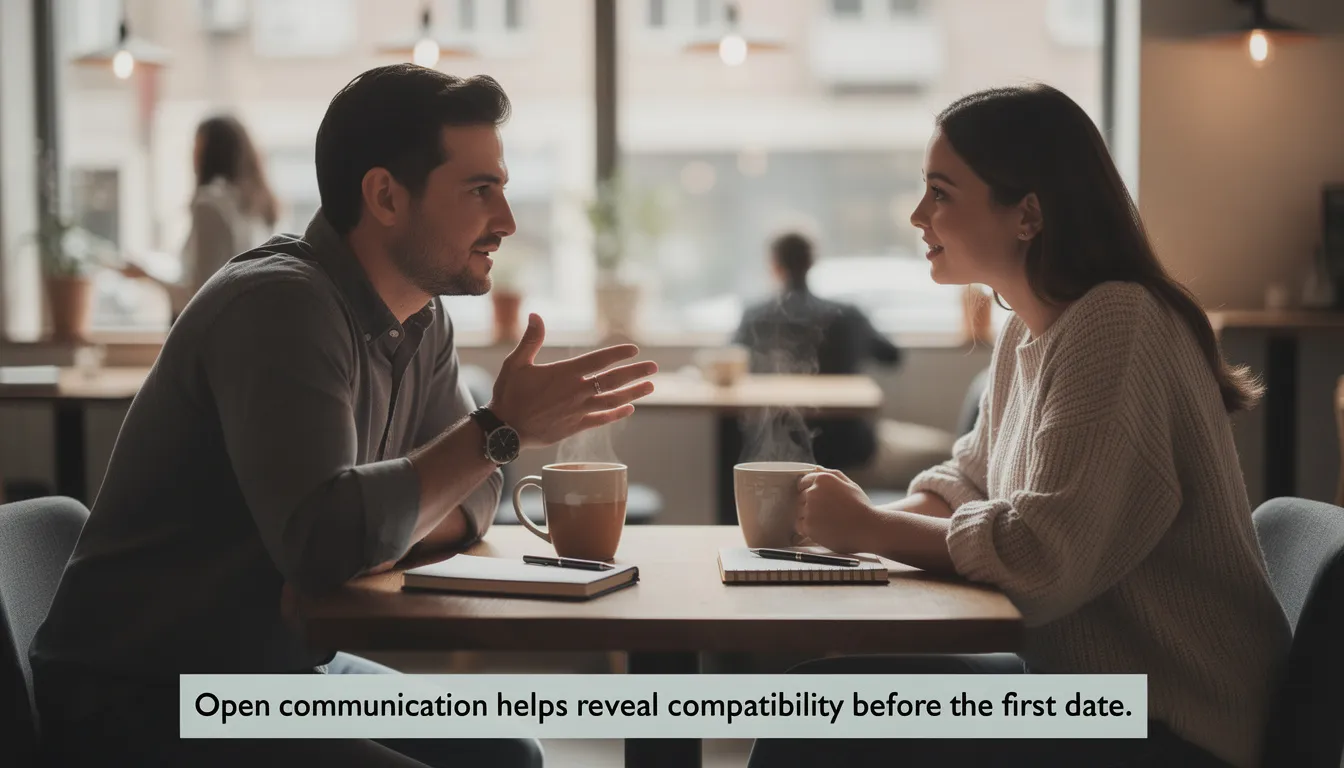
Many dating apps now offer compatibility screening before dating features—quizzes, personality tests, and algorithmic matching based on values and preferences. Utilize these tools to filter potential matches before investing in a date. These screenings can highlight compatibility red flags before first date and help you focus on prospects who align with your relationship goals. Popular platforms with such features include OkCupid, eHarmony, and Match.com.
Leveraging AI for Compatibility Assessment: How Jeter.ai Works
Incorporating technology into your dating journey can enhance your ability to assess compatibility before the first date. Whether you’re dating in a dense urban environment or a smaller city, resources like a complete guide to dating in cities in 2026 can help you navigate local dynamics, while platforms like Jeter.ai use advanced artificial intelligence to analyze your dating conversations and provide insights into compatibility factors.
Jeter.ai works by analyzing your chat interactions with potential matches, evaluating communication patterns, emotional tone, and shared values. The AI identifies areas of alignment and potential red flags, helping you make informed decisions about whether to pursue a date. This approach saves time and emotional energy by filtering out incompatible matches early.
By integrating AI-driven compatibility assessment tools like Jeter.ai into your dating process, you can supplement your intuition and traditional screening methods with data-backed insights. This technology empowers you to focus on connections that have a higher likelihood of success, reducing dating burnout and increasing the chances of finding a meaningful relationship.
Pre-Date Compatibility Questions
Having a set of compatibility questions to ask before dating can clarify core areas such as:
- Relationship goals (e.g., casual vs committed)
- Views on family and children
- Lifestyle preferences (e.g., social habits, financial attitudes)
- Core values and ethics
- Deal breakers and non-negotiables
These questions don’t have to be formal or intrusive but can be woven naturally into conversations to gauge alignment. For example, you might ask: “What does a fulfilling relationship look like to you?” or “How do you approach conflict in relationships?”
Signs of Compatibility Before You Meet
Some signs to look for include:
- Consistent and timely communication that shows genuine interest
- Alignment on major life priorities and deal breakers
- Comfortable and respectful online interaction that makes you feel safe and valued
- Mutual respect and curiosity about each other’s lives and opinions
Before moving forward, take a moment to reflect on your feelings and compatibility to ensure you’re making the right decision.
Now that you know how to assess compatibility before meeting, let’s explore the red flags to watch for.
Compatibility Red Flags Before First Date: What to Watch For
Knowing compatibility red flags before first date can protect you from investing in relationships that won’t work. Watch out for:
- Inconsistent or disrespectful communication, such as ignoring messages or dismissive replies
- Misaligned relationship goals or timelines, like differing desires for commitment or children
- Fundamental differences in values or lifestyle that cannot be reconciled
- Avoidance of important topics or vagueness about intentions, which may indicate lack of transparency
- Patterns of dishonesty, manipulation, or controlling behavior
Many people worry about ending up with the ‘wrong’ partner, but it’s important not to convince yourself to overlook clear signs of incompatibility.
Spotting these early allows you to move on quickly and preserve your emotional energy, avoiding the frustration of incompatible dates.
Next, let’s create a toolkit to help you stay focused and intentional in your dating journey.
Dating Compatibility Checklist Before Meeting: Your Pre-Date Toolkit
Creating a dating compatibility checklist before meeting helps you stay focused and intentional. Find ways to assess compatibility that align with your values and vision for the future. Your checklist might include:
- Agreement on relationship goals (e.g., monogamy, marriage, children) and alignment on future plans or long-term aspirations
- Similar core values and ethics that guide daily life and decisions
- Compatible lifestyle choices (e.g., social habits, finances, work-life balance)
- Emotional maturity and effective communication skills
- Absence of major red flags or deal breakers
Use this checklist as a guide when evaluating potential dates, either during online conversations or brief phone calls. This proactive approach to compatibility screening before dating can significantly reduce wasted time.
With your toolkit in hand, let’s look at practical tips for knowing if someone is compatible before the first date.
How to Know if Someone Is Compatible Before First Date: Practical Tips
- Schedule a phone or video call: Hearing their voice and tone can reveal much about their personality and emotional availability. It also offers a chance to assess chemistry alongside compatibility.
- Discuss deal breakers early: Don’t shy away from important topics like desire for children, religion, or lifestyle preferences. Early transparency builds trust.
- Observe their responsiveness: Are they engaged and interested, or do they seem distracted or disinterested? Responsiveness often reflects genuine interest.
- Trust your intuition: Sometimes, subtle cues in conversation can signal compatibility or lack thereof. Your gut feelings matter.
- Ask open-ended compatibility questions: Use these to understand their perspectives and values.
- Imagine what a future with this person might look like: Visualize spending time together, sharing experiences, and how your lives could fit together. This can help you gauge both chemistry and compatibility.
- Don’t expect perfection: Be open to discovering compatibility over time, rather than assuming everything must align immediately.
If you want to avoid wasting time on incompatible dates, the next section will show you how.
How to Avoid Wasting Time on Incompatible Dates
Dating can be time-consuming and emotionally draining, and many people are struggling with dating fatigue. However, with intentional pre-date compatibility assessment, you can avoid much of this strain. Here’s how:
- Prioritize quality over quantity: Focus on fewer, better-matched prospects rather than many superficial connections.
- Set clear boundaries and standards: Know your non-negotiables and stick to them firmly.
- Use compatibility screening tools and questions early in the process.
- Be honest and direct about your intentions to avoid misunderstandings.
- Reflect on past dating patterns to identify what works and what doesn’t, learning from experience.
- Don’t let others’ opinions dictate your dating choices—trust your own judgment and values.
By adopting these strategies, you can streamline your dating life and increase your chances of finding a compatible partner.
Let’s go beyond the basics and explore additional ways to determine compatibility early.
Ways to Determine Compatibility Early: Beyond the Basics
Shared Conflict Resolution Styles
- Shared conflict resolution styles: How do you both handle disagreements? Compatible partners tend to have complementary approaches.
Emotional Availability
- Emotional availability: Are both partners willing to be vulnerable and supportive?
Support Systems
- Support systems: How do your social circles and family dynamics align? Friends play a significant role in shaping relationship dynamics, as they can influence how you connect and interact as a couple.
Growth Mindset
- Growth mindset: Are you both open to evolving individually and as a couple? Flexibility is key to long-term compatibility.
Open Communication
- Ability to talk openly about difficult topics without defensiveness.
Interesting Conversations and Unique Traits
- Interesting conversations and unique traits: Having interesting hobbies, perspectives, or life experiences can make interactions more engaging and help deepen compatibility.
Exploring these dimensions before meeting can deepen your assessment and help you avoid surprises later.
Next, let’s discuss the importance of self-awareness in compatibility assessment.
The Role of Self-Awareness in Compatibility Assessment
Identifying Core Values
- Identify your core values, needs, and deal breakers.
Recognizing Emotional Triggers
- Recognize your emotional triggers and patterns in past relationships. Understanding your triggers can help you identify what you really want in a partner.
Clarifying Relationship Needs
- Clarify what kind of partner and relationship will truly support your growth and happiness.
When you know yourself, you can better assess compatibility before meeting someone and avoid investing in relationships that don’t align with your authentic self. Taking responsibility for your own needs and responses in relationships is essential for building healthy compatibility and mutual understanding.
With a clear sense of self, you can now approach compatibility screening with greater confidence.
Integrating Compatibility Screening into Modern Dating
In today’s digital dating landscape, compatibility screening before dating is more accessible than ever. Many platforms incorporate personality tests and matching algorithms designed to highlight compatibility factors. These tools can help define your relationship priorities by clarifying what traits and values matter most to you. While these tools are helpful, they should complement—not replace—your personal assessment.
Use them as a starting point to identify promising matches, then apply your own compatibility questions and observations to confirm alignment. Combining technology with intentional human judgment creates a powerful approach to finding compatible partners, especially when you face the reality of compatibility rather than idealized expectations.
As technology continues to shape relationships, let’s examine its broader impact on dating and intimacy.
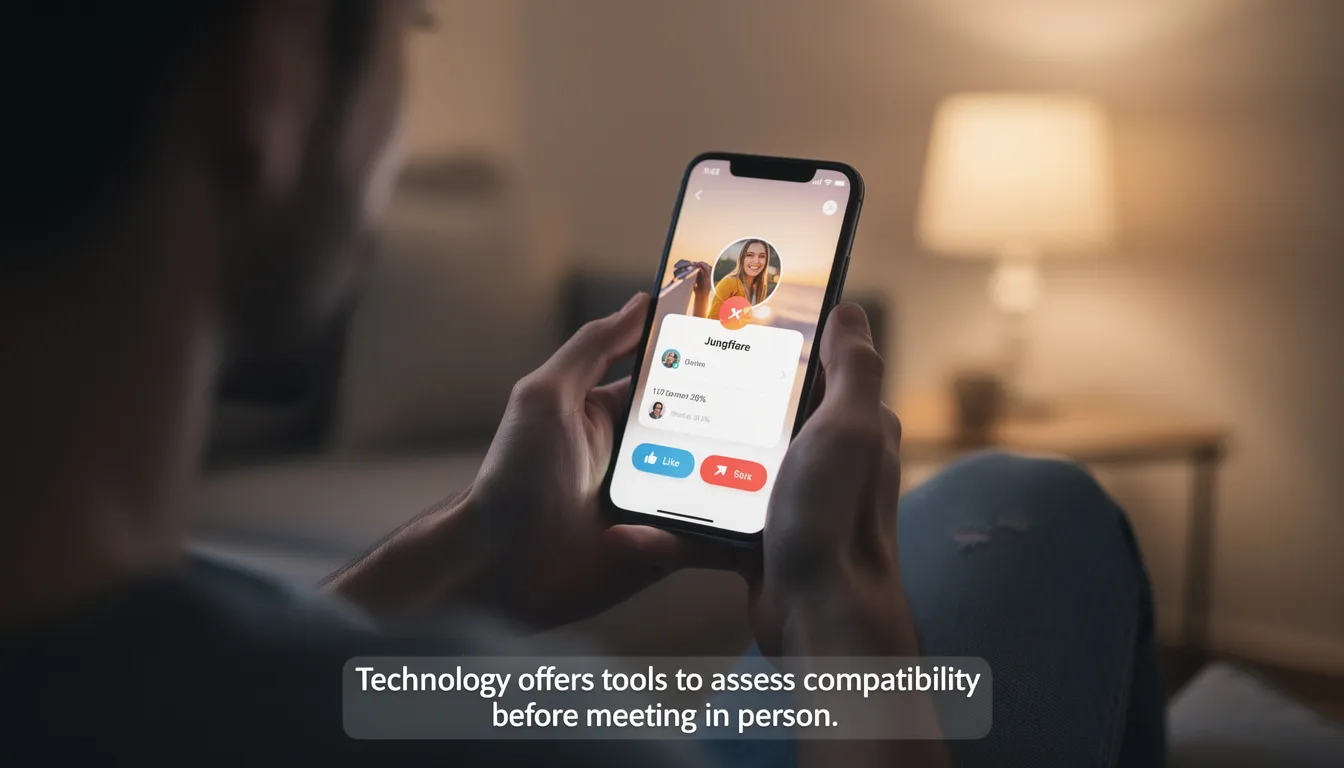
The Impact of Technology on Relationships
Technology has dramatically reshaped the landscape of modern dating, influencing how people connect, communicate, and build intimacy. Dating apps and social media platforms have made it easier than ever to meet new people, expanding the pool of potential partners far beyond what was possible in the past. This increased accessibility can lead to exciting opportunities, but it also introduces new challenges.
One of the most significant effects of technology on relationships is the “paradox of choice.” With so many options at our fingertips, it’s easy to feel overwhelmed or hesitant to commit to one person, always wondering if someone better might be just a swipe away. This abundance can sometimes make dating feel transactional, leading to a culture of disposability where connections are quickly formed and just as quickly abandoned.
While technology can facilitate communication and help people stay connected, it can also hinder the development of deep, meaningful intimacy. Excessive screen time and reliance on digital messaging can make it harder to truly get to know someone, as important nuances of face-to-face interaction are lost. For a healthy relationship to flourish, it’s essential to strike a balance—using technology as a tool to connect, but prioritizing real-life conversations and shared experiences that build trust and emotional closeness.
Ultimately, technology is neither good nor bad for relationships—it’s how we use it that matters. By being mindful of our digital habits and focusing on genuine connection, we can let technology enhance, rather than detract from, our dating lives and long-term relationships.
With technology’s role in mind, let’s look at the latest trends shaping modern dating.
Modern Dating Trends
Modern dating is constantly evolving, shaped by shifting social norms, technology, and changing expectations around relationships. Today, there’s a noticeable trend toward more casual relationships, with many people exploring connections without the pressure of traditional courtship or immediate commitment. This shift reflects a broader emphasis on personal freedom and autonomy, as individuals prioritize their own needs and desires.
Both girls and guys face societal pressures regarding appearance, self-expression, and dating behavior. Girls often invest significant effort into their looks and personalities, while guys are also increasingly aware of grooming and self-care in the context of modern dating.
However, this new landscape isn’t without its challenges. Behaviors like “ghosting” (suddenly cutting off communication) and “benchwarming” (keeping someone as a backup option) have become common, often leading to confusion and hurt feelings. These trends highlight the importance of healthy communication and mutual respect in dating, as well as the need for clear boundaries.
At the same time, there’s growing acceptance of alternative relationship structures, such as non-monogamy and open relationships, as people seek arrangements that align with their values and lifestyles. Despite these changes, many still long for meaningful, long-term connections built on trust, respect, and shared goals.
Navigating modern dating requires adaptability, self-awareness, and a commitment to healthy relationship practices. By staying true to your values and communicating openly, you can find the sweet spot between personal freedom and the deep connection that makes relationships truly fulfilling.
Next, let’s discuss the importance of effective communication in building strong relationships.

Effective Communication
Effective communication is the foundation of any healthy relationship. It involves expressing your thoughts, feelings, and needs clearly while also listening actively to your partner. Open and honest communication fosters trust, resolves conflicts, and deepens intimacy.
By prioritizing communication, couples can navigate challenges together and build a resilient partnership.
Let’s now explore how boundaries play a crucial role in relationships.
Boundaries and Relationships
Healthy boundaries are the backbone of any strong, respectful relationship. Setting and maintaining boundaries means clearly communicating your needs, desires, and limits, while also honoring those of your partner. This mutual respect creates a safe space where both people feel valued and understood.
Boundaries are essential for emotional safety and intimacy. They help partners navigate conflict, manage expectations, and prevent issues like codependency or emotional overwhelm. When boundaries are unclear or ignored, relationships can become unbalanced, leading to resentment or a loss of trust.
Developing good boundary-setting skills starts with self-awareness and self-care. Take time to reflect on what you need to feel safe and respected in a relationship, and practice expressing those needs assertively. Understanding your own nature—your innate tendencies and core energy—can help you set boundaries that feel authentic and sustainable. Encourage your partner to do the same, and listen with empathy when they share their boundaries.
By prioritizing boundaries and mutual respect, couples can build a healthy foundation for intimacy, growth, and long-term happiness. Remember, strong boundaries don’t create distance—they foster the trust and security that allow true closeness to flourish.
With boundaries in place, let’s consider the value of authenticity in relationships.
The Value of Authenticity
Authenticity is about being true to yourself and expressing your genuine thoughts, feelings, and desires in a relationship. When both partners are authentic, it creates a foundation of trust and openness that allows the relationship to flourish.
Embracing authenticity helps you attract partners who appreciate you for who you are, leading to deeper and more meaningful connections.
Let’s now talk about embracing the unknown in dating and relationships.
Embracing the Unknown
In both dating and life, embracing the unknown is a powerful way to foster personal growth and deeper relationships. Letting go of rigid expectations and welcoming uncertainty can open the door to new experiences, creativity, and a greater sense of wonder. Sometimes, stepping into the ‘night’—the emotional or romantic darkness where passion and mystery reside—can lead to a deeper connection and awaken unconscious feelings that fuel chemistry.
Approaching relationships with curiosity and playfulness allows you and your partner to navigate challenges as a team, building trust and resilience along the way. Instead of trying to control every outcome, accept that human life is full of complexity and mystery—this acceptance can lead to richer, more meaningful connections.
Embracing the unknown also means being open to growth, both as individuals and as a couple. By facing life’s surprises together, you strengthen your bond and create a sense of adventure that keeps your relationship vibrant and alive.
Ultimately, the willingness to step into the unknown is what transforms ordinary moments into extraordinary ones, helping you build a life and relationship filled with hope, possibility, and a deep sense of connection.
With this mindset, let’s look at how to overcome obstacles in relationships.
Overcoming Obstacles
Every relationship faces challenges, but overcoming obstacles together strengthens your bond and deepens your connection. By communicating openly, supporting each other, and maintaining a growth mindset, couples can navigate difficulties and emerge stronger.
Let’s now revisit the ideal relationship dynamic and how to balance chemistry and compatibility.
Balancing Chemistry and Compatibility: The Ideal Relationship Dynamic
The ideal relationship balances the excitement of chemistry with the stability of compatibility. Chemistry brings intimacy, passion, and attraction, while compatibility fosters mutual respect, similar values, and shared life goals.
Finding this balance requires:
- Recognizing that chemistry can be fleeting and should not overshadow compatibility.
- Valuing the comfort and security that compatibility provides, even if it feels less thrilling initially.
- Being open to developing chemistry over time within a compatible partnership.
- Understanding that both partners contribute to maintaining this dynamic through communication, compromise, and emotional support.
In astrology, a person’s Sun sign plays a significant role in shaping their personality traits and how they interact in relationships. The Sun symbolizes one’s inherent nature, shaping personality traits and natural inclinations that affect relationship dynamics. The compatibility between different Sun signs often points to a primal, instinctive recognition and the potential for mutual respect between two people. Understanding your own sign and your partner’s Sun sign can offer insights into your relationship dynamics and help you appreciate the unique ways you connect and communicate. For more on this, check out Astro.com.
Now, let’s look at practical questions you can use to check compatibility before going on a date.
Practical Pre-Date Compatibility Questions to Ask
To help you check compatibility before going on a date, consider integrating these questions naturally into your conversations:
- What are your long-term relationship goals?
- How do you like to spend your free time?
- What role does family play in your life?
- How do you handle conflict or disagreements?
- What are your views on financial management?
- What values are most important to you in a partner?
- How do you balance work and personal life?
- What does intimacy mean to you?
These questions encourage open dialogue and reveal alignment or divergence in key areas.

Conclusion: The Power of Pre-Date Compatibility Assessment
In 2026’s complex dating landscape, compatibility before the first date is more than a luxury—it’s a necessity. By adopting compatibility screening before dating, asking the right pre-date compatibility questions, and understanding the delicate dance of compatibility vs chemistry in dating, you empower yourself to make smarter, more fulfilling choices.
This proactive approach saves time, reduces dating burnout, and paves the way for relationships that are both passionate and sustainable. Remember, attraction may start the journey, but compatibility is the ticket to lasting connection. The perfect partner does not exist, and embracing this reality is key to building healthy expectations.
Financial independence for women and the role of money have significantly changed the dynamics of dating, making relationships less essential than they once were. As women gain more independence and money plays a different role in society, traditional dating expectations and gender roles continue to evolve.
Embrace compatibility assessment before meeting in person, trust the signs of compatibility before you meet, and use this knowledge to create a dating experience that honors your time, energy, and heart.
This guide equips you with the tools and insights to navigate modern dating with confidence and clarity. Your next great relationship could begin with a simple, intentional conversation—before the first date even happens.
Self-Reflection and Growth
In the world of modern dating, self-reflection is a powerful tool that can transform your approach to relationships and life. Taking time to understand your own values, beliefs, and expectations is essential for attracting a compatible partner and building a healthy, long term relationship. When you know what truly matters to you, it becomes easier to recognize when someone aligns with your vision for the future.
Self-awareness is the foundation of confidence and personal growth. By identifying your strengths and acknowledging areas where you want to improve, you become more attractive—not just to potential partners, but to yourself. This sense of self-worth radiates in your interactions, making you more likely to connect with people who respect and appreciate you for who you are.
Focusing on self-improvement isn’t just about fixing flaws; it’s about embracing your journey and striving to become the best version of yourself. As you grow, you’ll find that your relationships become more fulfilling and meaningful. You’ll be better equipped to communicate your needs, set healthy boundaries, and support your partner’s growth as well. In the end, self-reflection and personal growth lead to deeper connections and a more positive outlook on both dating and life.
Building a Strong Connection
A strong connection between two people is built on more than just a fleeting spark or initial attraction. While chemistry can ignite interest, it’s the combination of compatibility, mutual respect, and similar values that creates a lasting bond. When you and your partner share core beliefs, interests, and personality traits, you lay the groundwork for a relationship that feels both exciting and secure.
Effective Communication
- Effective communication: Being able to talk openly, listen actively, and express yourself without fear of judgment fosters a sense of intimacy and trust. When both partners feel heard and supported, it becomes easier to navigate challenges and celebrate successes together.
Mutual Respect
- Mutual respect: Valuing each other’s opinions, boundaries, and individuality helps create a safe environment where both people can thrive. Over time, this respect deepens your emotional connection, making your relationship resilient in the face of life’s ups and downs.
Ongoing Effort
- Ongoing effort: Remember, a strong connection isn’t just about the moments when everything feels perfect—it’s about the ongoing effort to understand, support, and grow with each other. By focusing on compatibility, communication, and respect, you can cultivate a relationship that stands the test of time.
Next, let’s discuss how to navigate the dating world with these principles in mind.
Navigating the Dating World
Defining Relationship Goals
Start by defining what you want from a relationship and what kind of person you hope to meet. This clarity helps you avoid wasting time on connections that don’t serve your emotional well-being or align with your values.
Setting Boundaries
Setting healthy boundaries is crucial—know your limits and don’t be afraid to communicate them, even if it means walking away from someone who isn’t the right fit.
Keeping an Open Mind
At the same time, keep an open mind. The world of dating is full of surprises, and sometimes the right person comes along when you least expect it. Be willing to try new things, meet different people, and learn from each experience. Remember, dating is a journey, not a race. It’s okay if it takes time to find a relationship that feels healthy and meaningful.
By staying true to yourself and prioritizing your sense of well-being, you can navigate the dating world with confidence and resilience, making each step a valuable part of your life’s story.
Finding the Right Partner
Qualities of a Healthy Relationship
Finding the right partner goes beyond simply matching on paper or feeling an initial rush of chemistry. It’s about discovering someone who truly resonates with your values, sense of humor, and outlook on life. When you connect with a person on this deeper level, you’ll often feel a sense of excitement, comfort, and hope for the future.
A healthy, fulfilling relationship is built on mutual respect, trust, and open communication. Both partners should feel safe to express themselves, share their dreams, and support each other’s growth.
Looking Past Surface-Level Attraction
It’s important to look past surface-level attraction and focus on qualities that matter in the long run—kindness, empathy, and integrity.
Growing Together
As you search for the right partner, remember that no one is perfect. What matters most is finding someone who is willing to grow and evolve with you, facing life’s challenges as a team. By prioritizing these deeper qualities and maintaining a clear focus on what you value, you increase your chances of building a relationship that is not only passionate, but also truly lasting.
In the end, the right partner is someone who brings out the best in you, respects your individuality, and shares your vision for a meaningful life together.


