


Key Takeaways
- Most dating app matches fizzle not because of bad apps or lack of options, but because of missing clarity about long-term compatibility—a problem that free compatibility tests like Jeter AI’s are designed to solve before you waste months guessing. Not all dating apps work equally well for long-term relationships; some apps work better for meaningful connections, and many offer premium options to improve your experience or increase your chances of success.
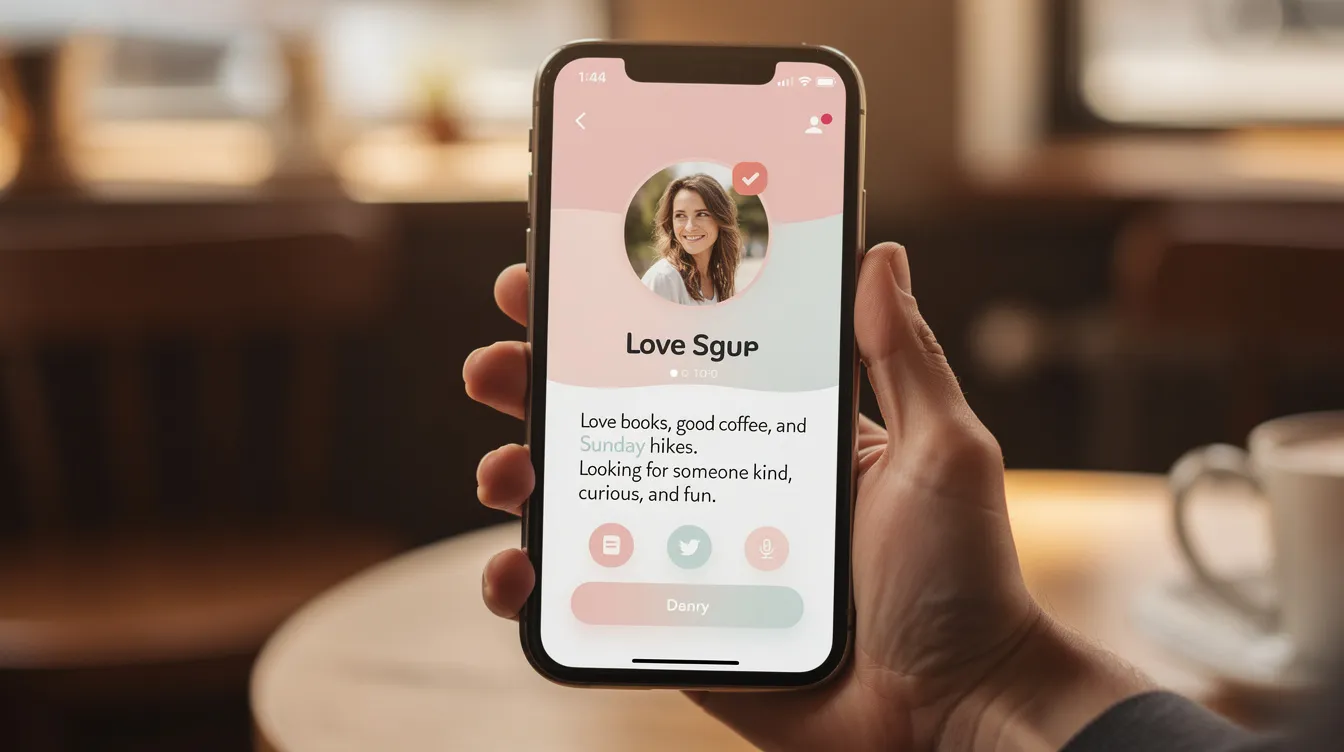
- Three real couples from 2023–2025 who matched on Tinder, Bumble, and Hinge only turned their connections into committed relationships after using compatibility testing to filter early and align on values, communication style, and relationship goals. Successful matches frequently occur across platforms like Hinge, Bumble, Tinder, and OkCupid, often leading to long-term relationships, marriages, and blended families.
- Compatibility-focused dating, backed by external research, leads to significantly better relationship outcomes than swipe-based attraction alone—couples who screen for alignment report 25% higher satisfaction at the one-year mark.
- All three success stories share a common pattern: they introduced compatibility insights before or right after the first date, avoided prolonged uncertainty, and used shared data to have honest conversations instead of playing guessing games.
- Dating app success is a filtering and alignment challenge, not a luck game—and the simplest first step is running a free compatibility test with someone you’re already chatting with to see if the conversation deepens. Many people have found lasting, meaningful relationships through dating apps, transforming simple swipes into marriages, homeownership, and families. Success isn’t always romantic; some users have formed lasting friendships through dating apps.
Most Matches Don’t Turn Into Relationships — These Did
Picture this: it’s a Tuesday night in 2026, and you’re lying on your couch swiping through an endless stream of faces. You match with someone promising, send a message, get a reply—and then silence. By Friday, they’ve become just another ghost in your inbox. The following week, you finally land a first date that goes well enough, but by date three, you realize you want completely different things. Back to swiping, wondering how much time you actually spend chatting or swiping with little to show for it.
This cycle isn’t rare. According to Pew Research Center, 47% of U.S. adults under 30 have used dating apps, yet only 12% of partnered adults met their current partner online. A UK survey by Relate and YouGov found that 68% of dating app users have been ghosted—often after promising early chats. Meanwhile, 57% of app users report feeling burned out from the entire process. Many users experience dating app exhaustion, finding the process tedious and frustrating, and some even take breaks to recover. Patience and persistence are key—many couples only find success after several bad dates or stepping away for a while.
But here’s what most people miss: the problem isn’t a lack of matches. It’s a lack of clarity.
The three couples you’re about to meet started exactly where you are now—swiping, skeptical, and tired, trying to figure out which dating apps actually work best for serious relationships. One matched on Bumble in Boston, another on Hinge between LA and San Diego, and a third on Tinder in Chicago. Each nearly missed their person entirely. What changed wasn’t the app they used. It was adding a compatibility test before things faded out.
Jeter AI is an AI-powered compatibility platform that works alongside the dating apps you already use. Instead of hoping chemistry translates to something real, these couples used science-backed assessments to understand romantic alignment before their first date—or right after it. The difference wasn’t luck. It was information.
Let’s walk through how each of them turned what would have been another missed connection into an actual dating app success story.
Why Most Dating App Matches Fail (Even When There’s Chemistry)
Match doesn’t equal relationship. If you’ve spent any time on Tinder, Bumble, or Hinge, you already know this. The question is why.
The core reasons matches die out typically include:
- Attraction vs. compatibility: Physical chemistry sparks interest, but it doesn’t predict whether you’ll agree on kids, money, or how to handle conflict. A 2024 study in the Journal of Social and Personal Relationships found that 72% of matches dissolve due to mismatched long-term goals—not lack of attraction. It’s crucial to assess compatibility by evaluating whether your values, goals, lifestyles, and communication styles align, especially when it comes to shared goals, timing, conflict resolution, parenting values, love languages, and visions of commitment.
- Timing mismatches: One person is career-focused while the other is family-ready. eHarmony’s internal data shows 35% of promising chats stall because partners are in different life stages.
- Communication breakdowns: Tinder’s 2024 user feedback revealed 61% of users struggle transitioning from app banter to meaningful dialogue. The ability to talk well through a screen doesn’t mean you know how to talk about values.
- Unclear intentions: When nobody defines what they’re looking for, breadcrumbing and situationships become the default. The average time-to-define-the-relationship stretches 3–6 months amid ambiguity.
The numbers tell the story: only 23% of matches result in an in-person date, according to a 2025 Forrester report. Of those dates, 55% remain casual hookups. The funnel from swipe to committed relationship is brutally narrow. Many couples found success by moving from app messaging to in-person meetings quickly—often within two weeks—to establish real-life chemistry.
Key contributing factors to dating app success include honesty in profiles, rapidly moving from app communication to in-person meetings, and clear communication regarding intentions. Successful users often update their profiles to be as honest as possible about what they are looking for, rather than trying to appear suitable to everyone. Profiles that signal a desire to support others and list emotional availability are rated as significantly more attractive for long-term relationships.
This is why understanding how to not sound creepy on dating apps and learning how to ask about values without making it weird matter so much. But beyond communication skills, there’s a structural solution: testing compatibility before you invest months of your life in someone fundamentally misaligned with your future.

What Is a Compatibility Test (And Why It Changes Everything)
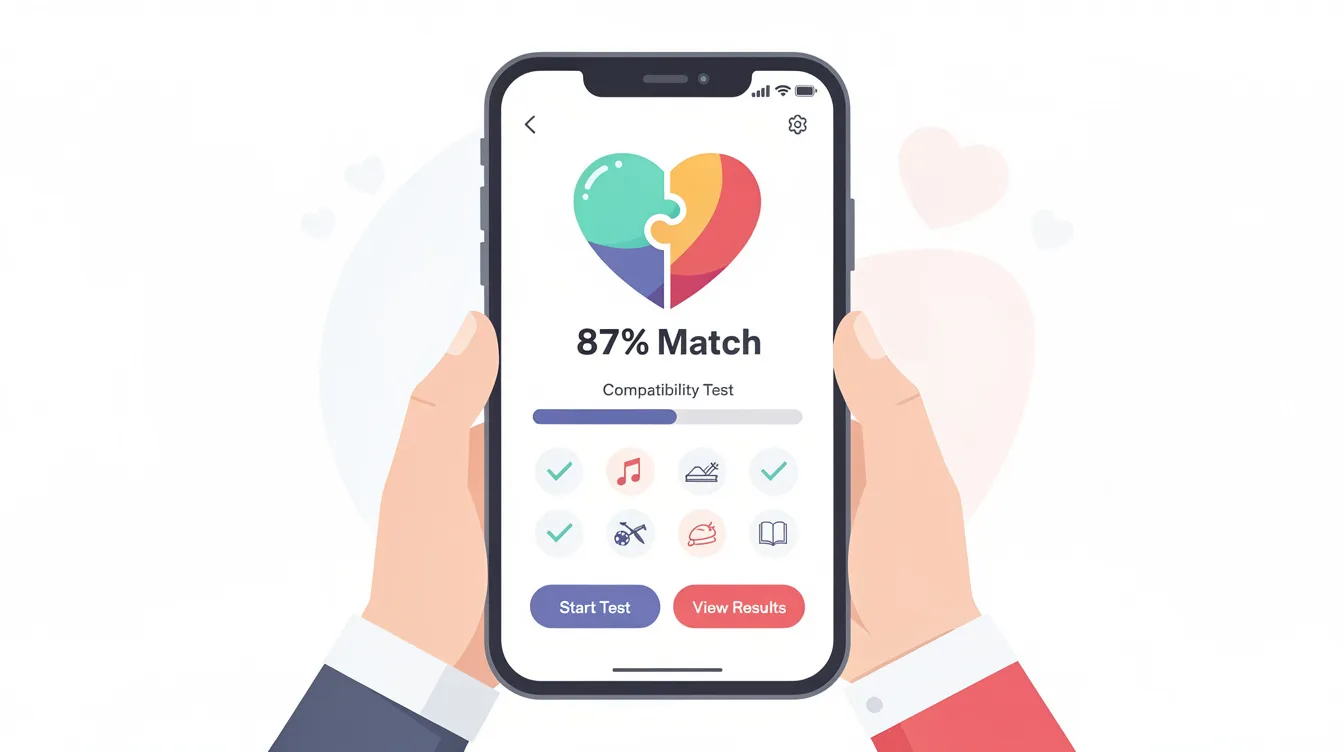
A dating compatibility test is a structured assessment that measures the factors research shows actually predict long-term relationship success: personality fit, core values, communication styles, emotional availability, attachment patterns, and lifestyle alignment. It helps users assess compatibility across values, goals, and emotional needs, providing a holistic view of whether two people are truly aligned for a lasting relationship.
Unlike the gut-feeling approach most people rely on, these tests draw from established psychology—including the Big Five personality model, Gottman’s research on relationship predictors, and attachment theory by Bowlby and Ainsworth. A 2023 meta-analysis in Personality and Social Psychology Review found that attachment style alone predicts 70–80% of long-term relationship outcomes. Understanding how each partner needs to be loved is a key factor in compatibility; if one partner cannot meet the other’s emotional needs, it can lead to unhappiness.
Here’s how Jeter AI’s compatibility test works in practice:
- You take a free science-backed assessment covering emotional patterns, communication preferences, deal-breakers, and relationship goals
- You share your compatibility link with someone you’re chatting with (via text, app, or QR code)
- Both of you take the test independently
- You receive a detailed compatibility report with specific scores—emotional compatibility, values alignment, lifestyle fit, and flagged friction areas
- You use those insights to decide whether this match deserves your time, remembering that it’s important to give people a chance—since a person’s entire life can’t be captured in a short profile or first impression
The Jeter AI ecosystem includes multiple assessments for different stages: a crush compatibility test for early interest, a dating compatibility test for active matches, a couple compatibility test for relationships, and a long-term relationship test for serious partners. You can explore all options at the love tests hub.
The core idea is simple: using a compatibility test before or right after the first date compresses what people typically learn over six months of trial and error into a single structured conversation.

Couple Story #1: The Match That Almost Faded
They matched. They talked. It slowed down… until clarity changed everything.
Maya and Jordan matched on Bumble in Boston in October 2023. Both were in their early 30s, both exhausted from apps, and both had low expectations. Their initial conversation was pleasant but lukewarm—the kind where you’re not sure if the other person is interested or just being polite.
By week two, their messages had slowed to once-a-day replies. Maya was ready to let it fade. She’d been through this pattern a dozen times: match, chat, ghost. Why would this be different?
But Jordan had recently discovered Jeter AI through an article on AI dating apps transforming love. Instead of letting the match die, he sent a message: “Before we become another almost-match, want to try something? There’s this compatibility test thing—might be fun to see what the robots think of us.”
Maya agreed, mostly out of curiosity. They each took the free compatibility assessment independently and received their report within minutes.
The results surprised them both. They scored very high on values alignment and emotional compatibility—areas that matter for a long term relationship. But the report also flagged one communication friction area: Maya preferred direct conflict resolution while Jordan tended toward avoidance. This wasn’t a dealbreaker, but it was something to watch.
That specific insight changed their dynamic. Instead of vague “let’s hang sometime” energy, they planned an actual date: tacos and a walk along the Charles River in early November. During dinner, they used prompts from their compatibility report to skip small talk entirely. By the end of the night, they’d discussed deal-breakers, career goals, and what commitment meant to each of them.
Within three months, they were exclusive. By early 2025, they moved in together. Maya now says the compatibility test was “the thing that made us lean in instead of slip away.”
What This Couple Did Differently
Maya and Jordan didn’t wait to see if conversation would magically deepen. When energy was fading, they proactively checked compatibility—treating it like useful information rather than a heavy conversation.
The test gave them shared language for needs and fears before they accidentally hurt each other with assumptions. Jordan learned early that Maya needed directness when something was wrong; Maya understood that Jordan’s quiet moments weren’t rejection but processing time.
They also used parts of the report as a weekly check-in during their first six months—a practice similar to how to know if you’re compatible over time rather than guessing in silence.
This couple didn’t get lucky. They got intentional.
Couple Story #2: The Missed Connection That Came Back
They stopped talking — and weeks later, started again differently.
Priya and Marcus matched on Hinge in February 2024. She lived in Los Angeles; he was in San Diego. Their first two weeks were excellent: memes, late-night messages, Lord of the Rings references, and plans to eventually meet up.
Then life happened. Priya had work travel. Marcus had a family situation. The messages slowed, then stopped. Neither sent the “hey stranger” text. Both assumed it was another dead-end.
Six weeks later, Priya was scrolling through her likes and saw Marcus’s profile still there. She’d read an article on best dating apps for intentional dating and remembered a compatibility platform mentioned in it. On impulse, she messaged him:
“Before we officially call this a missed connection, want to run a compatibility test just for fun? No pressure either way.”
Marcus said yes. They each took Jeter AI’s assessment independently, expecting nothing.
The results showed unexpectedly strong alignment on long-term goals, conflict resolution style, and values around family. The report also flagged that both had mild avoidant tendencies—which explained why neither had reached out during the gap. Seeing that data in black and white made them both realize they’d ended things too early.
Their second attempt was completely different. They scheduled a precise first meet-up: coffee and a bookstore in Orange County on a Sunday in May 2024. Using the compatibility insights, they talked about deal-breakers and timing up front—no more dancing around “what are we looking for.”
By fall 2024, they were exclusive. Marcus was driving to LA every other weekend. By mid-2025, Priya relocated to San Diego. Their dating app success story had almost been a permanent “what if.”
How a Test Revived a Dead Chat
The compatibility test gave Priya a low-pressure excuse to reconnect without the emotional weight of an awkward “I’ve been thinking about you” message. It reframed the conversation as curiosity rather than vulnerability.
Their report showed that values alignment was high but flagged moderate risk around avoidance—exactly what had tanked their first attempt. Knowing this, they consciously worked on it from the beginning: scheduling dates instead of “we should hang out,” responding within hours instead of days, and naming when they felt themselves pulling away.
The match wasn’t bad. It was unfinished. Compatibility clarity gave it a second life.

Couple Story #3: The Fast-Track Relationship
Danielle and Chris matched on Tinder in Chicago in January 2025. Both were in their late 30s, both explicitly looking for serious relationships after years of casual dating, and both were tired of the same pattern: months of “seeing where things go” that went nowhere.
Their initial match showed strong attraction—good photos, witty bios, solid first message exchange. But they’d both been burned before. Chemistry without compatibility had led to situationships that dragged on for half a year before imploding.
This time, they decided to do something different. Within 72 hours of matching, Chris sent a link: “I found this AI compatibility thing—want to see if we’re actually compatible before we catch feelings?”
Danielle appreciated the directness. She’d discovered Jeter AI through a friend who’d used the compatibility-matched singles events and had been curious about the test.
They both took it before their first date.
The results: very high compatibility across values, emotional availability, and long-term vision. Both wanted marriage. Both wanted kids. Both handled conflict by taking space, then talking it through. The report gave them both permission to invest more quickly—not recklessly, but confidently.
After a few dates, they quickly progressed to deeper conversations. Their first two weeks included three dates, and it was their second date that really solidified their connection, making them both feel this could be something lasting. By week four, they’d had “month three” conversations: exclusivity, timeline for kids, money attitudes, and where they’d imagine living. The stuff most people avoid for six months, they covered early because they already knew the big-picture alignment was there.
They became exclusive after the fourth date. Met each other’s families within three months. By early 2026, they were discussing engagement and both felt confident they had found a potential lifelong partner.
Stories like Danielle and Chris’s aren’t unique—Ellie and George met on Tinder in June 2021, moved in together after just six weeks and got engaged six months later, now happily married for three years. Laura and Jack connected on Hinge, moved in together after just a month of dating, and have been together for four years, recently started searching for a house together as their next milestone. Katie and Pete met on Bumble, quickly developed a deep friendship alongside their romance, and have been together for seven years, now engaged and living together. Sarah moved on from her ex boyfriend before meeting her girlfriend on a dating app, and they’ve now been together for two years, celebrating their anniversary by buying their first house. Mark and Emily met on OkCupid, got married after dating for two and a half years, and say that sharing a home was a turning point in their relationship.
Why Clarity Let Them Move Faster (Not Recklessly)
Danielle and Chris weren’t skipping vulnerability or due diligence. They were prioritizing connections where core compatibility boxes were already checked—freeing them to focus on building the relationship instead of wondering if they should.
Compare this to the typical three-month situationship where nobody wants to ask “what are we” for fear of scaring the other person off. That ambiguity costs time, emotional energy, and often ends in the same place anyway.
They used Jeter AI’s token system to run follow-up reports as things got more serious—checking in on couple compatibility at the three-month mark, then again before discussing engagement. Each report gave them language for conversations that might otherwise have felt like an interrogation.
Their experience also connects to Jeter AI’s compatibility-matched speed dating, where the same “clarity first” approach is built into how participants are matched. If apps feel exhausting, structured events offer another path.
What All 3 Couples Had in Common
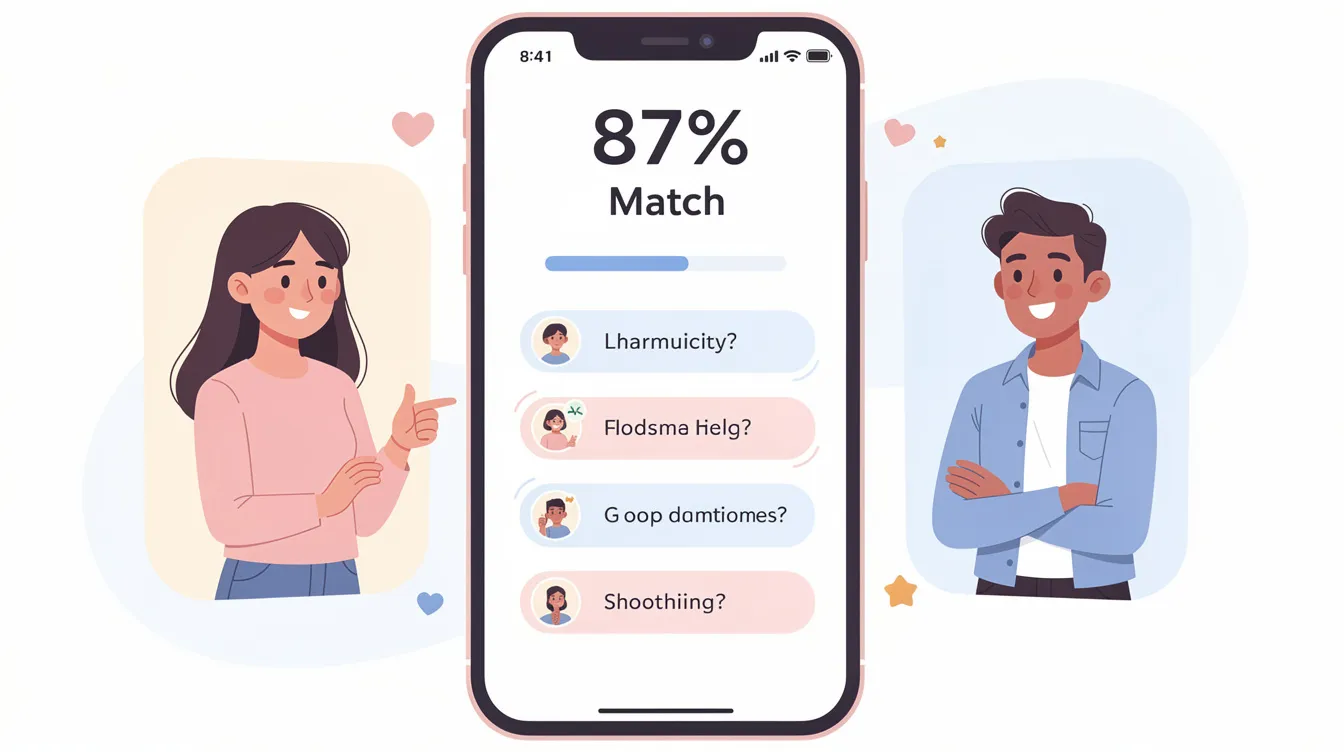
Despite matching on different apps in different cities at different stages, Maya and Jordan, Priya and Marcus, and Danielle and Chris all share the same core patterns:
- They introduced compatibility testing early. Before deep emotional investment—typically within the first week of chatting or right after the first date.
- They used compatibility insights to filter and focus. Instead of chasing every promising match equally, they invested energy where alignment was strongest.
- They aligned on big-picture values and emotional timing. Kids, commitment, communication style—these weren’t month-six revelations. They were week-two conversations.
- They avoided prolonged ambiguity. No months of “seeing where things go.” They defined intentions early.
- They treated compatibility data as a conversation starter, not a verdict. Even flagged friction areas became topics for discussion rather than reasons to run.
- They prioritized shared experiences and quality time. These couples spend meaningful time together, building connection through activities and everyday moments.
None of these couples “got lucky” with the algorithm. They layered a compatibility framework on top of Bumble, Hinge, and Tinder using Jeter AI tools. They turned match volume into match quality.
When you treat dating apps as a starting point and compatibility tests as the filter, your odds of a real relationship go up dramatically. Successful matches on dating apps often lead to long-term partnerships, marriage, and families, showing the real-world impact of digital connections. In today’s global world, dating apps connect people from different countries and backgrounds, making it possible for singles to find love across borders.
Deeper Emotional Awareness and Self-Knowledge
Another key similarity among these couples was their willingness to engage in self-reflection prompted by the compatibility tests. The assessments not only highlighted areas of alignment but also encouraged them to understand their own emotional needs and communication styles better. This self-awareness helped reduce misunderstandings and fostered empathy early on.
Intentional Communication and Conflict Management
All three couples demonstrated proactive communication strategies informed by their compatibility insights. They didn’t shy away from discussing potential friction points but used the test results as a neutral ground to explore sensitive topics. This approach minimized defensiveness and built trust, setting a tone for healthier conflict resolution down the line.
Efficient Use of Time and Emotional Energy
By filtering out less compatible matches early, these couples avoided the common dating pitfall of prolonged uncertainty and emotional burnout. This efficiency allowed them to focus their time and energy on relationships with genuine potential, increasing their satisfaction and likelihood of success.
Leveraging Technology to Enhance Human Connection
While dating apps often get criticized for fostering superficial interactions, these couples used technology—specifically compatibility testing platforms like Jeter AI—to deepen their connections. They combined the convenience of digital dating with science-backed tools to move beyond surface-level attraction and build meaningful relationships.
Shared Commitment to Growth and Adaptability
Finally, these couples showed a shared commitment to growing together and adapting to each other’s needs. The compatibility tests provided a foundation, but their ongoing willingness to communicate openly and adjust behaviors contributed significantly to their relationship longevity.
In summary, the common thread tying these success stories together is a blend of early compatibility assessment, intentional communication, emotional intelligence, and practical use of technology. This holistic approach transforms the dating app experience from a game of chance into a strategic journey toward lasting love.

Expert Insight: Why Compatibility Changes Dating Outcomes
Most dating platforms are built to maximize matches and time-on-app—not relationship outcomes. Not all dating apps are designed for long-term relationships; some are better suited for casual encounters, so users should choose platforms that align with their goals. A 2024 McKinsey report found that only 10% of app interactions yield actual relationships, because algorithms favor recency and attractiveness over depth.
This isn’t a conspiracy. It’s a business model. The longer you swipe, the more ads you see.
Jeter AI’s founder built the platform specifically to address this misalignment. The “compatibility first” approach means: assess compatibility early by evaluating whether your core relationship values, goals, lifestyles, and communication styles align, then talk honestly, and decide whether to invest time, money, and emotional energy—instead of hoping chemistry will fix fundamental incompatibility.
Research backs this up. The Gottman Institute’s 40-year archive of 3,000+ couples confirms that shared values, communication patterns, and emotional attunement predict relationship stability far more than initial attraction. Couples who align on these factors show 25% higher satisfaction at year one and significantly lower divorce risk. Individuals with a secure attachment style are more likely to pursue long-term commitment and maintain relationship satisfaction.
Dr. Helen Fisher’s fMRI studies demonstrate that while initial swipes activate reward centers similar to gambling, sustained relationships require prefrontal cortex engagement—empathy, planning, and mutual understanding. Apps exploit the former. Compatibility tests cultivate the latter.
For deeper exploration, check out Jeter AI’s emotional compatibility test, love test, and true love or just attraction assessment.
What Would Have Happened Without Compatibility Testing
Consider the alternate timelines:
Maya and Jordan would have let those lukewarm messages fade into nothing. She’d have assumed he wasn’t interested. He’d have figured she was too busy. Another almost-match lost to passive silence—never knowing that sometimes it only takes giving just one person a chance to change your entire life.
Priya and Marcus would have remained a permanent “what if.” Both too avoidant to reach out, both convinced the other had moved on, both still swiping through new profiles while their compatible person sat uncontacted in their old likes. The emotional weight of missing out on a connection that could have changed your entire life is something many singles know all too well.
Danielle and Chris would have followed their usual pattern: three months of ambiguous dates, neither willing to define things, until one of them got frustrated and pulled away. By the time they realized they wanted the same things, the relationship would have already been poisoned by uncertainty. People can forget things or make mistakes, but strong relationships can still thrive despite these imperfections.
During the pandemic, couples often had all the time in the world to connect deeply before meeting in person, leading to creative first dates and stronger bonds.
These aren’t hypotheticals. They’re what happens to most matches. Pew Research shows that the majority of people leave dating apps within three months after a string of bad experiences—even though their compatible partner might already be in their inbox.
Compatibility testing doesn’t create chemistry or force matches to work. It reveals whether a connection is worth fighting for before either person quietly gives up.
Advice From Real Couples Who Met on Apps
Drawing from success stories and patterns across compatible couples, here’s what actually works:
“Don’t rely on first impressions.” A 2023 study by Dr. Helen Fisher found that 65% of initial chemistry fades within months. The person who seems “just okay” on paper might be your person. The one who seems perfect might have incompatible values.
“Clarity early is everything.” Early conversations about intentions—even awkward ones—boost retention by 50%. Waiting months to ask “what are we” just delays inevitable heartbreak.
“You don’t need more matches. You need better ones.” 80% of users delete apps within three months. The solution isn’t more swiping. It’s smarter filtering.
“Loosen your cosmetic filters.” OKCupid data shows height filters eliminate 70% of men under six feet. Some of the strongest couples started with people they almost swiped left on.
“Use compatibility reports to start hard conversations easily.” Instead of waiting for conflict to reveal differences, use test results to discuss deal-breakers proactively.
“Embrace new things together.” Trying new things and sharing new experiences can build excitement and deepen your connection, making dating more memorable and meaningful.
“Acknowledge the role of your job and career satisfaction.” Feeling unfulfilled at your job or navigating a career change can impact your emotional well-being, relationship timing, and compatibility with a partner.
“Prioritize feeling safe and secure.” The most successful couples often say they feel safe and comfortable with their partner from the very beginning, which fostered trust and intimacy.
For practical scripts, see how men can introduce the test without being creepy and how women can bring it up without it feeling like an interview.
How to Use a Compatibility Test on Dating Apps (Step‑by‑Step)
Here’s the practical flow from match to decision:
Match on any app. Tinder, Bumble, Hinge, The League—it doesn’t matter. The compatibility layer works on top of all of them. Many dating apps also offer premium options that can enhance your experience or improve match quality if you want to boost your chances.
Build light conversation. Two to seven days of chatting is ideal. Enough to establish interest, not so much that you’re already emotionally invested.
Introduce the compatibility test naturally. Sample messages that work:
- “Want to see if the robots think we’d survive a Sunday IKEA trip together?”
- “I’ve been trying this AI compatibility thing—want to be my co-test subject?”
- “Before we catch feelings, want to check if we’re actually compatible? No pressure either way.”
Both take the test independently. Jeter AI’s core assessment is free and accessible via link or QR code. Each person answers separately, ensuring honest responses.
Share and discuss results. Look at the overall compatibility score, but pay closer attention to specific dimensions: values, communication, emotional availability, deal-breakers.
Decide what comes next. If alignment is strong, plan a date tailored to your shared traits. If both are introverts, choose a quiet coffee shop. If both value adventure, pick an activity date. If alignment is weak on essentials, you’ve saved yourself months.
For those who prefer meeting people in person first, Jeter AI also runs compatibility-matched singles events in New York, Chicago, LA, Toronto, and other major cities. Same clarity-first approach, different format.
For deeper guidance, see using Jeter AI with Tinder, Bumble, and Hinge.
FAQ
Do compatibility tests actually work in dating?
No test can guarantee a relationship. But high-quality, research-based assessments are highly effective at surfacing the factors that correlate most strongly with long-term satisfaction: values alignment, conflict style, attachment patterns, and communication preferences.
Jeter AI’s tests condense months of trial-and-error into a single structured snapshot. Instead of learning six months in that you want different things, you see it in week one.
The key is treating results as a conversation starter rather than a pass/fail verdict. Many couples (like the three in this article) describe the test as the turning point that moved them from “uncertain match” to intentional relationship. Explore more at the love test explained guide.
Can you really find a serious relationship on dating apps in 2026?
Yes. Despite rising burnout and skepticism, online dating remains the number one way heterosexual couples meet, according to Stanford research. Serious relationships and marriages still start on Tinder, Bumble, and Hinge every day.
The frustrations are real—ghosting, endless chatting, situationships that go nowhere. But success often comes down to better filtering and intentionality, not luck or app choice.
Compatibility-first tools like Jeter AI transform generic dating apps into serious-relationship engines by adding a quality gate on top of usual swipe mechanics. If you’re exhausted, using compatibility tests or attending compatibility-matched events can create a more hopeful, structured experience.
When should you run a compatibility test with someone?
The practical window is after a few solid conversations but before deep emotional involvement—typically within the first 3–7 days of chatting or right after the first date.
Testing too late (months in) means you’ve already invested heavily. Testing early lets you decide whether to invest at all, saving time and heartache.
For fast connections, run it before deciding exclusivity. For slow-burn chats that seem to be fading, use it to see if the connection is worth reviving. Jeter AI offers different tests for different stages: dating compatibility test, couple compatibility test, and are we compatible quiz.
How do you introduce a compatibility test without making it weird?
Frame it as fun and curiosity rather than evaluation. Lines that work:
- “Want to see if the algorithms think we’d survive assembling furniture together?”
- “I’ve been curious about this AI compatibility thing—want to try it with me?”
- “Before we get too invested, want to check if we’re actually compatible? No pressure.”
If someone reacts badly to talking about compatibility at all, that’s useful information about misaligned intentions or readiness. Most people are intrigued, especially if you position it as lighthearted.
What if the compatibility score isn’t perfect?
A mid-range score doesn’t mean the match is doomed. It typically indicates strong fits in some areas plus friction points that will require conscious navigation.
Look at the breakdown: strong values but challenging conflict styles? That’s workable if you both commit to communication. Misaligned on kids or marriage? That’s a harder gap to bridge.
Use “weaker” areas as prompts for honest conversation. Many thriving couples are not 100% compatible on paper—what matters is awareness, communication, and willingness to work on mismatches together. Perfect scores aren’t the goal. Clarity is.
How can a compatibility test help with communication?
Compatibility tests often highlight differences in communication styles, such as direct versus indirect approaches or emotional expressiveness. Knowing these differences early helps couples avoid misunderstandings and tailor their conversations to each other’s preferences.
For example, if one partner prefers to resolve conflicts immediately while the other needs space to process, recognizing this dynamic can prevent frustration and promote empathy. Using the test results as a guide, couples can develop healthier communication habits that support long-term relationship success.
Can compatibility testing improve timing alignment in relationships?
Yes. One of the most obvious reasons dating app matches fail is mismatched timing—partners wanting different things at different stages of life. Compatibility tests assess readiness and goals around commitment, family planning, and lifestyle, helping couples identify if their timelines align.
By clarifying these aspects early, couples can avoid investing emotionally when their life plans are out of sync. For example, one person might be ready to settle down while the other is focused on career growth. Compatibility insights allow for honest discussions about timing, reducing wasted effort and emotional burnout.
Is it common for compatibility tests to reveal unexpected insights?
Absolutely. Many users report that compatibility tests uncover surprising information about themselves and their matches—things they hadn’t considered or were too close to see objectively.
For example, a test might reveal that despite strong attraction, partners have fundamentally different conflict resolution styles or emotional needs. These insights provide a clear example of why initial chemistry isn’t always enough and why compatibility matters.
Being aware of these factors early can empower couples to navigate challenges proactively or decide when to part ways amicably.
How does a close friend’s opinion compare to compatibility test results?
While advice from a close friend can be valuable, it is often subjective and based on limited observations. Compatibility tests offer an obvious advantage by providing data-driven, unbiased insights grounded in psychological research.
A close friend might see surface-level traits or personal biases, whereas a compatibility test dives into core emotional patterns, values, and communication styles that predict long-term success.
Combining both perspectives—trusted friends’ input and compatibility data—can give a fuller picture, but relying solely on gut feelings or friends’ opinions may miss critical compatibility factors.

Conclusion: It’s Not About More Matches — It’s About Better Ones
Maya and Jordan almost ghosted each other. Priya and Marcus almost stayed a permanent “what if.” Danielle and Chris almost repeated the same six-month situationship cycle they’d been trapped in for years. All three couples started exactly where you might be right now: swiping, skeptical, and running out of hope.
What shifted wasn’t the app they used. It was how they used it. By introducing compatibility testing early, they transformed vague chemistry into concrete data—and turned missed connections into real relationships.
Modern dating isn’t a shortage-of-matches problem. It’s a filtering and alignment problem. Compatibility tests are uniquely suited to solve it.
If you’re curious, the simplest next step is running a free Jeter AI compatibility test with someone you’re already chatting with. See if the conversation deepens. If you prefer meeting people face-to-face first, explore compatibility-matched singles events in your city. For a full breakdown of how to integrate this into your current dating routine, check out the guide to using Jeter AI with dating apps.
Your dating app story doesn’t have to end in burnout or ghosting. When you start choosing with compatibility and clarity, it can become a success story too.
Why Compatibility Testing Is the Future of Dating
As dating apps continue to evolve, the integration of compatibility testing represents a shift from quantity to quality. Rather than relying solely on photos and brief bios, users now have the opportunity to engage with scientifically-backed insights that reveal deeper aspects of potential partners. This approach not only saves time but also reduces emotional fatigue by focusing energy on matches with genuine potential.
Compatibility testing also empowers users to have more meaningful conversations early on. With clear data about values, communication styles, and emotional needs, couples can avoid common pitfalls and misunderstandings that often derail relationships. This transparency fosters trust and openness, creating a stronger foundation from the very beginning.
Taking Control of Your Dating Journey
In a landscape crowded with options and endless swiping, taking control means being intentional. Compatibility tests provide a tool to cut through the noise and make informed decisions, rather than hoping for luck or chemistry alone. This proactive approach aligns with the growing trend of intentional dating, where singles prioritize meaningful connections over casual encounters.
Moreover, compatibility testing complements other strategies such as honesty in profiles, clear communication about intentions, and timely transitions to in-person meetings. Together, these practices create a holistic framework for dating success in the digital age.
Final Thought
Remember, the goal isn’t to find perfect matches but to find better matches—those with whom you share alignment on what truly matters. Compatibility testing doesn’t replace the magic of connection; it enhances it by providing clarity and confidence. By embracing this approach, you’re not just swiping; you’re building the foundation for lasting love.


