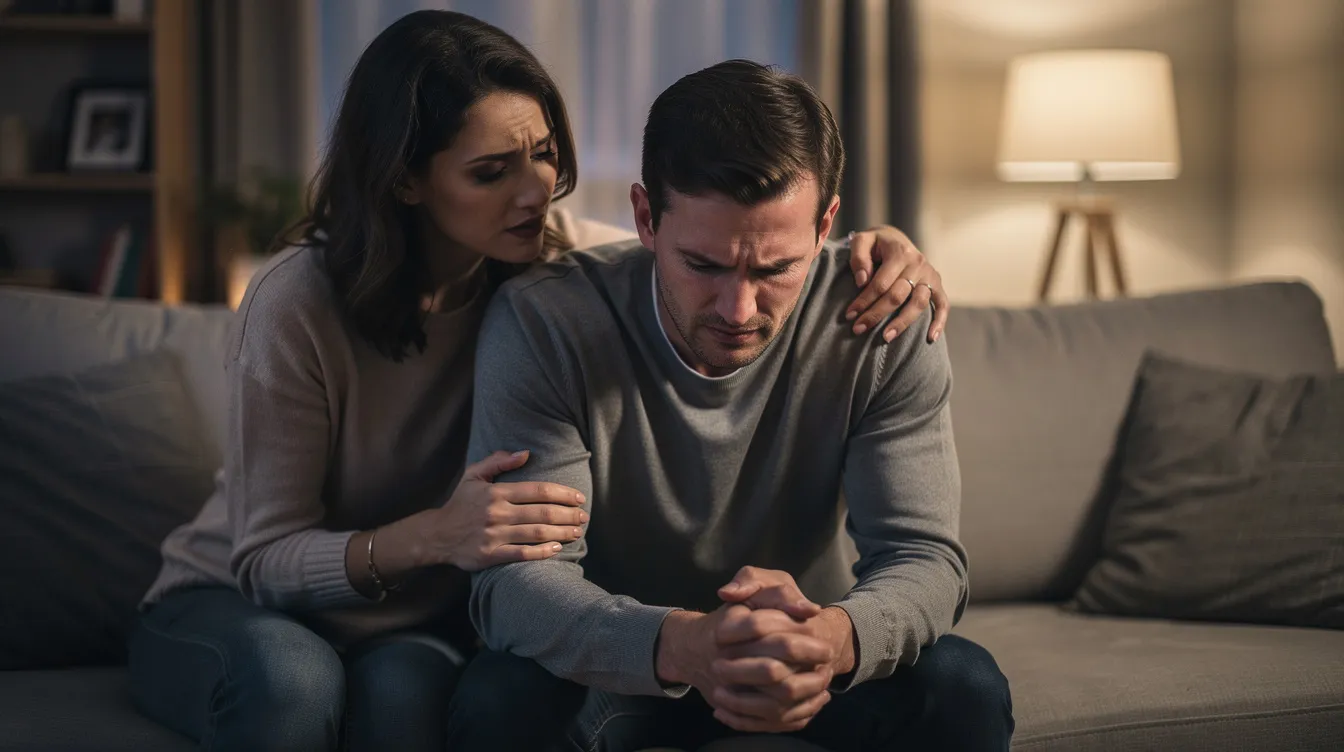
My Anxiety Is Ruining My Relationship: A Practical Guide to Stop Pushing Love Away
If you’re feeling like “my anxiety is ruining my relationship,” you’re not alone. That tightness in
25 min read
If you’re thinking “my anxiety is ruining my relationship,” you’re not imagining it. That tightness in your chest when they don’t text back, the spiraling thoughts at 2 a.m., the way a single off-hand comment can derail your entire week—these aren’t just quirks. They’re patterns that quietly erode even the strongest connections.
Here’s the reality: chronic anxiety can damage romantic relationships through clinginess, emotional withdrawal, jealousy, and conflict avoidance. But this isn’t a life sentence. With the right skills and support, these patterns are changeable.
Quick answer: Can anxiety really ruin your relationship?
Yes—and the research backs this up. According to the National Institute of Mental Health, approximately 19.1% of U.S. adults had an anxiety disorder in the past year. Anxiety disorders affect over 19% of adults in the United States, and those with anxiety are twice as likely to experience relationship problems and three times more likely to avoid intimacy with their partner.
A 2023 study in the Journal of Family Psychology found that people with higher anxiety symptoms report significantly lower relationship satisfaction—25-30% lower, in fact—and their partners experienced similar declines due to secondary stress. This creates a bidirectional impact where one partner’s anxiety amplifies strain for both people over time.
Common signs of relationship anxiety include constant reassurance-seeking, overanalyzing texts or tone, fear of abandonment, jealousy or checking behaviors, conflict that escalates quickly, avoidance, or feeling like you can’t relax in the relationship.
This article covers:
Where relationship anxiety originates (attachment styles, past trauma, generalized anxiety)
Five signs anxiety—not incompatibility—is the real problem
Relationship anxiety isn’t a formal diagnosis in the DSM-5, but it’s a recognizable pattern where closeness, texting delays, labels, or conflict trigger disproportionate fear responses. Your nervous system treats a late reply like an existential threat.
Attachment styles, shaped by early experiences with caregivers, significantly influence how individuals communicate, relate to, and establish intimacy in romantic relationships. The framework originates from John Bowlby’s work in the 1960s and was later applied to adult romance by researchers Hazan and Shaver in 1987.
In everyday terms:
Anxious attachment: Checking your phone 40 times after sending a text, needing constant proof of love, panicking when plans change
Avoidant attachment: Vanishing when things get serious, shutting down during difficult conversations, feeling suffocated by closeness
Individuals with an anxious attachment style often worry about being left or not being “good enough,” which leads to heightened relationship anxiety. Research indicates that anxious attachment is associated with behaviors such as excessive reassurance seeking and protest behaviors aimed at restoring closeness. For a deeper dive, explore Jeter’s attachment styles guide.
Other influences include:
Childhood caregiving patterns (inconsistent or unpredictable responsiveness)
Past betrayal or cheating (a 2018 breakup can still shape your current reactions—one study found 62% of individuals post-breakup exhibited heightened jealousy in subsequent relationships)
Generalized anxiety disorder, panic disorder, and social anxiety frequently spill over into relationships. The American Psychological Association reports that 40% of those with generalized anxiety cite relational impairment as a primary symptom.
Many anxious patterns repeat across partners. If you’ve felt this intense anxiety with multiple safe, trustworthy people, it’s likely about your internal wiring rather than your current partner. A structured tool like Jeter’s compatibility test framework can help distinguish “this is my pattern” from “this is about this specific person.”
How anxiety quietly damages a relationship (even when you love each other)
Most people don’t recognize anxiety as the problem initially. It shows up disguised as “I’m just protective” or “I just care too much.” Meanwhile, your partner feels smothered, interrogated, or shut out.
Anxiety can ruin a relationship when it repeatedly creates cycles of reassurance-seeking, emotional distance, controlling behavior, and conflict avoidance. A 2022 meta-analysis in Clinical Psychology Review (analyzing 45 studies with 12,000 couples) found that higher anxiety predicts 35% lower satisfaction and increased demand-withdraw patterns.
Anxiety can lead to excessive reassurance-seeking in relationships, which can reduce relationship quality over time as partners may feel that their responses are never enough. It can also create a cycle of avoidance and emotional distance, where individuals shut down or push their partners away to cope.
Unaddressed anxiety elevates breakup risk significantly. A 10-year Norwegian cohort study (HUNT study) linked baseline anxiety to 2.1 times higher divorce odds. Anxiety can manifest as irritability and anger, leading to unexpected outbursts that strain relationships.
Some pairings are especially volatile. Anxious-avoidant dynamics—where pursuit triggers shutdown, which triggers more pursuit—show 50% higher conflict volatility. For more on this pattern, see Jeter’s anxious-avoidant trap article.
Sign 1: One partner feels emotionally drained and “on call” 24/7
This looks like 20+ reassurance texts a day, needing constant proof of love, or panic if your partner doesn’t respond within minutes. You find yourself repeatedly asking “Are we okay?” after small misunderstandings that most couples wouldn’t notice.
People with anxiety may excessively seek reassurance from their partner, which can leave the other person feeling drained and may ultimately push them away. A 2019 study in Behaviour Research and Therapy found this pattern correlates with 40% drops in satisfaction over just six months.
The psychological loop works like this: Short-term relief from reassurance → Long-term worsening of anxiety → Partner resentment builds → More reassurance needed.
Being a supportive partner is healthy. Being someone’s only coping strategy turns you into an unpaid therapist. If every Friday night gets derailed by a panic spiral—“He’s 10 minutes late, he must be cheating”—escalating to hour-long interrogations, the relationship can’t sustain itself. For more on recognizing these patterns early, see Jeter’s clingy dating signs piece.
Sign 2: You’re walking on eggshells or avoiding any fight so they’re not “mad” at you
Anxiety can make conflict feel catastrophic. You swallow your needs, say “it’s fine” when it isn’t, or over-apologize for things that don’t warrant apology.
Anxiety can lead to avoidance behaviors, where individuals may find it hard to open up and be vulnerable with their partner, preventing genuine emotional intimacy from developing.
The result: hidden resentment builds. Then comes passive-aggressive comments or sudden blowups after months of silence. Health research links chronic conflict-avoidance with elevated cortisol, higher blood pressure (15-20 mmHg increases), and cardiovascular strain over decades.
Healthy relationships use “needs-first” communication rather than people-pleasing. Specific scripts for this appear later in this guide.
Sign 3: Jealousy, checking, and fear of cheating dominate your thoughts
Checking their phone at 1 a.m. Rereading texts for hidden meanings. Interpreting every delay as proof of betrayal. Interrogating about coworkers or exes.
Anxious thoughts can manifest as a preoccupation with the partner’s potential infidelity or breakup, often driven by past relationships rather than current evidence. Attachment anxiety is a strong predictor of jealousy in romantic relationships—3-4 times more than other factors according to a 2022 meta-analysis—often stemming from internal fears rather than actual partner behavior.
Sometimes anxiety is accurate. If there’s lying or clear boundary-breaking, trust your gut. But often the level of fear doesn’t match reality.
A quick fact-check exercise: List what you actually know vs. what you’re guessing vs. what past experience is coloring your perception.
Constant suspicion can also kill desire and warmth. For more on this dynamic, see Jeter’s article on losing attraction to a partner.
Sign 4: You feel distant because you’re not telling the truth about how anxious you are
Shame about anxiety leads many people to hide panic attacks, obsessive thoughts, or intrusive images from their partner.
Individuals experiencing relationship anxiety may feel distant from their partner due to a lack of open communication about their anxious thoughts, leading to feelings of self-recrimination and pervasive anxiety.
Your partner senses something is wrong, assumes you’re losing interest or hiding something, and pulls back. One couple in 2025 nearly separated because one partner kept anxiety attacks secret—the other believed they were considering a breakup.
Honest sharing, done in a regulated way, often brings people closer. For examples of how to disclose anxiety early in dating, see Jeter’s dating with anxiety guide.
Sign 5: Your entire life starts revolving around this relationship
Codependency patterns include:
Canceling plans with friends repeatedly
Letting hobbies fade
Tracking your partner’s moods minute-by-minute
Feeling like your day is “ruined” if they sound off in one text
This over-focus usually increases anxiety instead of calming it. Any small change feels like a life-or-death threat when the relationship is your only source of meaning.
Relying solely on a partner for emotional regulation can lead to burnout; maintaining independence is crucial. Research links codependency with 45% poorer relationship satisfaction and depression.
Questions to ask yourself:
When was the last time I did something just for me on a Saturday?
Do I have friends I’ve talked to this month who aren’t mutual friends with my partner?
Can I name three hobbies I engage in without my partner?
Is it relationship anxiety or a real problem with your partner?
A common fear: “What if I tell myself it’s anxiety, but my gut is actually warning me about something real?”
Look for patterns. If you’ve had similar anxiety with multiple safe partners, it’s more likely internal. If the anxiety started after repeated lying or boundary violations, it may be about the current relationship.
Understanding both your own and your partner’s attachment styles can provide insight into the sources of relationship anxiety and help in developing healthier interactions.
Try this 3-column exercise:
What I Know (Facts)
What I Fear (Anxiety Stories)
What I’ve Seen Over Time
They texted back 3 hours later
They’re losing interest
They often reply late during work
They went out with friends Friday
They’re hiding something
They’ve always maintained friendships
Using structured tools like the Jeter compatibility test can systematically assess values, conflict style, and attachment rather than relying on anxious swings.
Important: If there’s serious concerning behavior—emotional abuse, coercive control, financial abuse, repeated cheating—the priority is safety, not just treating anxiety. The National Domestic Violence Hotline (1-800-799-7233) provides confidential support.
How to stop anxiety from ruining your relationship: 7 science-backed steps
You can’t “just stop worrying.” But you can change how you respond to anxious thoughts, which reshapes the relationship over weeks and months.
Cognitive behavioral therapy (CBT) is considered the gold standard in psychotherapeutic treatment for anxiety disorders, with randomized trials showing 50-60% symptom reduction. Emotion-focused therapy (EFT) has been extensively studied among couples with relationship anxiety, helping partners identify negative cycles with 70-75% of couples showing improvement.
These steps work whether you’re dating, in a long-term partnership, or married. They pair well with professional support and tools like Jeter’s love tests or compatibility framework.
1. Communicate like it’s a shared problem (you + your partner vs. anxiety)
Shift from “I’m broken” or “you’re too much” to “we’re dealing with my anxiety together.” Approaching anxiety as a team strengthens the relationship bond.
Open and honest communication makes both partners feel safe expressing their concerns without fear of judgment, which is crucial for managing anxiety in relationships.
Example scripts:
“My brain is telling me you’re going to leave because you didn’t text back. I know that’s probably anxiety, but I need some reassurance right now.”
“I’m feeling overwhelmed—can I get a hug and 5 minutes of listening?”
Using ‘I’ statements rather than blaming one another can help reduce conflict escalation, such as saying “I feel overwhelmed when our plans change without notice” instead of “You never tell me anything.”
Practicing active listening is important for effective communication, as it helps partners feel genuinely heard. Communicating your needs clearly—framing needs as “this is what I need from you” rather than “you need to do this”—fosters understanding.
Active, non-blaming communication creates a safe environment for addressing stressors. Open communication about fears and anxieties can build empathy between partners. Research shows emotional disclosure lowers physiological stress markers by roughly 25%.
2. Learn your triggers and early warning signs
Everyone has predictable trigger patterns: unanswered messages, late-night social media scrolling, certain anniversaries, drinking, or sleep deprivation.
Identifying triggers involves noticing specific situations that spark anxiety. Creating a trigger journal can help identify these situations, allowing you to prepare and respond more effectively.
Keep a 1-2 week trigger log noting:
Situation
Thought that arose
Body sensations
What you did next
Most people start noticing patterns by day 7-10. Understanding internal triggers is essential before addressing patterns with a partner.
Share a short list of your top 3 triggers with your partner: “When plans change last-minute, I may get quiet or feel overwhelmed.” This preempts 40% of escalations in couples who try it.
Jeter’s dating with anxiety guide has examples of common dating-specific triggers for first dates, social events, and texting.
3. Challenge catastrophic thinking instead of obeying it
Common cognitive distortions in relationships:
All-or-nothing: “If they’re annoyed, they must want to break up”
Mind reading: “They didn’t kiss me goodbye—they’re done with me”
Fortune-telling: “This relationship will end like all my others”
Challenging negative thought patterns can help in managing anxiety. Mindfulness techniques can help redirect focus during moments of high anxiety.
Use this 4-step CBT tool:
Name the thought (“They’re bored with me”)
Rate how much you believe it (0-100%)
List evidence for and against
Choose a more balanced alternative (“They often reply late during work. If they’re distant for several days, we can talk then.”)
Grounding techniques, such as the 5-4-3-2-1 method (name 5 things you see, 4 you hear, 3 you can touch, 2 you smell, 1 you taste), can calm the nervous system. The Anxiety & Depression Association of America describes these techniques as effective for acute anxiety relief.
4. Set healthy boundaries so your partner isn’t your only lifeline
There’s a difference between support and over-reliance. Expecting them to answer every panic text instantly creates burnout. Agreeing on check-in times and realistic support capacity preserves the relationship.
Setting healthy boundaries can help manage relationship anxiety by preventing one partner from becoming overly dependent on the other for emotional support.
Sample boundary conversations:
“I love you and want to support you, but I can’t reassure you about the same issue more than twice a night. Let’s also use your coping tools.”
“When I’m at work, I can do one check-in text at lunch. More than that affects my job.”
Establishing clear signals for needing space can facilitate better understanding between partners. Working with a partner to limit reassurance-seeking behaviors helps in building internal trust.
Establishing reassurance rituals—scheduled check-ins rather than constant ad-hoc reassurance—provides structure and safety.
For recognizing when anxiety has crossed into unhealthy dependence, see Jeter’s clinginess and neediness article.
5. Build your own anxiety toolkit (not just couple tools)
Create a personal “anxiety action plan” for before, during, and after spikes:
Breathing exercises (4-7-8 breathing)
Grounding techniques
A short walk
Journaling
Calming playlist
Practicing self-soothing techniques, such as deep breathing or mindfulness, can help individuals manage their anxiety and improve their emotional responses in relationships.
Keep a digital “emergency kit” on your phone: photos of safe memories, affirmations, recordings of loved ones, notes from therapy. Use this before turning to your partner.
Managing one’s nervous system can prevent anxiety-driven behaviors such as overthinking. Maintaining one’s identity by investing in hobbies and friendships can reduce over-dependence in a relationship.
A 2022 meta-analysis found that regular exercise, consistent sleep, and mindfulness practice reduce overall anxiety sensitivity by approximately 40%. Routine shared activities can also provide stability and security.
Jeter’s love and compatibility tests can serve as reflective journaling tools about values and patterns.
6. Use attachment understanding instead of blame
Anxious attachment leads to protest behaviors—clinginess, accusations, demanding constant contact. Avoidant attachment leads to stonewalling and shutting down when things get too close.
Instead of:
“You’re so clingy!”
“You’re cold and don’t care about me!”
Try:
“When I get scared and chase, and you pull away, we both end up hurt.”
“I notice when I ask for more reassurance, you need more space. How can we work with that?”
Understanding both your own and your partner’s attachment styles helps recognize underlying causes. Learn each other’s patterns via Jeter’s attachment style explainer.
Addressing anxiety requires self-regulation and collaborative communication. Research shows that couples who work with attachment patterns in therapy see significant improvement over 1-2 years.
7. Try structured help: therapy, tests, and guided conversations
For chronic anxiety, panic disorder, or trauma affecting your relationship, individual therapy makes a significant difference. CBT, EMDR, and acceptance and commitment therapy (ACT) show 60-80% symptom remission rates.
Managing anxiety within a relationship requires individual self-care and collaborative communication.
When both partners are willing, couples therapy can positively impact around 70% of couples who undergo treatment, especially when one partner suffers from anxiety. Options include EFT, Integrative Behavioral Couple Therapy, and cognitive-behavioral couple therapy.
Structured tools like Jeter’s compatibility test can guide calm conversations about values, conflict style, and attachment when anxiety makes it hard to know what’s real.
If in-person therapy is hard to access due to cost, schedule, or location, combine self-help resources with online groups and guides from trustworthy sources like NIMH or the Anxiety & Depression Association of America.
How to support a partner whose anxiety is hurting the relationship
If you’re the less anxious partner, you may feel confused, guilty, or resentful when nothing you do seems to help. You didn’t cause the anxiety, but your responses can either reinforce panic cycles or help build security.
Research on expressed emotion shows that high criticism doubles relapse risk for mental health conditions. The goal is interdependence—both people supported—rather than codependency.
Be there, but don’t be their only coping strategy
Creating reassurance rituals through consistent check-ins can help alleviate anxiety in relationships. But constantly answering the same fear can strengthen it neurologically.
Support phrases that work:
“I believe you that this feels scary.”
“Do you want comfort, ideas, or just listening right now?”
Set time limits on intense anxiety talks when they repeat: “Let’s talk about this for 10 more minutes, then we’ll switch to coping tools.”
Gently point your partner toward individual therapy or reputable guides, including Jeter’s dating-with-anxiety resources.
Build a wider support system together
Identify at least 2-3 additional supports: friends, family, peer groups, or online communities. The relationship shouldn’t be the only emotional outlet.
Have a joint conversation about who each partner feels comfortable leaning on for what—work stress vs. trauma processing vs. daily venting.
Research links strong social networks with lower anxiety and depressive symptoms and better relationship outcomes. Consider spaces like Jeter’s singles events for expanding social circles.
Encourage – not pressure – them to get help
Creating predictable, low-stakes times for relationship discussions can prevent anxiety-fueled conflicts.
Scripts for bringing up therapy:
“I see how hard you’re fighting this. I think a therapist could give us both more tools—would you be open to looking together?”
“I want to support you, and I also think you deserve professional guidance. Can I help research options?”
Offer to help research, attend a first session, or cover costs if possible. Don’t threaten or coerce.
Online and lower-cost options exist. Jeter’s compatibility testing and pricing page illustrate accessible relationship-focused tools.
Research shows early intervention leads to better outcomes than waiting until contempt sets in.
When anxiety is ruining your relationship: when to consider a reset or ending it
Sometimes the most loving thing is to step back—either temporarily or permanently—especially when anxiety and constant conflict have become chronic.
Signs a pause or breakup might be needed:
Repeated boundary violations despite clear communication
Emotional or physical abuse
Refusal to seek any professional help
Constant high conflict affecting work, sleep, or children
Use a written pros/cons list, journaling, and structured tests like Jeter’s compatibility test to think clearly outside of fight-or-flight mode.
Ending a relationship does not “cure” anxiety. If anxious thought patterns have shown up with multiple partners over the years, focusing on your own healing between relationships is crucial. Seek professional guidance when making big decisions—a therapist, coach, or support group can provide clarity.
You’re not broken: how to start changing this pattern today
Changing anxious relationship patterns takes months to years. But even small steps this week can reduce conflict and panic. Effective communication establishes a foundation of safety that can lower anxiety over time.
Your action plan for the next 7 days:
Start a trigger log (even just notes on your phone)
Have one honest, calm conversation with your partner using an “I” statement
Book a therapy consult OR take a compatibility test to clarify patterns
Build a small anxiety toolkit: 3 grounding techniques, 2 people you can call, 1 calming playlist
Track progress with specific markers: fewer panic spirals per week, shorter reassurance loops, more evenings that feel calm instead of tense.
Explore Jeter’s relationship resources to support your journey:
Anxiety is treatable. Love is learnable. Getting structured support now is far easier than trying to repair a relationship already at the breaking point.
Why small steps matter
When anxiety feels overwhelming, it’s tempting to want immediate change. However, relationship anxiety is deeply rooted in your nervous system and thought patterns, which take time to rewire. Small, consistent actions help build new neural pathways and foster trust between you and your partner. Tracking progress with tangible markers—like fewer panic spirals or more calm evenings—provides encouragement and a sense of control.
The power of “I” statements
Using “I” statements during conversations helps you express your feelings without placing blame. This approach reduces defensiveness and opens the door to empathy. For example, saying “I feel overwhelmed when plans change suddenly” invites understanding, whereas “You never tell me anything” can escalate conflict. Practicing this skill even once a week can gradually transform your communication style and reduce anxiety-driven misunderstandings.
Building your anxiety toolkit
An effective anxiety toolkit includes grounding techniques like the 5-4-3-2-1 sensory exercise, deep breathing, or mindfulness meditation. Having trusted contacts—friends, family, or therapists—to reach out to during anxious moments prevents over-reliance on your partner. A calming playlist or soothing activities can help regulate your nervous system. Regularly using your toolkit empowers you to manage anxiety independently, improving your relationship’s health.
The role of professional support
Booking a therapy consultation is a proactive step toward healing. Therapists trained in cognitive behavioral therapy (CBT) and emotion-focused therapy (EFT) offer evidence-based strategies tailored to your unique needs. Alternatively, taking a compatibility test can provide insights into your relationship dynamics and help identify patterns that fuel anxiety. Combining professional guidance with self-help resources creates a comprehensive support system.
Leveraging Jeter’s resources
Jeter’s platform offers a wealth of tools designed to help individuals and couples navigate relationship anxiety. From compatibility tests to love assessments and educational articles, these resources provide practical guidance and foster self-awareness. Engaging with these tools can complement therapy and daily efforts, accelerating progress toward healthier, more secure relationships.
Taking these initial steps demonstrates commitment to change and lays the groundwork for long-term growth. Remember, you’re not broken—your anxiety is a challenge you can overcome with patience, support, and the right strategies.
Understanding the importance of patience and persistence
It’s crucial to recognize that changing deep-seated patterns related to anxiety is a gradual process. You won’t see overnight results, but each small step builds resilience and rewires your responses. Consistency in applying new communication skills and coping strategies fosters trust and security between partners. Celebrate small victories, like a calm conversation or a moment of self-soothing, as they pave the way for lasting change.
Incorporating self-compassion and reducing self-judgment
People struggling with relationship anxiety often experience harsh self-criticism, believing they are “broken” or “too much.” Practicing self-compassion—treating yourself with kindness and understanding—can reduce feelings of shame and isolation. Remind yourself that anxiety is a mental illness and a common human experience, not a personal failing. This mindset shift encourages openness and vulnerability, essential for healing.
Leveraging professional support and community resources
While self-help steps are valuable, professional support accelerates progress. Therapists skilled in cognitive behavioral therapy (CBT) and emotion-focused therapy (EFT) can guide you and your partner through tailored interventions. Additionally, joining support groups or attending singles events (like those offered through Jeter’s singles events) can provide connection and reduce feelings of isolation.
Building a sustainable anxiety toolkit
A personalized anxiety toolkit empowers you to manage symptoms independently and reduces over-reliance on your partner. Grounding techniques such as the 5-4-3-2-1 method, deep breathing exercises, and mindfulness meditations are effective tools. Including trusted contacts for support and curated calming playlists ensures you have immediate resources during moments of heightened anxiety.
Embracing a team mindset with your partner
Approach anxiety in your relationship as a shared challenge rather than an individual deficit. Collaborate with your partner to establish reassurance rituals, boundaries, and communication norms that work for both of you. This shared responsibility fosters empathy, reduces blame, and strengthens your bond. Remember, you’re both learning and growing together.
Tracking progress and adapting strategies
Regularly assess how your new approaches affect your relationship dynamics. Notice changes in frequency and intensity of anxiety episodes, communication quality, and emotional closeness. Be flexible in adapting your strategies based on what works best. Using structured tools like Jeter’s compatibility test can provide objective insights to guide adjustments.
By committing to this multi-faceted approach, you can transform anxiety from a relationship obstacle into an opportunity for deeper connection and personal growth.
FAQ: Common questions about anxiety and relationships
What are the most common signs my anxiety is affecting my relationship?
The clearest signs include constant reassurance seeking, feeling drained or draining your partner, overanalyzing texts or tone, fear of abandonment, jealousy or checking behaviors, avoiding conflict until it explodes, and never feeling relaxed in the relationship. If your partner has mentioned feeling exhausted or “on call,” that’s a significant indicator.
Will I always feel this anxious in relationships?
No. With consistent practice using evidence-based approaches, approximately 70% of people see meaningful improvement in anxiety symptoms. Mental health treatment through CBT, medication, or both can make all the difference. Patterns built over years won’t dissolve overnight, but they absolutely can change.
Can medication help with relationship anxiety?
Yes. SSRIs and other medications help 50-60% of people with anxiety disorders, according to NIMH guidelines. Medication works best combined with therapy and relationship skill-building. Consult a mental health professional to discuss whether this is right for you.
Should my partner come to therapy with me?
If both partners are willing, family counseling or couples therapy boosts outcomes significantly. Couples therapy positively impacts around 70% of couples who undergo treatment. However, individual therapy for anxiety is also valuable—you don’t need your partner’s participation to start healing.
What if my anxiety is actually pointing to a real problem?
Use pattern recognition: if you’ve felt this anxious person-to-person regardless of how safe they are, it’s likely internal. If anxiety started after specific betrayals or violations, trust your gut. Using structured tools like Jeter’s love tests and compatibility checkups alongside therapy can accelerate insight into what’s anxiety versus incompatibility.
What if I’m in crisis?
If anxiety is causing self-harm thoughts, domestic violence, or severe functional impairment, seek immediate professional support or emergency help. Contact the 988 Suicide & Crisis Lifeline (call or text 988) or the National Domestic Violence Hotline (1-800-799-7233).
How can I stay calm during anxious moments in my relationship?
Staying calm during anxious moments is crucial to prevent strain anxiety and maintain a balanced relationship. Techniques like deep breathing, grounding exercises (such as the 5-4-3-2-1 method), and mindfulness can help redirect your focus to the present moment. Creating space when anxiety strikes allows both partners to pause and avoid escalating conflicts. Practicing these self-soothing strategies regularly builds resilience against anxiety spikes.
How does anxiety impact my partner’s feelings?
Anxiety impacts your partner’s feelings by potentially creating confusion, frustration, or emotional exhaustion. When anxiety strikes, partners may feel overwhelmed by repeated reassurance-seeking or misinterpret anxious behaviors as disinterest or criticism. This strain communication can lead to distance or misunderstandings. Open dialogue about your anxious mind and its effects helps partners empathize and work together toward positive changes.
What role does attachment theory play in relationship anxiety?
Attachment theory explains how early caregiving experiences shape your approach to important relationships, influencing your attachment style. An anxious attachment style can cause heightened sensitivity to perceived threats of abandonment, leading to anxious moments and behaviors that affect relationships. Understanding your own and your partner’s attachment styles can help create space for compassion and tailored strategies, reducing anxiety impacts and fostering a more balanced relationship.
How do I create a treatment plan for anxiety affecting my relationship?
A treatment plan for anxiety impacting your relationship typically includes individual therapy focusing on cognitive behavioral therapy (CBT) to challenge negative thought patterns, emotion regulation techniques, and sometimes medication. Couples therapy can complement this by improving communication and addressing relationship dynamics. Setting personal goals, tracking triggers, and developing coping strategies are essential components. Collaborating with mental health professionals ensures a tailored approach that supports both partners’ needs.
What positive changes can partners commit to when managing anxiety in their relationship?
Partners can commit to positive changes such as practicing active listening, using ‘I’ statements instead of blame, establishing healthy boundaries, and creating reassurance rituals that are sustainable. They can also agree to recognize and respect each other’s triggers, create predictable times for important discussions, and support individual self-care practices. These commitments help reduce anxiety spikes and build a foundation of trust and emotional safety, contributing to a balanced relationship.
Be The First to Date Smarter
Join our pre-launch waitlist and get 6 free compatibility tokens ($15 value) at launch. Find out if there’s real compatibility before investing your time on dates.
No spam. Just early access and free compatibility tokens.
We’ll email you when Jeter AI is live.
We respect your inbox. No spam, just exciting updates.
Additional
Related Insights For You
Join thousands of daters moving from guesswork to guidance.
In 2025, two coworkers began dating after months of collaboration, but their
25 min read
FAQ
Frequently Asked Questions
Join thousands of daters moving from guesswork to guidance.
How do compatibility-based events work?
Before the event, participants complete the free Jeter compatibility assessment. For virtual speed dating, our AI matches you with compatible participants one hour before the event starts. For in-person events, you can share your compatibility link or QR code during conversations, then review compatibility insights after the event to decide who to follow up with.
Do I need to complete the assessment before attending an event?
Yes, for virtual speed dating events where we pre-match participants based on compatibility. For in-person events (mixers, themed nights), you can complete the assessment beforehand or create your profile at the event—but completing it in advance helps you share your compatibility link more easily and get better post-event insights.
What's the difference between virtual and in-person events?
Virtual speed dating happens online with video dates—you’re matched with compatible participants for 5-minute conversations. In-person events bring people together face-to-face at venues in your city (speed dating, mixers, themed nights). Both event types use compatibility insights to enhance connections, but virtual events emphasize pre-matching while in-person events focus on natural interaction with optional compatibility follow-up.
How much do events cost?
Event pricing varies by format, location, and type. Virtual speed dating events typically range from $25-$45. In-person events range from $35-$75 depending on the venue and format. All event pricing is clearly listed on individual event pages. The compatibility assessment is always free—you only pay for event attendance.
What happens after the event?
After any Jeter event, you can review match requests from people you connected with. If someone shared their compatibility link with you (or vice versa), you can unlock detailed compatibility insights using a Compatibility Token. This helps you decide who to follow up with based on actual alignment, not just first impressions. Match requests and compatibility links don’t expire, so review them whenever you’re ready.
We Value Your Privacy
We use cookies to improve your browsing experience, analyze site traffic, and personalize content. By clicking “Accept,” you agree to our use of cookies. You can manage your preferences or learn more in our Cookie Policy.
Functional
Always active
The technical storage or access is strictly necessary for the legitimate purpose of enabling the use of a specific service explicitly requested by the subscriber or user, or for the sole purpose of carrying out the transmission of a communication over an electronic communications network.
Preferences
The technical storage or access is necessary for the legitimate purpose of storing preferences that are not requested by the subscriber or user.
Statistics
The technical storage or access that is used exclusively for statistical purposes.The technical storage or access that is used exclusively for anonymous statistical purposes. Without a subpoena, voluntary compliance on the part of your Internet Service Provider, or additional records from a third party, information stored or retrieved for this purpose alone cannot usually be used to identify you.
Marketing
The technical storage or access is required to create user profiles to send advertising, or to track the user on a website or across several websites for similar marketing purposes.