


Introduction: When Intense Chemistry Turns Into the Anxious-Avoidant Trap
Picture a couple in their late twenties who spent their first three months texting constantly, staying up until 2 AM talking about everything, and canceling plans with friends just to be together. They both felt like they had finally found someone who truly understood them. Then, slowly, something shifted. One partner started needing more space, responding to texts hours later, and pulling away when conversations got too emotional. The other partner, often described as the anxiously attached partner, noticed every change, felt their stomach drop at every slow reply, and began reaching out more often, asking for reassurance that things were still okay. This anxiously attached partner typically experiences emotional instability, fears abandonment, and tends to overanalyze their partner’s responses, leading to increased emotional distress. What started as electric chemistry became an exhausting cycle of pursuit and retreat. This recurring pattern is often referred to as the anxious avoidant relationship cycle, where one partner pursues while the other withdraws, creating ongoing emotional tension.
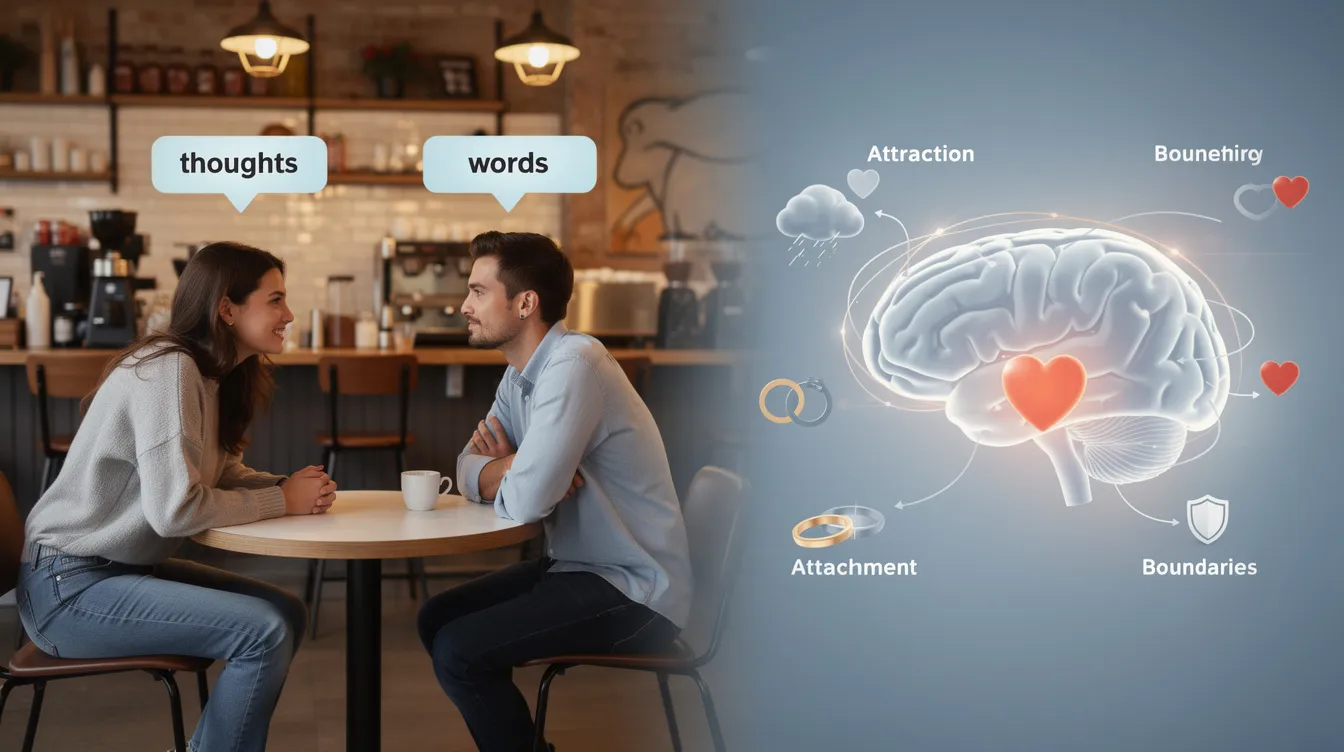
This is the anxious-avoidant trap, a relationship pattern where one partner craves closeness while the other instinctively pulls away, creating a push-pull dynamic that leaves both people feeling drained, confused, and deeply attached at the same time. The anxious avoidant cycle can feel impossible to escape, even when both partners recognize that something is wrong.
If you have ever felt like your relationship swings between intense connection and painful distance, you may already be living inside this trap without having the language for it. Many people spend months or years stuck in an anxious avoidant relationship before understanding why it feels so different from what they expected love to be. This dynamic is commonly labeled as an anxious and avoidant relationship, highlighting the emotional complexities and challenges rooted in differing attachment styles.
This article will explain exactly what the anxious-avoidant trap is, why it forms, and how to recognize the signs. More importantly, you will find a concrete Jeter AI Compatibility Test later in this article to help you assess whether your relationship has a realistic chance of working, or whether the pattern runs too deep. For a deeper understanding of how AI is revolutionizing relationship assessments, check out the AI Compatibility Calculator.

What Is the Anxious-Avoidant Trap?
The anxious-avoidant trap is a relationship dynamic that occurs when one partner has an anxious attachment style and the other has an avoidant attachment style. Together, they create a chronic pursue-withdraw cycle where the anxious partner chases closeness and the avoidant partner retreats to protect their independence. Neither person feels truly secure, and both feel misunderstood by the person they love most.
Someone with an anxious attachment style experiences a heightened fear of abandonment. They crave emotional intimacy, seek frequent reassurance, and feel anxious when communication slows down or their partner seems distant. This pattern often traces back to inconsistent caregiving in childhood, where love and attention were sometimes available and sometimes withdrawn. Attachment theory, first developed by British psychoanalyst John Bowlby in the 1950s, explains how these early experiences shape our expectations in adult relationships. Exploring your relationship history—including past relationships and attachment experiences—can be crucial for understanding and addressing current relationship patterns.
Someone with an avoidant attachment style, on the other hand, values independence and self-reliance above all. They feel uncomfortable with too much emotional closeness and tend to pull away when a relationship starts to feel intense or demanding. This pattern often develops when a child learns early that expressing emotional needs leads to rejection or dismissal, training them to rely only on themselves. Emotionally unavailable caregivers teach children that vulnerability is unsafe.
When these two attachment styles combine, the result is known as anxious avoidant attachment—a classic dynamic marked by a push-pull pattern of seeking closeness and distancing. The typical cycle looks like this: the anxious partner seeks closeness and reassurance, the avoidant partner feels overwhelmed by the emotional intensity, the avoidant partner withdraws to regulate their stress, the anxious partner pursues harder in response to the distance, conflict escalates as both partners feel increasingly triggered, there is a temporary repair or moment of reconnection, and then the whole cycle repeats. The anxious avoidant attachment style often leads to recurring misunderstandings and emotional dissatisfaction, as both partners struggle to get their needs met and feel emotionally safe.
This pattern can show up in early dating, long-term committed relationships, and even in on-and-off situationships that stretch across years. Consider a couple in their late twenties who have been together for two years. At first, he texted constantly and planned elaborate dates. Once she wanted to move in together, he started working longer hours and responding to messages more slowly. She began checking his social media, asking repeatedly if they were okay, and wanting to process every shift in his mood. He experienced her as demanding; she experienced him as cold. After every big fight, they would have a passionate reconnection and a few weeks of closeness before the same argument themes returned. This is the anxious-avoidant trap in action. Anxious avoidant relationship work involves recognizing these unhealthy patterns and actively working through them—sometimes with professional support—to improve the relationship dynamic. For practical tools on assessing your relationship, see Compatibility Test: How Jeter AI Predicts Real Relationship Compatibility.
Why Anxious and Avoidant Partners Feel So Drawn to Each Other
One of the most confusing aspects of the anxious-avoidant trap is how powerful the initial attraction often feels. Many anxious and avoidant partners describe their early relationship as unusually intense, even feeling like they had finally met their soulmate. This anxious avoidant attraction can be so strong that it masks the underlying incompatibility until the cycle is already entrenched.
Both partners are often unconsciously drawn to familiar emotional patterns from childhood, even when those patterns were painful. For the anxious person, a partner who is emotionally distant confirms an old belief that love must be earned and that closeness requires constant effort. For the avoidant person, a partner who is warm, attentive, and pursuing confirms an expectation that others will eventually become too demanding. Neither person consciously chooses this dynamic, but both find it strangely familiar. In many cases, avoidant attachment styles drawn to anxious partners create a cyclical dynamic rooted in childhood experiences, where each person’s attachment needs and fears reinforce the other’s patterns.
In the first three months, an avoidant partner’s emotional distance can feel exciting and mysterious to an anxious partner—especially for someone who tends to lean anxious in relationships. The nervous system activation that comes from uncertainty, from not quite knowing where you stand, can be misread as evidence of rare chemistry or deep connection. The avoidant partner, meanwhile, often enjoys the attention and admiration from the anxious partner during this phase. Being pursued feels flattering, especially when the avoidant partner does not have to expose too much vulnerability in return.
Consider a timeline where intensity builds quickly over the first six to eight weeks. Long phone calls, constant texting, and rapid emotional bonding make both partners feel unusually connected. Around month two or three, as the relationship moves toward more commitment, the avoidant partner’s autonomy concerns start activating. They may pull back slightly, and the anxious partner, sensitive to changes in closeness, notices immediately.
This is where validation loops begin. Each partner’s behavior temporarily soothes and then re-triggers the other’s attachment wounds. When the avoidant partner shows affection, the anxious partner feels loved and validated. When the avoidant partner pulls away, the anxious partner feels abandoned and pursues harder, which confirms the avoidant partner’s belief that relationships are overwhelming. Both people are caught in a feedback loop that feels impossible to stop.

It’s important to recognize that attachment styles exist along an attachment spectrum, rather than as fixed categories, and understanding this range can help individuals become more self-aware and foster healthier relationship dynamics.
For those curious about assessing compatibility even before deep involvement, reading about Compatibility Before First Date: We Tested Ourselves, Here’s What Happened can offer valuable insights.
7 Signs You’re Stuck in the Anxious-Avoidant Trap
Below are seven key signs that your relationship may fit the anxious avoidant relationship pattern. These patterns are especially common when one partner has a more anxious attachment style, which can intensify the push-pull dynamic. Notice how many apply to your current or recent relationship for valuable insight.
1. One Partner Constantly Seeks Reassurance While the Other Withdraws
-
If one of you frequently asks questions like “Do you love me?” or “Are we okay?” while the other becomes quiet, defensive, or physically unavailable, this is a core sign of the anxious avoidant dynamic. The anxious attachment partner, or anxiously attached person, often exhibits anxious behaviors such as seeking constant validation and reassurance, while the avoidantly attached partner finds these requests overwhelming.
2. Arguments Turn Into a Chase Dynamic
-
In conflict, one partner tends to pursue resolution immediately, sending multiple messages or wanting to talk right away, while the other shuts down, ignores messages, or leaves the room. This pursue-withdraw pattern is one of the clearest signs of an anxious avoidant relationship, as avoidant partners tend to distance themselves emotionally in response to conflict. For more on this dynamic, see Gottman Institute’s explanation.
3. You Have Broken Up and Reunited Multiple Times
-
The anxious avoidant cycle often includes repeated breakups and reconciliations. Breakups happen when the anxious partner can no longer tolerate the distance or when the avoidant partner feels too pressured. These cycles are often fueled by avoidant tendencies, which contribute to repeated separation and reunion. Reunions happen when time apart temporarily reduces tension and both feel a pull back to the intense connection.
4. Emotional Highs and Lows Feel Addictive
-
The relationship swings between euphoria and despair. Reconnection after conflict feels incredibly intense, while periods of distance feel unbearable. This emotional roller coaster can make the relationship feel uniquely powerful, even as it drains both partners.
5. One Partner Is Labeled “Too Needy” While the Other Is Called “Cold”
-
The anxious partner often hears that they are too sensitive, too emotional, or too demanding. The avoidant partner is often labeled cold, distant, or emotionally unavailable. Both feel misunderstood, and each sees the other as the problem rather than recognizing the dynamic itself.
6. You Overthink Texts and Response Times Constantly
-
The anxious person may spend significant mental energy analyzing communication patterns, reading into emoji choices, or catastrophizing when a reply takes longer than expected. The avoidant person may feel suffocated by frequent check-ins and pull away further, confirming the anxious person’s fears.
7. Even Small Disagreements Escalate Quickly
-
Minor issues like weekend plans or tone of voice rapidly blow up because they tap into deeper attachment fears. Discussions stall when one partner shuts down and the other escalates. Problems either explode or get swept under the rug, only to resurface later.
If several of these signs match your experience, you may be caught in an anxious avoidant trap. Later in this article, you will find a more structured Jeter AI Compatibility Test to help you assess the strength of this pattern and whether your relationship has a chance to improve.
Why This Relationship Dynamic Feels So Addictive
One reason the anxious avoidant cycle feels so hard to escape is intermittent reinforcement. In behavioral psychology, unpredictable rewards create stronger attachment than consistent ones. When affection and attention come and go unpredictably, the anxious partner becomes even more vigilant, more preoccupied, and more determined to win the avoidant partner’s consistent love. It works like a slot machine: the uncertainty itself keeps you hooked. Learn more about intermittent reinforcement in behavioral psychology.
The emotional volatility of anxious avoidant relationships also floods the nervous system with stress hormones during conflict and feel-good chemicals during reconnection. Big fights followed by passionate reconciliations can create a neurochemical cocktail that feels like deep, meaningful love. The contrast between pain and relief is so intense that many people mistake it for rare chemistry rather than recognizing it as a sign of instability.
Both partners’ attachment wounds are repeatedly activated and temporarily soothed in this dynamic. The anxious partner’s fear of abandonment is triggered every time the avoidant partner pulls away, then calmed when they reconnect. The avoidant partner’s fear of engulfment is triggered every time the anxious partner pursues, then calmed when they get space. This cycle can repeat for years without resolution.
Consider a couple who has broken up four times over two years. Each time, the anxious partner ends things during a period of high conflict. The avoidant partner feels relieved at first, then starts to miss the intimacy and validation and reaches out after a few weeks. They have long, emotional conversations, confess they cannot live without each other, and reunite with intense closeness. Within a month, the old pattern returns, and another breakup follows. Both feel baffled by their inability to detach, interpreting the cycle as proof of a special bond rather than a sign of unhealed attachment wounds.
Feeling hooked on a relationship or unable to let go does not automatically mean the relationship is healthy or compatible for the long term. It may reflect intermittent reinforcement, emotional volatility, and attachment trauma more than genuine compatibility of values, goals, and mutual emotional safety.
Can Anxious and Avoidant Partners Actually Be Compatible?
Emotional Awareness
The most important condition for anxious avoidant relationship success is emotional awareness from both partners. Both people need to recognize their own attachment style, understand how it shows up in the relationship, and take responsibility for their part in the cycle. Unmet emotional needs often drive the anxious-avoidant dynamic, fueling the push-pull cycle and emotional intensity. Without this awareness, couples tend to personalize everything and blame each other rather than addressing the underlying dynamic, with unmet emotional issues frequently at the root of recurring conflict.
Willingness to Change
Willingness to do things differently is equally crucial. Both partners must be motivated to experiment with new behaviors, even when those behaviors feel uncomfortable. The anxious partner must practice tolerating uncertainty without immediately seeking reassurance. The avoidant partner must practice staying engaged and expressing emotions rather than shutting down. Neither can change the other; both must change themselves.
Concrete Compatibility Factors
Key compatibility factors that improve the chances of success include:
|
Compatibility Factor |
Description |
|---|---|
|
Shared life goals |
Both want commitment within a reasonable timeframe, value honesty and respect, and can tolerate discomfort while learning new patterns. |
|
Secure communication skills |
Use of “I” statements, reflecting back what is heard, and making genuine repair attempts after conflict. |
|
Willingness to seek support |
Openness to therapy or coaching, individually or as a couple, to develop healthier patterns. |
|
Capacity for self-reflection |
Both partners are able to recognize and discuss their own triggers and patterns. |
When Compatibility Is Unlikely
Red flags and situations where compatibility is unlikely:
-
Severe, unresolved trauma in one or both partners
-
Ongoing substance misuse without treatment
-
One partner refusing to acknowledge the dynamic or do any work
-
Escalating emotional manipulation or abuse
In these cases, the attachment wounds run too deep for relationship work alone to address, and individual healing must come first. This can result in an unstable relationship, marked by emotional distress, lack of trust, and constant conflict.
Consider two scenarios. In the first, an anxious woman and an avoidant man, both in their early thirties, both want long-term commitment and children. After repeated fights, they read about attachment styles, recognize their patterns, and start couples therapy. He agrees to text once during the workday and schedule a weekly check-in. She commits to journaling and waiting twenty minutes before sending emotionally reactive messages. Over time, conflict intensity decreases and both feel safer, though it remains a growth area. In the second scenario, an avoidant partner who drinks heavily and refuses therapy routinely disappears after fights and dismisses the anxious partner’s concerns. The anxious partner becomes increasingly distressed and isolated. Here, the attachment dynamic is compounded by substance misuse and emotional manipulation, making compatibility unlikely without major individual change and often resulting in an unstable relationship.

For a comprehensive list of questions to explore with your partner before making big commitments, see the 100 Compatibility Questions for Couples: The Ultimate Pre-Commitment Checklist.
The Anxious-Avoidant Compatibility Test
The Jeter AI Compatibility Test is a practical way to assess the strength of the anxious avoidant trap in your specific relationship. This is not a clinical diagnosis but rather a structured self-reflection tool that can help you understand where you stand and what might need to change.
Rate each statement from 1 to 5 while thinking about your current or most recent partner. Use this scale: 1 means strongly disagree, 2 means disagree, 3 means neutral, 4 means agree, and 5 means strongly agree.
Statement 1: My partner tends to withdraw, shut down, or need a lot of space when conflict happens.
Statement 2: I feel anxious or preoccupied when communication slows down or they do not text back for a while, and I find it hard to focus on other things.
Statement 3: One of us fears losing independence or feeling trapped if the relationship gets too close or serious.
Statement 4: One of us fears being abandoned or left and often worries the relationship will end.
Statement 5: Arguments often turn into a chase, with one of us pursuing, sending multiple messages, or pushing to talk right away, while the other shuts down or pulls away. This often happens because the avoidant partner sees the anxious partner’s pursuit or need for reassurance as overwhelming or intrusive, which can lead to further withdrawal or distancing.
Statement 6: We break up or almost break up repeatedly, then reunite, often with intense emotion.
Statement 7: Physical intimacy, including sex, often feels especially intense after conflict or a period of distance.
Statement 8: We rarely resolve disagreements calmly in the moment; issues tend to explode or get swept under the rug.
Statement 9: One of us often feels labeled as “too needy” or “too emotional,” while the other is seen as “cold” or “distant.”
Statement 10: Despite strong feelings, this relationship often feels like an emotional roller coaster that leaves both of us drained.
Now add up your total score. Here is how to interpret your results:
|
Score Range |
Interpretation |
|---|---|
|
10–20 |
Low anxious-avoidant dynamic. Some tension may exist, but the classic trap is not strongly present, or secure behaviors are already moderating it. |
|
21–35 |
Moderate anxious-avoidant pattern. There are noticeable push-pull tendencies that may be workable with awareness, communication, and consistent effort. Outside support could help. |
|
36–50 |
Strong anxious-avoidant trap. The relationship likely involves high distress, instability, and addictive-feeling dynamics. Significant work and possibly professional support would be needed to change it. For some couples, separation may be healthier. |
|
Write down your score. If it feels safe and appropriate, consider inviting your partner to take the anxious avoidant compatibility test separately. Comparing results can open a conversation about patterns rather than personalities, though this should only be done if both people feel emotionally safe doing so. |
|
|
A more interactive, personalized version of the Jeter AI Compatibility Test is available on their platform, which guides you through branching questions based on your specific responses and offers tailored feedback for your situation. This test is part of Jeter AI’s broader relationship support system, which uses advanced AI to analyze relationship patterns and provide personalized insights. You can learn more about how Jeter AI works and supports couples on their How It Works page. |
How to Break the Anxious-Avoidant Cycle
Breaking the anxious avoidant cycle requires both partners to change how they respond to their own triggers rather than trying to fix or reshape the other person. Emotional self-regulation and new communication patterns are the foundation of change.
Regulating Emotional Responses
-
Recognize early signs of attachment activation. For the anxious partner, this might be racing thoughts, the urge to text repeatedly, or catastrophizing about the relationship. For the avoidant partner, it might be feeling overwhelmed, numb, or irritable.
-
Pause before reacting. Wait twenty minutes before sending a reactive message, take slow breaths, or go for a short walk to calm the nervous system.
Creating Safe Communication Routines
-
Establish predictable structures for check-ins and conflict conversations. For example, a weekly twenty-minute relationship check-in where both partners share appreciations and concerns can reduce the need for constant reassurance.
-
Make agreements like: “If we argue, we can take a one-hour break but will return to talk at a specific time.” This prevents indefinite stonewalling while still respecting the avoidant partner’s need for space.
Setting Boundaries
-
For the anxious partner: Commit to self-soothing before reaching out, avoid sending more than two messages in a row without a response, and ask for specific, realistic forms of reassurance rather than general validation.
-
For the avoidant partner: Set explicit, time-bound space requests (“I need an hour to process; I will text you by 8 PM”) rather than disappearing indefinitely.
Building Secure Attachment Behaviors
-
Practice consistent responsiveness to reasonable needs.
-
Apologize and repair after conflict.
-
Be open to expressing and hearing emotions.
-
See your partner as a separate person who is not responsible for regulating all of your feelings.
-
Both partners can learn these behaviors through therapy, psychoeducation, and deliberate practice.
Steps for Each Partner
For the anxious partner:
-
Practice self-soothing before reaching out.
-
Delay long emotional messages for at least twenty minutes to separate the urge from the action.
-
Invest in friendships, hobbies, and routines that provide meaning and validation outside the romantic relationship.
For the avoidant partner:
-
Learn to name emotions in simple language (“I feel overwhelmed” or “I care, but I’m stressed”).
-
Commit to brief but consistent communication during conflict.
-
Practice staying physically present even when the urge to leave arises.
Example of Secure Conversation Pattern
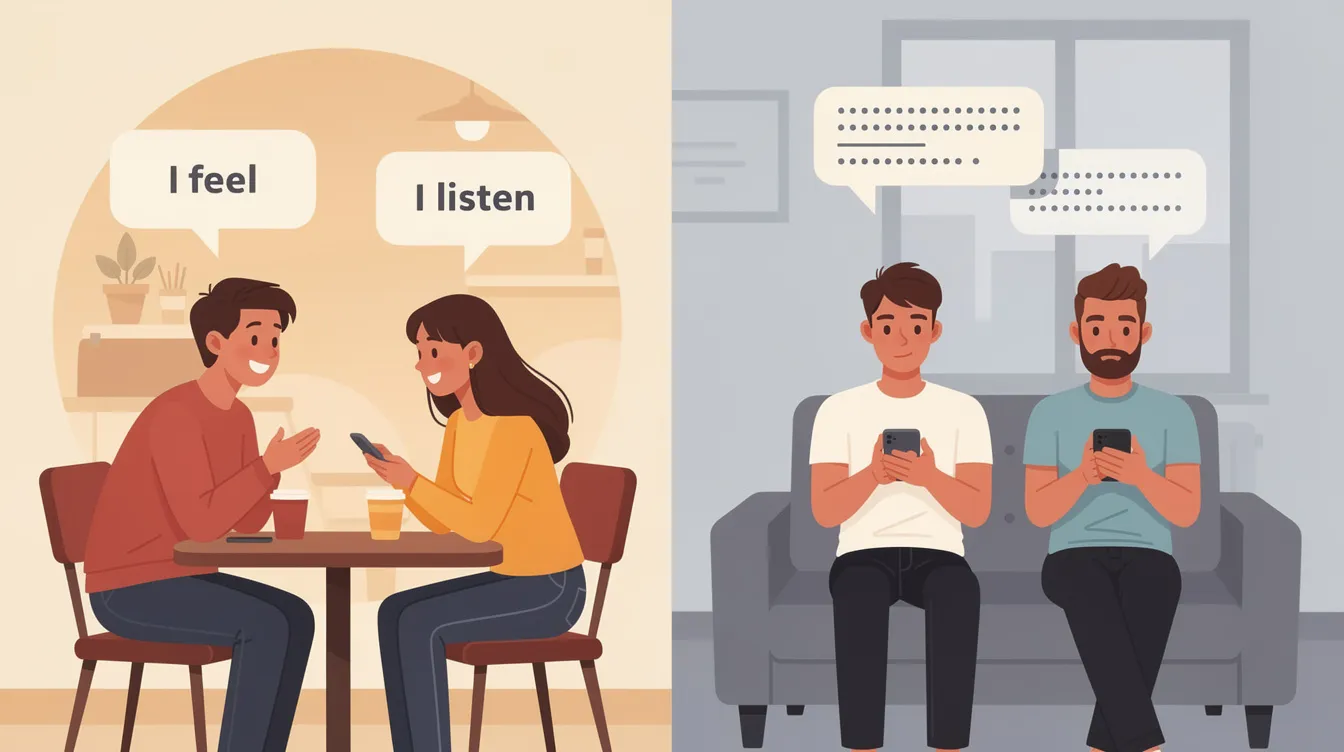
In the insecure version, the anxious partner says “You never text back; you don’t care about me. I’m done,” and the avoidant partner responds “You’re so dramatic. I can’t deal with this” before going silent for days. In the more secure version, the anxious partner says “I feel anxious when I don’t hear from you; can we agree on a check-in time if you’re busy?” and the avoidant partner responds “I hear that you feel anxious. I need some focus time at work, but I can text you at lunch and call you around 7 PM.” The shift is from blame and protest to naming needs and negotiating specifics.

How to Know If It’s Time to Walk Away
Not every anxious avoidant relationship can or should be saved. While attachment work can help many couples, some dynamics remain chronically harmful, especially when one or both partners are unwilling or unable to change.
-
Persistent emotional distress most days of the week is a significant red flag. If the relationship is a primary source of anxiety, sadness, or anger most days, with only brief highs in between, that suggests a chronically dysregulated bond rather than a secure partnership. The anxious partner may experience insomnia, intrusive thoughts, and difficulty functioning. The avoidant partner may chronically feel trapped, resentful, or emotionally numb, and may also experience intense fear of abandonment or engulfment, especially when feeling overwhelmed by their partner’s emotional needs.
-
Feeling afraid to bring up needs is another warning sign. If one partner consistently fears voicing concerns because they expect criticism, withdrawal, or dismissal, psychological safety is dangerously low. This is particularly concerning when the anxious partner has stopped expressing needs to avoid conflict but internal distress remains high.
-
Escalating conflict that includes insults, contempt, or stonewalling indicates a deteriorating relationship. If arguments regularly involve name-calling, character attacks, long silent treatments spanning days or weeks, or threats to break up used as a regular tactic, the relationship has likely become toxic rather than simply challenging.
-
One partner refusing to acknowledge the dynamic makes change nearly impossible. If one person repeatedly denies any problem, refuses to discuss patterns, or consistently blames everything on the other partner’s supposed flaws, growth cannot happen. Change requires both partners to recognize that the anxious avoidant cycle is co-created.
-
Only one person doing the work leads to exhaustion and resentment. If one partner is reading about attachment, going to therapy, and practicing new responses while the other continues old patterns with no effort or empathy, the working partner will eventually burn out.
If the anxious avoidant trap has persisted for more than twelve to eighteen months with no real improvement despite genuine attempts to change, this may signal a deeply entrenched pattern that is unlikely to shift without serious, sustained intervention from both people. In some cases, the relationship may involve a fearful avoidant attachment style, where one or both partners experience a combination of anxiety and avoidance, leading to cycles of emotional pull and push that make the relationship particularly unstable.
Signs that leaving may be healthier include losing your sense of self, abandoning close friends or interests to manage the relationship, and noticing anxiety, depression, or physical symptoms worsening over time. If you are considering ending the relationship, seek professional support or trusted community to help you think through the decision. If there is any emotional or physical abuse present, safety planning must be the priority.
Final Thoughts: Awareness, Choice, and Secure Connection
The anxious-avoidant trap is fundamentally about two insecure attachment patterns colliding, not about either partner being broken or unlovable. Both anxious and avoidant attachment styles developed as protective strategies in childhood, and they continue to operate automatically in adult relationships until they are recognized and consciously addressed.
Awareness of your own attachment style and your partner’s tendencies is the first major step toward change. Without this vocabulary and understanding, couples personalize everything and remain stuck in cycles of blame. Recognizing “I’m feeling triggered and wanting to pursue” or “I’m feeling overwhelmed and wanting to withdraw” allows both partners to respond differently instead of reacting automatically.
Compatibility is not determined solely by having anxious versus avoidant labels. It depends on whether both people are willing to recognize their patterns, take accountability for their side, practice more secure behaviors over time, and align on core values and life goals. Some anxious avoidant relationships become more stable and secure with consistent effort. Others find that despite genuine attempts, the dynamic remains too painful, and parting ways is healthier for both people.
Use your Jeter AI Compatibility Test results as a starting point for reflection, journaling, or a conversation with a therapist, not as a final verdict on your relationship’s fate. Scores reveal patterns, not destinies.
Secure, stable love is learnable. Research on attachment indicates that attachment styles can shift over time with corrective experiences and conscious work. People who have spent years caught in anxious avoidant relationships can develop more secure patterns, whether with a current partner who is equally committed to growth or with a future partner who offers a different dynamic.

FAQ: Common Questions About the Anxious-Avoidant Trap
This FAQ section addresses frequent questions about anxious avoidant relationships in brief, accessible answers.
What is the anxious avoidant trap?
The anxious avoidant trap is a recurring push-pull relationship pattern rooted in insecure attachment styles that forms when an anxious partner who craves closeness and an avoidant partner who needs distance repeatedly trigger each other’s insecurities. This creates a cycle of pursuit, withdrawal, conflict, and temporary repair that often feels intense, confusing, and hard to break. It can occur in dating, long-term relationships, and on-and-off situationships spanning years.
Why are anxious and avoidant partners attracted to each other?
Anxious and avoidant partners are often unconsciously drawn to familiar emotional patterns from childhood. Each partner’s behavior confirms the other’s deep beliefs about relationships. The anxious person finds the avoidant partner’s distance familiar, mirroring early experiences of having to work for love. The avoidant person finds the anxious partner’s intensity familiar, confirming beliefs that others will be too demanding. Early chemistry and mystery can be mistaken for deep compatibility when it actually reflects attachment wound activation.
Can anxious and avoidant relationships work long term?
Anxious and avoidant relationships can work long term, but success requires both partners to understand their attachment patterns, take responsibility for their part in the cycle, build secure communication skills, and often engage in therapy or coaching. In intimate relationships with these attachment styles, building and maintaining emotional connection can be especially challenging, as disruptions often lead to cycles of pursuit and withdrawal. Not all such relationships will or should be saved, especially when there is ongoing abuse, unwillingness to change, or deeply incompatible life goals. Both people must be genuinely motivated to grow for the relationship to become stable and secure.
How do you break the anxious avoidant cycle?
Breaking the anxious avoidant cycle requires recognizing the pattern, slowing down automatic reactions, and learning to self-regulate rather than immediately pursuing or withdrawing. Both partners benefit from open conversations about needs and triggers, setting clear agreements about space and communication, and seeking professional support when the pattern feels entrenched. The anxious partner practices self-soothing before reaching out; the avoidant partner practices staying engaged and naming emotions. Prioritizing emotional expression is essential for building trust and security between partners.
Are anxious and avoidant partners ever truly compatible?
Long-term compatibility depends less on attachment labels and more on whether both partners are willing to move toward secure attachment together. This means practicing consistency, empathy, boundaries, and honest communication over time. Some anxious-avoidant couples become more secure and stable with sustained effort. Others find that despite attempts, the dynamic remains too painful, and separation is healthier. Compatibility is about willingness to grow, not just initial chemistry or attachment style matching.
Attachment Styles in Adult Relationships
Attachment styles are at the heart of how we connect, communicate, and experience love in adult relationships. For many couples, especially those with anxious and avoidant partners, these patterns shape everything from daily interactions to the overall sense of emotional intimacy. Anxious and avoidant partners often find themselves caught in a push-pull dynamic: the anxious partner seeks emotional closeness and constant reassurance, while the avoidant partner values independence and tends to create emotional distance when things feel too intense.
The anxious attachment style is rooted in a deep fear of abandonment. An anxious partner may worry about being left or not being “enough,” leading to behaviors like frequent check-ins, seeking validation, or feeling uneasy when their partner is less responsive. On the other hand, the avoidant attachment style is characterized by discomfort with too much emotional closeness. An avoidant partner might withdraw, become distant, or prioritize self-reliance, especially when they sense their independence is threatened.
These two attachment styles can create a cycle where each partner’s attempts to feel safe actually trigger the other’s insecurities. The anxious partner’s pursuit of connection can feel overwhelming to the avoidant partner, who then pulls away, which in turn makes the anxious partner feel even more anxious and desperate for reassurance. This push pull dynamic can leave both people feeling misunderstood and emotionally exhausted.
Understanding attachment styles is the first step toward breaking this cycle. By recognizing whether you lean more anxious, avoidant, or somewhere in between, you can start to see how your own patterns contribute to the relationship dynamic. With self-awareness and effort, it’s possible to move toward a more secure attachment style—one that balances emotional intimacy with healthy boundaries and allows both partners to feel safe, valued, and connected in their adult relationships.
Communicating Emotional Needs Effectively
Navigating anxious avoidant relationships requires more than just awareness of attachment styles—it demands intentional, skillful communication about emotional needs. For many couples, the challenge lies in bridging the gap between emotional intensity and emotional distance, so that both partners feel heard and respected.
Using “I” Statements
Anxious partners often feel a strong urge to express their needs for closeness and reassurance, but if these needs are communicated in a way that feels overwhelming, the avoidant partner may retreat further. Conversely, avoidant partners may struggle to acknowledge or respond to emotional needs, fearing that doing so will compromise their independence or lead to uncomfortable emotional intensity.
The key is to communicate emotional needs in a way that fosters emotional intimacy without triggering defensiveness or withdrawal. Using “I” statements—such as “I feel anxious when we go long periods without talking” or “I need some time to process before we discuss this”—helps keep the focus on personal feelings rather than blaming the other person. This approach encourages openness and reduces the likelihood of escalating into the anxious avoidant cycle.
Setting Clear Boundaries
Setting clear boundaries is equally important. Anxious partners can practice self-soothing and limit repeated requests for reassurance, while avoidant partners can commit to small, consistent gestures of engagement, like checking in at agreed-upon times. Respecting each other’s triggers and needs creates a sense of emotional safety, making it easier to address issues before they spiral into conflict.
Balancing Emotional Intensity and Distance
Ultimately, effective communication is about finding a balance between emotional intensity and emotional distance. By working together to express needs honestly, listen with empathy, and honor each other’s boundaries, anxious and avoidant partners can break free from old patterns and build a more secure, connected relationship. This ongoing effort is essential for transforming anxious avoidant relationships into partnerships where both people feel valued, understood, and emotionally safe.
Get started with a free Jeter AI Compatibility Test


