


Introduction: Modern Dating Is Broken (And It’s Not Your Fault)
If you’ve ever wondered why modern dating feels so exhausting, you’re not alone. The endless swiping on apps like Hinge and Bumble. In fact, 48% of 18- to 29-year-olds have used a dating app, compared to only about 16% of those over 50. The ghosting after conversations that seemed promising. First dates in New York or Los Angeles that feel more like job interviews than romantic encounters.

Modern dating problems aren’t your fault. They’re built into the system.
The apps most people use are designed to keep you engaged, not to help you find a compatible partner. Many dating apps rely on intermittent reinforcement, using mechanics similar to slot machines to keep users engaged even when the experience is unfulfilling. Basically, these companies optimize for swipes, time spent, and subscriptions—not for helping you build a relationship with someone who actually fits your life. A Pew survey from 2020 revealed that 25% of dating app users say they feel more insecure after using a dating app.
I built Jeter AI because I was tired of the cycle. As a frustrated dater who went on over 100 dates before realizing the system was fundamentally broken, I wanted to create a compatibility-first alternative. What follows is my story, the data behind why dating apps fail so many users, and practical guidance for navigating modern dating problems more intentionally.
I Went on 100+ Dates and Realized Something Was Seriously Wrong
Before I built Jeter AI, I went on over 100 dates.
Between 2016 and 2022, I tried everything. Tinder, Bumble, Hinge, OkCupid. I swiped through profiles in New York City, Boston, and Chicago. I optimized my photos, crafted clever prompts, and followed all the advice about texting etiquette.
On paper, these were good matches. Similar interests. Great jobs. We liked the same podcasts. The conversations flowed easily over text.
In person? Something was always off.
Strong attraction but misaligned goals. Great texting chemistry but awkward silences at dinner. People who said they wanted commitment but behaved like they were still browsing. The same patterns kept repeating: two or three promising dates, then a slow fade or sudden ghost. Each time, there was usually a clear sign—like avoidance, defensiveness, or lack of follow-through—that hinted at deeper incompatibility.
One memorable date was with someone I met on Bumble in Boston. We had a great text exchange for weeks, sharing stories about our favorite books and travel experiences. When we met for coffee, though, she seemed distracted and kept checking her phone. Later, I found out she was still actively talking to multiple people and wasn’t ready to commit. It was a tough lesson in reading beyond the surface.
Another time in Chicago, I matched with someone whose profile highlighted her love of hiking and cooking. Our first date was dinner at a cozy restaurant, but midway through, I realized we had very different communication styles—she was very direct and blunt, while I preferred a more gentle approach. The mismatch led to misunderstandings and a quick end to what could have been a promising connection.
On a trip to New York, I met someone through Hinge who seemed perfect on paper. We both wanted a serious relationship, shared political views, and had similar lifestyles. But after a few dates, it became clear that our emotional availability was out of sync—she was more guarded, and I was more expressive. That disconnect created frustration and confusion for both of us.
As I talked with friends, I realized that women, especially, were facing unique modern dating problems—like harassment, safety concerns, and the pressure to share their values early—on top of the usual frustrations. While most negative interactions are non-violent, a notable minority involve threats to physically harm, especially towards younger women and marginalized groups, which highlights the seriousness of these risks.
Something deeper was wrong with how I was choosing who to meet.

The Reality of Modern Dating: Efficient, But Deeply Ineffective
Modern dating is optimized for speed and volume, not for compatible relationships.
According to Pew Research Center, three in ten U.S. adults have used a dating app, and roughly one in ten partnered adults met their current partner online. While online dating platforms are praised for their ability to expand the dating pool and allow users to evaluate potential partners before meeting in person, only 13% of dating app users report finding a committed relationship or marriage through these platforms.
The math doesn’t work. Many users swipe through thousands of profiles—especially in dense cities like New York, San Francisco, or Toronto—yet struggle to convert matches into meaningful connections. In fact, 57% of dating app users believe that the prevalence of dating apps has reduced opportunities to meet potential partners in real life.
Why? Several factors compound the issue:
Paradox of choice: Too many options create decision paralysis and constant second-guessing
Swipe culture: Snap judgments based on photos, height, and quick prompts instead of values or emotional availability
App burnout: A 2024 Hinge internal survey found 70% of users reported feeling burned out
Ghosting epidemic: 80% of online dating users have experienced ghosting, per YouGov polling
Research suggests that the very design of these platforms creates relationship stress rather than reducing it.

Why Most Dating Apps Make Modern Dating Problems Worse, Not Better
Most dating platforms—Tinder, Bumble, Hinge, and the broader Match Group portfolio—are built on engagement-based business models. These companies, including industry giants like Match Group and Bumble, focus their business strategies on maximizing user engagement, market share, and recurring revenue, often prioritizing profit motives over genuine user experience. Their revenue depends on time spent in the app, number of swipes, and recurring subscriptions.
This creates what I call the dating app paradox: apps lose their best customers when they help them leave.
The result? Systems that subtly favor endless browsing over efficient pairing. Internal Match Group leaks in 2023 revealed algorithms that prioritized newer or paying users over mutual compatibility.
Here’s how the business model works against you:
Freemium degradation: Free versions get progressively worse—fewer quality matches, paywalls on basic features like seeing who liked you—to push users into paid tiers averaging $20-50 monthly
Engagement metrics: AI algorithms optimize for what keeps you swiping, not who’s genuinely compatible
Opacity: Users don’t know why certain profiles appear, why good matches vanish, or how their behavior is interpreted
Normalized ghosting: High-volume, low-accountability environments discourage honest communication
App burnout: Many users experience ‘swipe fatigue’—the exhaustion that comes from endless swiping with little meaningful connection. This widespread swipe fatigue has led to a growing preference for ‘slow dating,’ where singles prioritize quality over quantity and seek more intentional, meaningful matches.
As a result of these business models, four of the biggest dating apps in the UK lost over a million users between them last year due to frustration and boredom with digital matchmaking.
Dating apps win when you stay single.

The Core Modern Dating Problem: We’re Choosing Based on the Wrong Signals
Here’s the insight that changed everything for me:
I wasn’t choosing the wrong people—I was using the wrong criteria.
Think about what most dating app users actually evaluate:
Photos
Witty prompts
Job title
Height
Playlists and interests
“Vibes” from DMs
What’s missing? The signals that actually predict whether a long term relationship will work:
Intent alignment (casual vs. serious, kids, timeline)
Communication style (texting frequency, directness, depth)
Emotional compatibility (attachment patterns, conflict style)
Lifestyle alignment (work schedules, finances, geography)
Values and vision (family, ambition, politics)
And just as important: the ability to spot a red flag early—like dishonesty, poor communication, or mismatched intentions—can save you from investing in the wrong connection before things get complicated.
Example: Someone in Atlanta matches with a person who wants kids in two years while they’re child-free by choice. Great chemistry. Similar values on paper. But that’s an inevitable long-term misalignment no amount of attraction can fix.
Humans are bad at predicting long-term fit from short-term sparks. Neuroscience shows initial attraction—dopamine and oxytocin surges—typically lasts about 90 days, often masking incompatibilities that only surface later.
What Actually Makes Two People Compatible (Beyond Just Attraction)
Relationship compatibility isn’t magic. It’s measurable.
Based on decades of relationship research—including John Gottman’s work studying over 3,000 couples—we can identify five key areas that predict whether romantic relationships will thrive or fail:
Mutual understanding, shared expectations, and maintaining independence are essential for a healthy relationship with a romantic partner. These factors help ensure both individuals feel respected and aligned in their goals.
1. Intent Alignment Are you both looking for the same thing? Casual dating, committed relationship, marriage, kids? Mismatched intents cause roughly 40% of early breakups, according to eHarmony data.
Example: One person in Denver wants to be married within three years. The other “isn’t sure” and keeps deflecting timeline conversations.
2. Communication Style How do you prefer to connect? Texting vs. calls, daily check-ins vs. space, directness vs. diplomacy. Poor sync here predicts dissolution.
Example: A texter who needs morning messages matched with someone who considers texts “for logistics only.”
3. Emotional Compatibility Attachment patterns matter. About 25% of adults have avoidant attachment styles, prone to pulling away when things get serious. Gottman’s research shows emotionally attuned couples turn toward each other’s bids for connection 86% of the time—failing couples, only 33%.
4. Lifestyle Alignment Daily rhythms, finances, social habits. A high-earning workaholic matched with someone prioritizing work-life balance will face friction.
Example: Someone in Vancouver who travels three weeks monthly for work vs. a partner in Seattle who wants daily together-time.
5. Values & Long-Term Vision Family plans, ambition, spirituality, politics. Core value alignment accounts for roughly 70% of long-term relationship success per recent studies.
Chemistry can exist in both compatible and incompatible pairings. The difference? Compatibility determines whether chemistry can grow into something stable.
Learn more about how dating compatibility testing works.

Founder Story: The Pattern I Couldn’t Ignore in My Own Dating Life
Looking back at my own dating life, the same patterns kept appearing.
Two to three month “almost relationships” that never quite became official. Repeat conflicts about communication frequency—I wanted daily contact, she preferred space. Misaligned expectations about exclusivity that neither of us surfaced until things got messy.
I remember a situationship in Brooklyn that ended when I realized we’d never actually discussed what we wanted. We’d been seeing each other for four months. Another in San Francisco where we aligned perfectly on hobbies but clashed fundamentally on money and kids—topics we’d avoided until month six.
One vivid memory was a date in Philadelphia where the woman I met seemed perfect: smart, funny, and ambitious. But after a few weeks, she revealed she was still emotionally attached to an ex, something she hadn’t disclosed early on. That hidden baggage made it impossible for us to move forward, despite the strong initial spark.
Another time, in Austin, I dated someone who was highly communicative and open online but became distant and unresponsive after we met in person. It was confusing and hurtful—a classic example of misaligned communication styles that no amount of chemistry could fix.
The emotional impact was real. Burnout. Cynicism. That creeping question: “Is it me?”
But something felt systemic. I kept meeting good people. The conversations weren’t bad. The problem was earlier—in how matches were being chosen in the first place.
It wasn’t bad luck. It was a broken system. And I wanted to know if compatibility could be made visible before the first date.
The Insight: What If We Could Actually Measure Compatibility Before Meeting?
The question became unavoidable: What if you could measure romantic compatibility before investing months into getting to know someone?
This idea drew from multiple influences. Personality psychology. Attachment theory from researchers like Amir Levine. Gottman’s decades of research on what predicts healthy relationships. And the emerging potential of data science to surface patterns humans miss.
I started sketching what a “compatibility engine” might look like. Not more right-swipes. Not better photos. A system that highlights alignment in intent, values, and relationship behavior before you ever meet.
The goal was never to replace intuition or attraction. It was to upgrade the input—who you choose to go on dates with in the first place. Compatibility tools like these can help users find love more efficiently by matching people who are truly aligned, reducing wasted time and frustration.

Building Jeter AI: From Personal Frustration to Compatibility Engine
Development started in early 2023. The first prototypes were rough—assessments that were too long, scoring that felt arbitrary, results that didn’t translate to real dating decisions.
I tested with friends in NYC, Philadelphia, and Austin. Their feedback was blunt: “Make it shorter.” “Tell me what to actually do with this.” “I don’t want to feel judged.”
The challenges were real:
Making assessments engaging enough that people actually complete them
Translating psychological insights into actionable scoring
Avoiding the trap of promising “soulmate” predictions when relationships are complex
Throughout the process, I realized that understanding the course of a relationship—how it develops and changes over time—was essential to building a compatibility engine that could truly guide singles through the modern dating problems they face.
What emerged was simpler than I expected. A free compatibility test people could share via link or QR code before a first date. Joint reports that surface where you align and where to have deeper conversations.
The late nights were worth it when early users started reporting fewer wasted dates and more clarity about who to invest in.
Explore our love tests to see how compatibility mapping works.
What Jeter AI Actually Does (And How It Tackles Modern Dating Problems)
Jeter AI uses science-backed assessments and AI to map how two people are likely to function in a relationship—not just how they flirt. This approach helps users focus on building significant connections that can lead to meaningful, long-term outcomes.
Here’s how it works:
Free compatibility assessment: Each person takes it individually
Shareable link or QR code: Invite someone you’re chatting with to compare results
Joint compatibility report: Breaks down communication, emotional style, lifestyle, values, and deal-breakers
Actionable insights: Where you’re a strong match, where to talk more before getting serious
No subscriptions. The compatibility test is free. Tokens are used only for detailed shared reports and events—transparent pricing with packages like 3 tokens for $10 or 12 for $25.
Each feature addresses a specific modern dating problem:
Problem | Jeter AI Solution |
|---|---|
First-date roulette | Compatibility report before meeting |
Situationships | Intent alignment scoring |
Burnout | Fewer but better-aligned matches |
Guessing games | Structured insights on key friction areas |
A significant number of people are finding real relationships through dating platforms—12% of adults say they have married or entered into a committed relationship with someone they first met through a dating site or app. |
How Jeter AI Is Different From Traditional Dating Apps
Most apps start with swiping. Jeter AI starts with understanding.
Where Tinder, Bumble, and Hinge measure success by daily active users and time spent, Jeter AI measures success by better-aligned connections—users reporting fewer but better dates, more second dates, clearer relationship decisions.
Jeter AI isn’t a replacement for other apps. It’s a compatibility-first layer you can use alongside them. Chatting with someone on Hinge? Share your Jeter compatibility link before agreeing to meet. It takes five minutes and can save you months.
Transparency matters. You can see what dimensions are being measured, why certain patterns matter, and what to talk about. No hidden engagement algorithms optimizing for your attention.
For those who want to meet people in person, Jeter AI also runs singles events—virtual and in-person compatibility-matched speed dating in cities including New York City, Boston, Chicago, Atlanta, Miami, Austin, Denver, Los Angeles, San Diego, San Francisco, Seattle, Washington DC, Toronto, and Vancouver.
Modern Dating Problem #1: Endless Swiping, Minimal Real Connection
You get 50 matches in a week. You’re still alone on Saturday night.
The paradox of choice leads to shallower evaluations. When everyone could be “the one,” no one feels worth investing in. You hedge. They hedge. Too many messages go unanswered. Conversations fizzle. Basically, when you have endless options, it becomes harder to commit to any one person, and genuine connections are lost in the shuffle.
The digital dating environment encourages users to treat potential partners as disposable commodities, resulting in emotional burnout.
Example: Someone in New York juggling chats with ten people across three apps. Low emotional investment on both sides. High flakiness. Plans made, plans canceled.
A compatibility-first filter shifts the question from “Who could I maybe like?” to “Who is actually aligned with how I want to build a life?”
Jeter AI reports help cut through the noise by focusing your energy on one or two promising people instead of twenty half-hearted matches.
Modern Dating Problem #2: Ghosting, Situationships, and Misaligned Intent
Ghosting: disappearing without explanation. Ghosting refers to abruptly cutting off communication, leading to emotional distress and uncertainty for those affected. Situationships: months of regular contact without commitment or future planning.
These aren’t character flaws. They’re predictable outcomes of high-volume, low-accountability environments. When you’re talking to multiple people with ambiguous expectations, disappearing feels easier than honest communication.
Example: One person in Philadelphia thinks they’re moving toward exclusivity. The other is casually dating four to five people with no plans for commitment. Neither stated their intent clearly.
Intent alignment is measurable. Jeter AI surfaces whether someone is genuinely relationship-oriented, avoidant of labels, or unclear about what they want—before you invest months wondering.
By date three, have explicit conversations about exclusivity, timelines, and definitions. It’s awkward for five minutes, but absolutely essential for honest communication and clarity. It saves you from situationship purgatory.
Modern Dating Problem #3: Confusing Chemistry with Compatibility
Chemistry feels like certainty. It isn’t.
The neuroscience is clear: dopamine and novelty create intoxicating feelings in the first 90 days that can mask fundamental incompatibilities. That’s why so many people wonder why relationships that started with fireworks end in frustration. One important sign to watch for is when chemistry overshadows clear warning signs of incompatibility—like avoidance of tough conversations or repeated conflict.
Consider two matches:
Match A: Intense physical spark, late-night texting, butterflies. But you clash on kids, money, and monogamy.
Match B: Slower-burn attraction. But deep similarity in values, emotional stability, and communication rhythms.
Most people chase Match A. Match B builds a healthy relationship.
A compatibility report can reframe this: “Attraction is there, but these three lifestyle gaps will be major friction points—talk about them before you invest deeply.” And remember, 71% of online daters report that it is very common for people on these platforms to lie about themselves to appear more desirable—another sign that relying on chemistry alone can be risky.
Modern Dating Problem #4: Emotional Burnout and Dating Cynicism
Dating burnout has specific symptoms:
Dread when opening apps
Resentment toward strangers before meeting them
Constant anticipation of being ghosted
The belief that “all the good ones are taken”
Emotional harm from negative interactions, such as being called an offensive name
A 2023 Pew study showed 47% of singles under 30 feel pessimistic about dating—up significantly from previous years. In fact, 35% of dating app users leave the apps feeling more pessimistic about dating. The cycle of choosing based on photos, ignoring red flags, and repeating communication mismatches reinforces the sense that true love isn’t possible.
Adding structure can reduce anxiety. Compatibility insights, guided questions, intentional events—these give daters a clearer roadmap instead of endless trial and error.
Practical steps:
Timebox app use (30 minutes daily maximum)
Focus on fewer but better matches
Use compatibility tools before agreeing to a second date
Set a limit: two first dates per week maximum
Modern Dating Problem #5: It’s Hard to Meet Offline, But Apps Don’t Really Fix It
Working from home, fragmented social circles, post-2020 isolation—organic offline meeting has gotten harder in cities like Boston, Austin, and Vancouver.
The irony? People go online hoping for efficient connection but end up with more pen pals than partners. You can engage in conversations for weeks without meeting. Female users often receive enough messages that overwhelm becomes the norm, while others struggle to get responses at all. But the risks of modern dating problems go beyond frustration: a significant portion of users have experienced harassment, with 37% of online dating users saying someone continued to contact them after they said they were not interested. On many platforms, app continued unwanted contact is a persistent issue—60% of female users ages 18 to 34 report that someone on a dating site or app continued to contact them after they said they were not interested. Younger women are especially vulnerable, facing higher rates of harassment, threats, and unwanted advances. In fact, 57% of female users ages 18 to 34 report being sent a sexually explicit message or image they didn’t ask for. Some users have even been threatened with physical harm, highlighting the real dangers that can arise from online dating interactions.
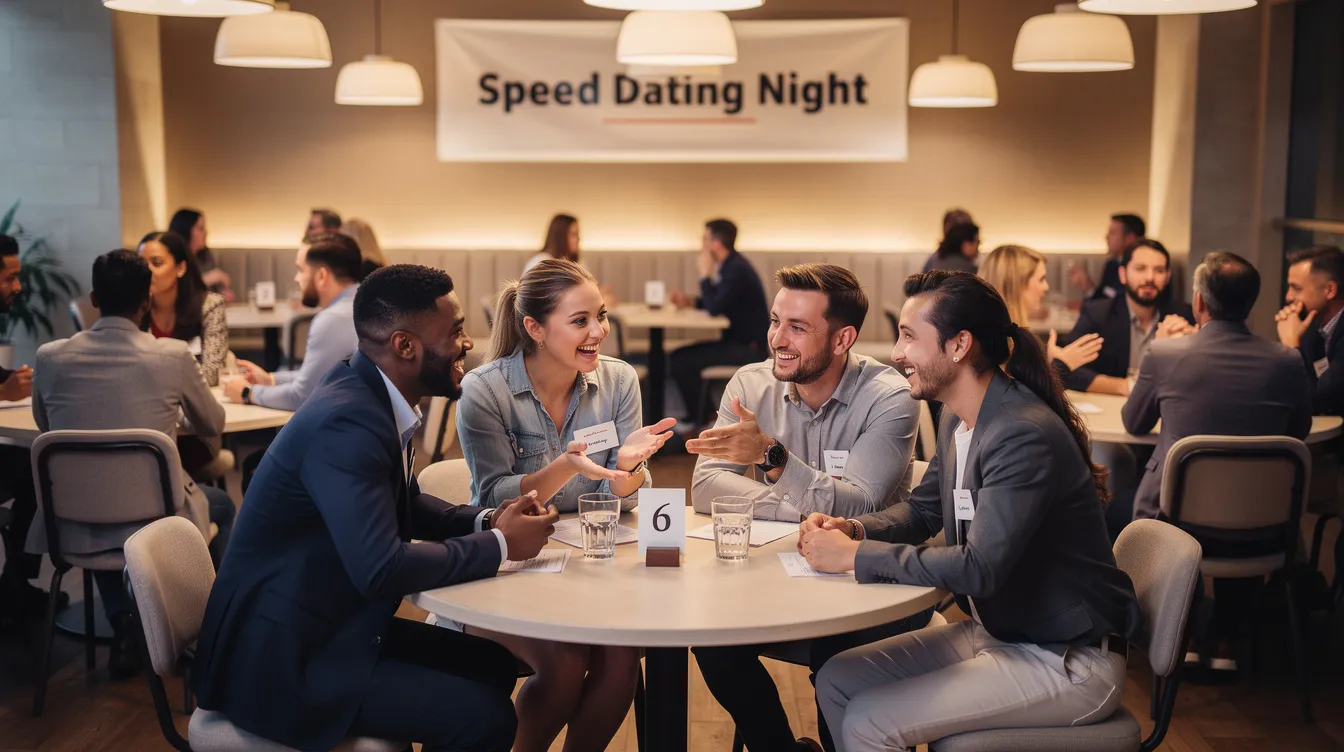
Jeter AI’s singles events offer an answer: compatibility-matched speed dating where each mini-date is pre-screened for core alignment.
The patent-pending matching algorithm works simply: participants complete the compatibility assessment, and dates are ordered from highest to lower compatibility. Your best potential matches come first.
Virtual speed dating runs $25-45. In-person events $35-75 depending on venue. No subscriptions.
The Future of Dating: From Guessing to Knowing
Imagine a future where compatibility-first tools become standard before serious dating investments. Instead of endless blind trial-and-error, people:
Take a compatibility assessment
Share it early with a potential partner
Go on dates already knowing key alignment and friction points
The old model—swipe, text, drink, repeat—is giving way to something more intentional. Not less romantic. More informed.
Jeter AI is an early step toward this future. An engine that helps people make clearer, kinder, more informed romantic decisions. Not the final word on love—attraction still matters, intuition still matters, life is still unpredictable.
But the past five years of app-dominated dating have shown us what doesn’t work. It’s time for something different.
Learn how the compatibility test works to see the mechanics behind this approach.
How to Start Dating Smarter Today (Practical Steps)
You don’t need to wait for the future to change your approach. Start now:
Audit your signals: Notice what you’re actually evaluating—photos? Banter? Job title? Challenge yourself to look deeper
Add one real question: Before meeting someone, ask about their relationship goals, not just their weekend plans
Use a compatibility test: Share Jeter AI’s free assessment with someone you’re currently interested in
Have the intent talk by date three: Exclusivity expectations, timeline, what you’re looking for—surface it early
Set weekly limits: Maximum two first dates per week to avoid burnout
Focus over volume: One promising person deserves more attention than ten maybe-matches
Even if you never use Jeter AI, adopting a compatibility-first mindset will dramatically reduce time wasted and emotional whiplash.
For deeper shared reports and events, pricing is transparent and one-off—no subscriptions.

FAQ: Modern Dating Problems, Compatibility, and Jeter AI
Why are modern dating apps failing so many people? Dating apps use engagement-first business models that prioritize swipes and time spent over actual relationship outcomes. Their algorithms optimize for what keeps you using the app, not who’s genuinely compatible. This creates a cycle where many users experience burnout without finding a committed relationship. Additionally, potential partners can misrepresent themselves on dating profiles, leading to catfishing where users encounter fake identities. Technology has also made digital infidelity easier, lowering barriers for inappropriate communication and making it simpler to hide or initiate emotional or physical infidelity.
What does compatibility actually mean in dating? Relationship compatibility involves alignment across five key areas: intent (casual vs. serious), communication style, emotional availability, lifestyle fit, and values. Chemistry can exist without compatibility—but compatibility determines whether attraction can grow into something lasting.
Can compatibility really be measured? No model predicts perfectly. But research from institutions like the Gottman Institute shows that patterns in behavior, attachment, and values are highly predictive of relationship success. Compatibility assessments surface these patterns earlier, not as a guarantee, but as informed guidance. When referencing survey results or statistics, it’s important to consider the time period over which the data was collected, as experiences can vary significantly between recent and older users.
How does Jeter AI work with the apps I already use? Jeter AI is a layer you use alongside Hinge, Bumble, or any dating site. Share your compatibility link or QR code with someone you’re chatting with. You both take the assessment, and you receive a joint report before meeting.
Is AI the future of dating? AI is an assistive tool for clarity—not a replacement for human choice. You still decide who to meet, who to pursue, who to commit to. AI helps surface patterns you’d otherwise discover months into a relationship.
Why do so many relationships fail early despite strong chemistry? Chemistry is often driven by novelty and dopamine, which typically fade after 90 days. Without underlying compatibility in communication, lifestyle, and values, even intense initial attraction can’t sustain a relationship. Bad actors don’t cause most breakups—misalignment does.
Learn more about our mission on the About page.
Closing: Why I Built Jeter AI (And What I Hope Changes About Modern Dating)
I didn’t build Jeter AI because I love apps. I built it because I was tired of watching good people—including myself—burn out on a broken system.
You don’t need more matches. You need better-aligned ones. And compatibility can be surfaced sooner with the right tools.
The problem isn’t that the right person doesn’t exist. It’s that traditional ways of finding them—swiping on photos, hoping for chemistry, crossing your fingers—aren’t working.
If you’re ready to date differently, start with the free compatibility test. Share it with someone you’re interested in. See what alignment actually looks like before you invest months wondering.
Modern dating is broken. But it doesn’t have to stay that way.

Additional Resources and Internal Links
For those who want to go deeper into compatibility science and modern dating problems:
The Modern Compatibility Test: Finding Real Relationship Compatibility in the Age of AI — How science-backed assessments identify what matters for long-term success
Love Test: How Jeter AI Turns Fun Compatibility Checks Into Real Intentional Dating — Making compatibility discovery engaging and actionable
Speed Dating Reimagined: How Compatibility Matching Turns 7 Minutes Into Your Best Shot at Love — How in-person events work with pre-matched compatibility
For additional context on online dating trends, see Pew Research Center’s findings on online dating in the U.S..


